

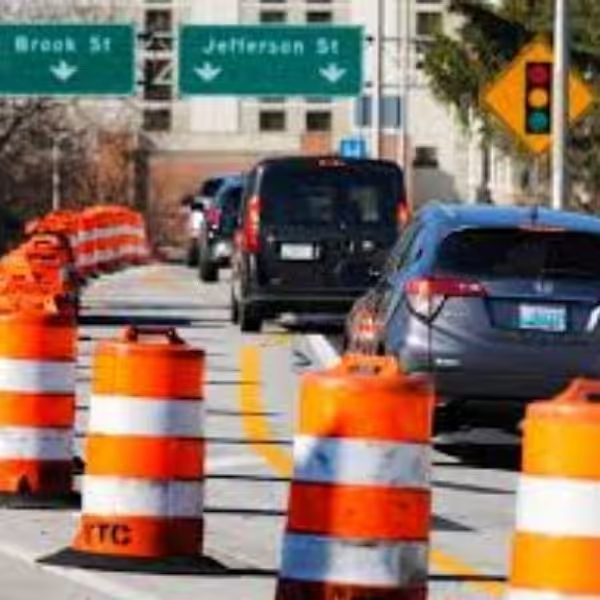
If it feels like orange barrels are everywhere in Louisville, you’re not imagining it.
Major work along I-64, I-65, I-71, I-265 (Gene Snyder Freeway) and key surface roads like Brownsboro Road has created congestion across the metro area. And more is coming — including a full summer closure of part of I-65.
State officials say the timing isn’t random. It’s driven by two major factors: aging infrastructure and a surge of federal funding.
The Two Big Reasons Behind the Construction Boom
1. Aging Bridges and Highways
According to James Ballinger, many of Louisville’s highway corridors are reaching — or exceeding — their intended lifespan.
Bridges along I-65 between downtown and I-264, including those near the Hospital Curve area, have required repeated deck repairs and frequent lane closures. Rather than continue patching, the state is moving forward with full replacements as part of the $150 million Central Corridor Project.
Heavy freight traffic and daily commuter volume have accelerated wear on Louisville’s interstate system, particularly on:
-
I-64
-
I-65
-
I-71
State leaders say delaying repairs would only increase long-term costs and safety risks.
2. Federal Infrastructure Funding
The second driver is money — specifically from the Infrastructure Investment and Jobs Act signed by former President Joe Biden.
The law significantly boosted federal transportation funding available to states.
Kentucky’s highway construction spending jumped to more than $1.6 billion in 2025 — about $500 million more than the previous year and the second-highest total in 35 years. Only 2012, during the Ohio River Bridges Project, saw higher spending.
Federal money flows to Kentucky in two main ways:
-
Annual allocations from the Federal Highway Administration
-
Competitive grants from the U.S. Department of Transportation
State officials say the funding created a rare opportunity to tackle long-delayed projects simultaneously.
Why I-65 Is Shutting Down This Summer
A key stretch of I-65 between Jefferson Street and the I-264 interchange will close from June through July 31.
The goal: replace multiple aging bridges and accelerate construction.
Officials say the full two-month shutdown will shave roughly a year off the project timeline, moving expected completion to mid-2027.
The timing is strategic:
-
After the Kentucky Derby
-
Before the Kentucky State Fair
New bridge designs aim to better handle traffic from major venues like Churchill Downs and the Kentucky Exposition Center.
What’s Happening With the Kennedy Bridge?
The John F. Kennedy Memorial Bridge is undergoing $6.9 million in expansion joint replacements.
Expansion joints allow the bridge deck to expand and contract with temperature changes. Repeated patch repairs led the state to replace them entirely to reduce ongoing traffic disruptions.
Completion is now expected in fall 2026 after delays for additional evaluations.
Are City Leaders Frustrated Too?
Yes — but coordination is improving.
Mayor Craig Greenberg’s administration has pushed for better communication after overlapping projects — including work along the Watterson Expressway and Louisville Water Co.’s River Road pipeline replacement — created major commuter headaches.
Louisville officials say the Kentucky Transportation Cabinet has since improved coordination and hired a consultant specifically for the I-65 Central Corridor Project.
City planners report that upcoming local projects, such as River Road and Zorn Avenue reconfigurations, are expected to have minimal overlap with state work.
Why It’s All Happening at Once
In short:
-
Infrastructure is old.
-
Federal funding is available now.
-
Officials don’t want to miss the window to fix it.
If Congress does not extend the infrastructure law beyond Sept. 30, no new competitive grants could be awarded under that program — adding urgency to current efforts.
The Bottom Line
The construction surge is painful for drivers, but state leaders argue it’s a long-overdue reinvestment in critical corridors that move freight, commuters and major event traffic through Louisville.
For now, patience — and alternate routes — remain essential.



Leave a Reply