


Bitter Arctic air is expected to surge deep into the Southeast, including Florida, where temperatures could fall 15 to 20 degrees below average.
Snow-peat: Winter pattern returns to the eastern half of the U.S.
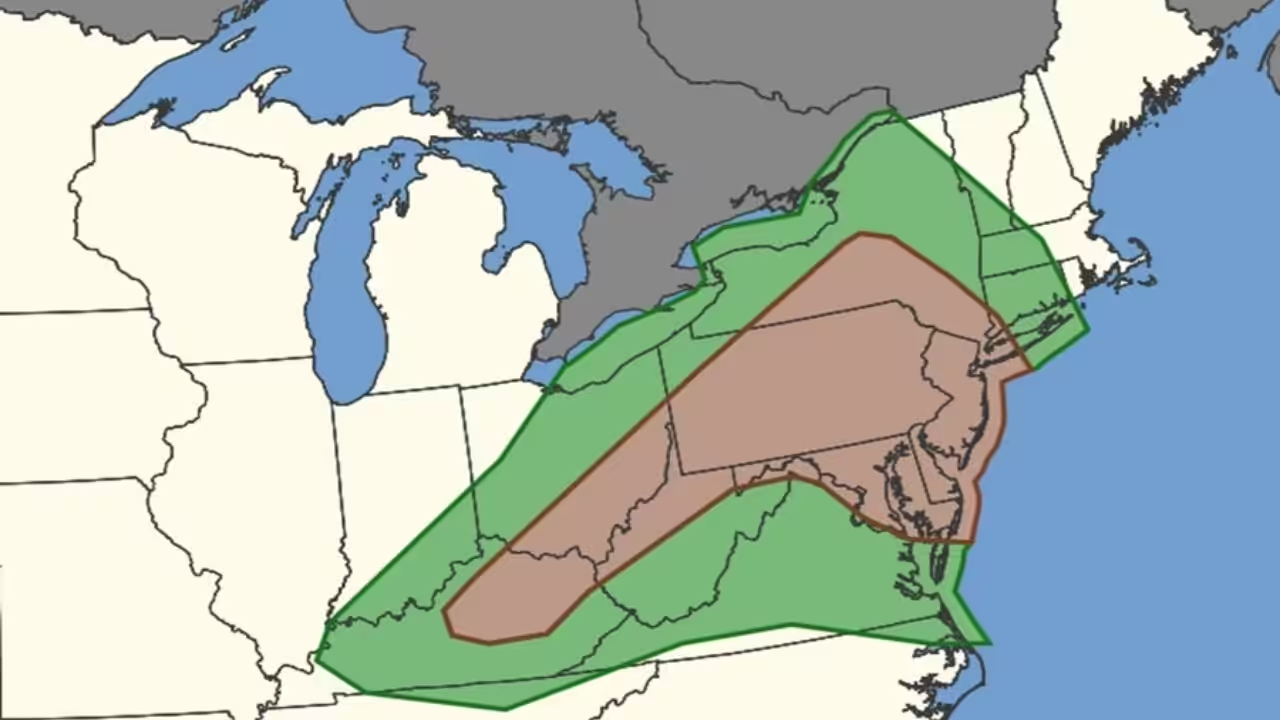
After a short January thaw, winter is poised to roar back for the rest of the month across much of the eastern half of the United States. Arctic temperatures and repeated rounds of snow are expected for the Great Lakes and the Interior Northeast. The winter chill will also extend into parts of the Southeast, where higher elevations in North Carolina and Tennessee could see snow as storm systems move through the region.
After a brief thaw, winter will return with force for the remainder of January across most of the eastern U.S., bringing Arctic cold and multiple snow events to the Great Lakes and Interior Northeast. Colder air will also push into the Southeast, allowing snow to fall in the higher elevations of North Carolina and Tennessee as storms track across the area.
Meanwhile, the West Coast is set to experience a return to milder conditions following weeks of repeated atmospheric rivers that caused historic flooding across parts of California and the Pacific Northwest.
Beginning Friday, a dip in the jet stream will stretch across portions of the Upper Midwest and much of the eastern United States.
According to the FOX Forecast Center, this dip will open the door for Arctic air and repeated winter storms to spill south into the Lower 48 from Canada.
“While none of these systems are expected to become blockbuster storms, they will restore the snowy and cold conditions,” the Forecast Center wrote Tuesday.
Bitter cold air will drive deep into the Southeast, including Florida, where temperatures may run 15 to 20 degrees below average, causing cold-stunned iguanas to tumble from trees.
January snow outlook
This active weather pattern mirrors much of December, when repeated snowfall drew attention even in traditional snowbelt regions across the Midwest and the Interior Northeast.
Syracuse, New York, which regularly sees lake-effect snow from Lake Ontario, has already recorded more than 83 inches of snow so far this season, the highest total in more than a decade.
Active winter pattern returns
Many of the same snowbelt areas along the Great Lakes should prepare for several rounds of snow over the next two weeks as storms drop south from Canada. Snow could extend into the southern Appalachians, and temperatures may become cold enough to support brief winter weather in states such as Alabama, Georgia, and the lower elevations of the Carolinas.
Calmer and warmer conditions develop in the West
Relief for the West
This pattern shift will bring a welcome return to drier weather along the West Coast, where weeks of atmospheric rivers have resulted in deadly and historic flooding across parts of Washington and California.
What is an atmospheric river?
While recent storms delivered much-needed snow to the Cascade and Sierra mountain ranges, the prolonged wet conditions also contributed to deadly avalanches.
FILE – PACIFIC, WASHINGTON – DECEMBER 16: An aerial view shows a neighborhood submerged by floodwaters on December 16, 2025, in Pacific, Washington. Evacuations were ordered in three suburbs south of Seattle following a levee failure, as northern Washington continued to recover from historic flooding the previous week. Atmospheric rivers were expected to persist, triggering widespread flooding, tens of thousands of evacuations, and numerous Coast Guard rescues.
Weather whiplash hits the Southeast
The sudden return to cold will be the most noticeable aspect of this pattern change for many areas.
SEE IT: 12-foot great white shark named “Ernst” pings off the coast of Alabama this week
Since the start of the New Year, much of the Lower 48 has experienced temperatures running 5 to 10 degrees above average.
Weather whiplash is expected for Atlanta and other parts of the Southeast this week.
After Atlanta reaches 60 degrees on Tuesday, overnight lows across parts of the Southeast are expected to plunge into the 20s by Thursday morning, signaling the start of several weeks of winter chill for the eastern half of the country.






Leave a Reply