

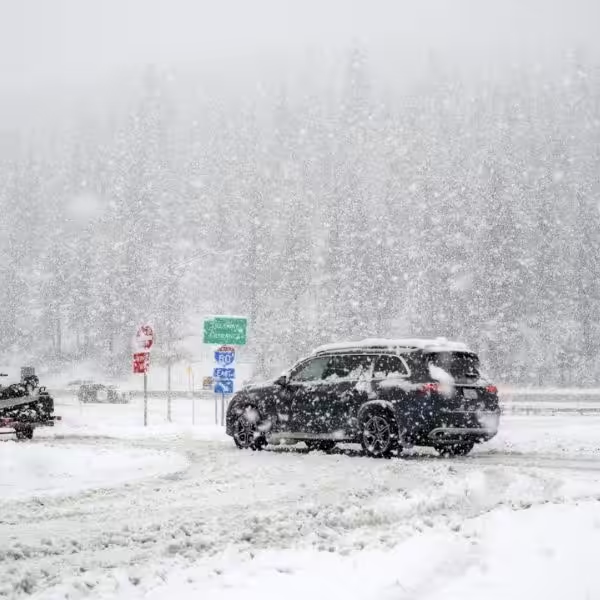
Snow has fallen across parts of Iowa, but some areas remain under drought watch, highlighting that colder weather does not automatically ensure water security. Experts say this is a warning of how long-term shifts in climate patterns are affecting communities across the region.
Current Situation
In December, the Iowa Department of Natural Resources placed three of the state’s five drought regions under watch, The Gazette reported. Eastern Iowa and parts of the northwest are expected to experience abnormally dry conditions well into February 2026.
Despite above-average snowfall this season, a dry autumn—particularly November, which recorded 0.25 inches below average precipitation—erased the benefits of summer rain. Many soils and waterways in Iowa remain depleted.
“Most of the state saw worsening conditions due to widespread precipitation deficits,” the DNR said in a news release.
Why It Matters
A winter drought illustrates that snow alone does not replenish groundwater like steady rainfall does. Experts note that global warming is intensifying extreme weather events, making water cycles more erratic and unpredictable.
Frequent and severe droughts harm communities, especially in economically vulnerable regions. Water scarcity disrupts ecosystems, reduces food production, drives up prices, and threatens millions of lives worldwide. In Iowa, over 900,000 residents currently live in areas affected by drought, according to the U.S. Drought Monitor.
Response and Solutions
Iowa actively monitors water resources and has a Drought Plan for preparedness, response, and recovery. National agencies coordinate through an integrated drought information system to assess conditions and provide early warnings.
Experts stress that addressing the root causes—such as reducing air pollution and mitigating climate change—is crucial. Individuals can help by supporting environmental initiatives, conserving water, and promoting policies that protect natural resources.
Iowa’s winter drought serves as a stark reminder that water security is increasingly fragile in a warming world, emphasizing the urgency of taking action now.
This article has been carefully fact-checked by our editorial team to ensure accuracy and eliminate any misleading information. We are committed to maintaining the highest standards of integrity in our content.



Leave a Reply