

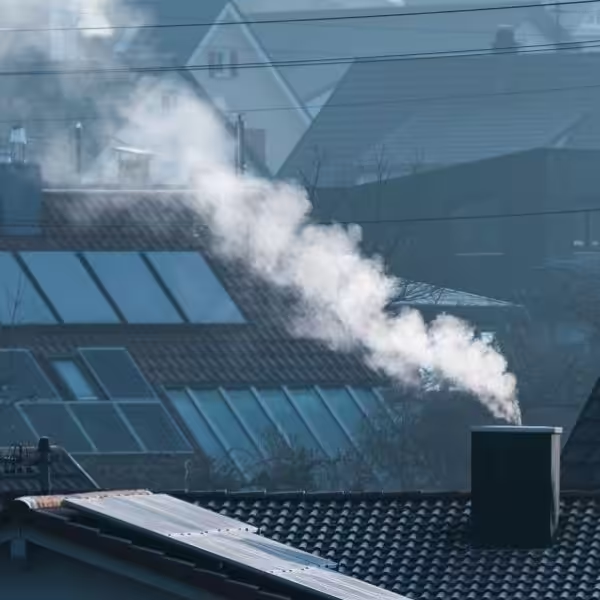
LEXINGTON, Ky. (FOX 56) — Winter doesn’t officially begin until Dec. 20, but bitter cold and snow are already creating safety risks and health concerns across Kentucky.
As temperatures drop, many families nationwide rely on the federal Low Income Energy Assistance Program (LIHEAP). The program offers utility support during severe weather, especially in colder months or when certain conditions are met.
How LIHEAP Helps Low-Income Families
According to its website, LIHEAP — operated by the National Center for Appropriate Technology — assists low-income energy providers and groups by:
- Improving how low-income energy services are managed and delivered
- Targeting benefits to people with the highest energy burdens
- Launching administrative and program improvements
- Finding supplemental nonfederal funding sources
- Reducing energy use among program recipients
- Fostering energy independence and lowering program dependency
- Strengthening coordination among utilities, HHS, grantees and organizations that serve low-income households
Officials noted that LIHEAP operates in all 50 states. Coverage varies, with each state setting criteria for cold-weather, hot-weather and extreme-weather protections.
In Kentucky, the Cabinet for Health and Family Services runs the program through community action agencies statewide.
Kentuckians Still Vulnerable to Winter Disconnections
Team Kentucky reported that LIHEAP helped nearly 80,000 Kentucky households cover winter heating bills in 2024.
Despite that support, LIHEAP’s website shows that Kentucky doesn’t have protections preventing utility disconnections during winter months. Of the seven states bordering Kentucky, only Tennessee also lacks winter shutoff protections.
A coalition of activists known as Kentuckians for Energy Democracy (K4ED) held a rally Monday morning on the Capitol’s north lawn. They urged state leaders to protect residents by prioritizing energy-efficient programs and lowering utility costs.
Activists said the Kentucky Public Service Commission in 2024 refused to grant Kentucky Power its full rate increase — even after providers negotiated a lower rate with stakeholders — reportedly citing public comments as the reason.
“Whether your concern is affordability and avoiding shutoffs, pushing back against monopoly utilities, or renewable energy and climate, everyone is impacted by the decisions that our utilities make in planning for the future,” K4ED members wrote on the group’s website.
This article has been carefully fact-checked by our editorial team to ensure accuracy and eliminate any misleading information. We are committed to maintaining the highest standards of integrity in our content.











Leave a Reply