

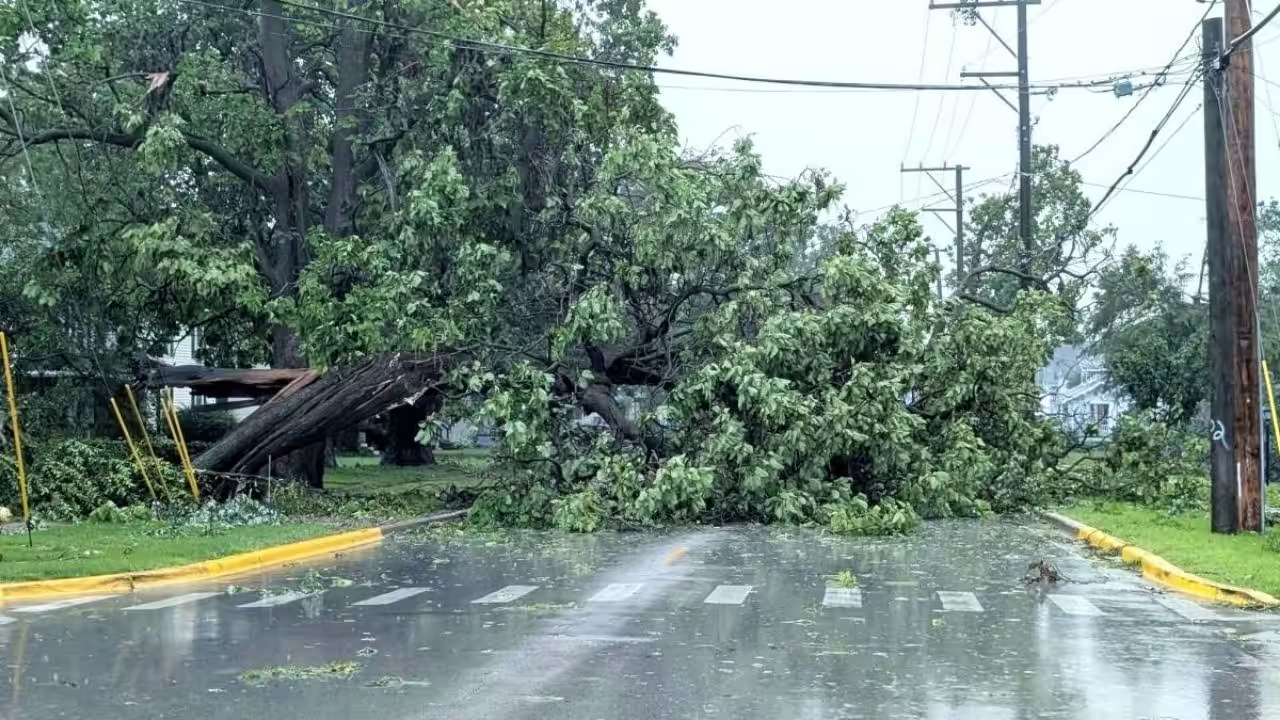
Hundreds of thousands of people in northeast Illinois and northwest Indiana were still without power Wednesday as cleaning efforts began following catastrophic storms that produced at least three tornadoes on Tuesday.
ComEd is still attempting to restore power to about 143,000 customers, a decrease from a peak of 370,000. The majority of outages occur in Cook and Will counties, with Chicago’s southwest suburbs most badly struck. ComEd officials indicated that full restoration is expected by 11 p.m. on Saturday.
NIPSCO, which serves northern Indiana, declared Tuesday’s outages to be the biggest in the utility’s history, with poles, power lines, and substations damaged across nearly its entire service territory. According to NIPSCO, around 275,000 of its 500,000 power customers were affected as of Wednesday morning.
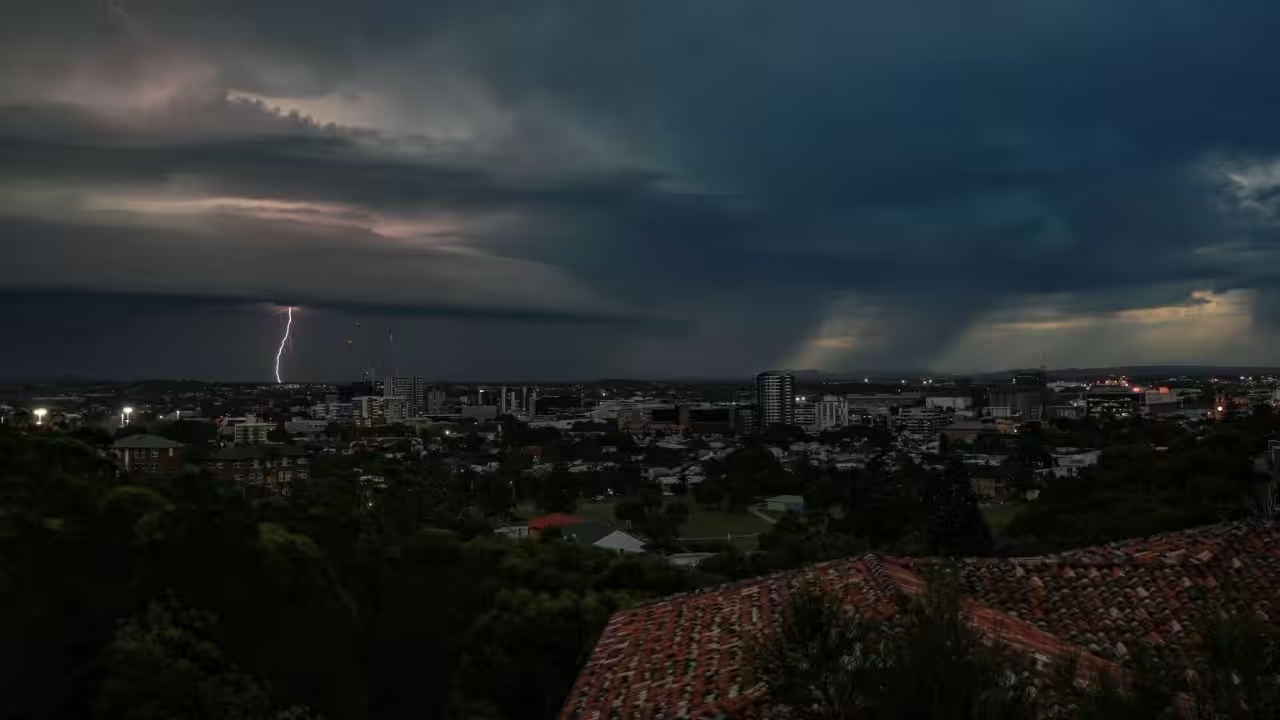
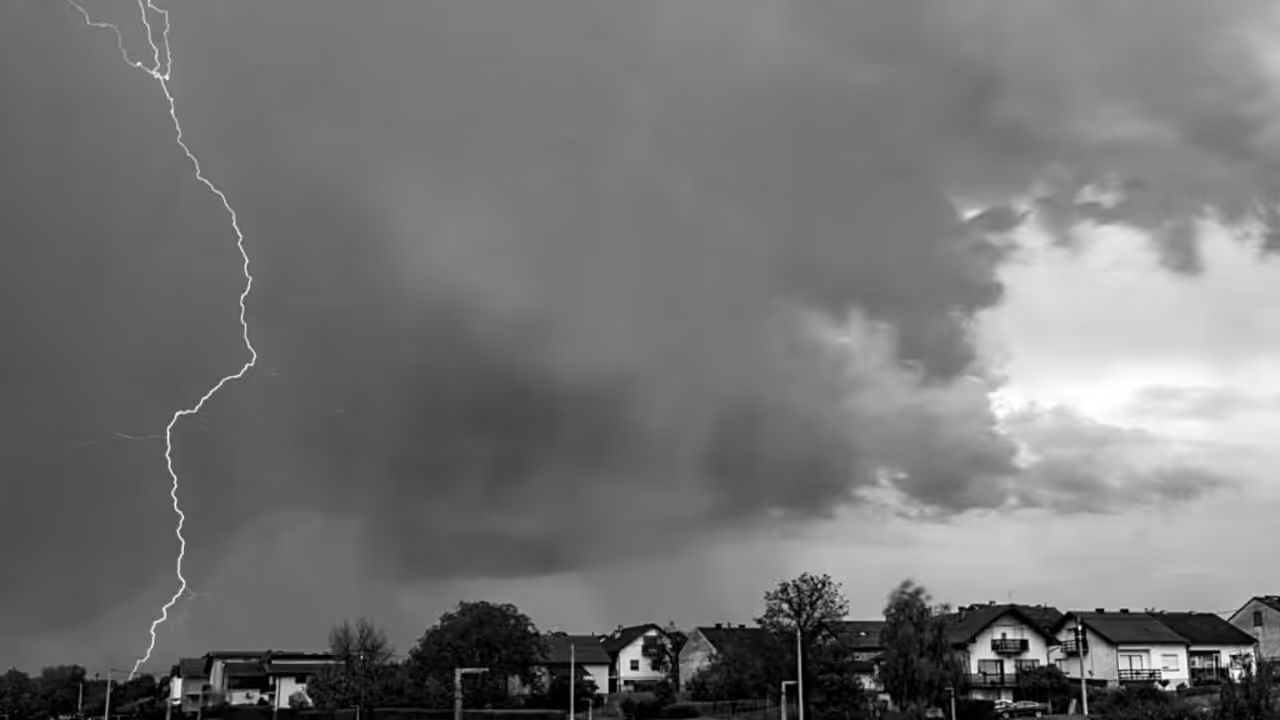
The National Weather Service Storm Prediction Center confirmed Tuesday’s extensive storms as a derecho, a long-lived wind storm that spanned more than 240 miles and had gusts of at least 58 miles per hour.
Tuesday’s storm traveled approximately 330 miles, from eastern Iowa to northern Indiana. A 99-mile-per-hour wind gust was reported at Gary Airport, while gusts of 97 and 96 miles per hour were measured in Sugar Grove and Shorewood, Illinois.
Weather service survey crews were still assessing damage Wednesday morning, and at least three tornadoes had touched down in the greater Chicago area on Tuesday. The weather service reported that all of them were consistent with EF-1 damage, with speeds ranging from 86 to 110 mph.
A tornado impacted northeast Will County, one in eastern Will County, and a third in southern Cook County, which shares a border with Will. The later two crossed into Lake County, Indiana.
With rain expected again on Wednesday, the Metropolitan Water Reclamation District of Greater Chicago issued an overflow action day advisory, asking consumers to use less water during and after storms to increase sewer system capacity.




Leave a Reply