

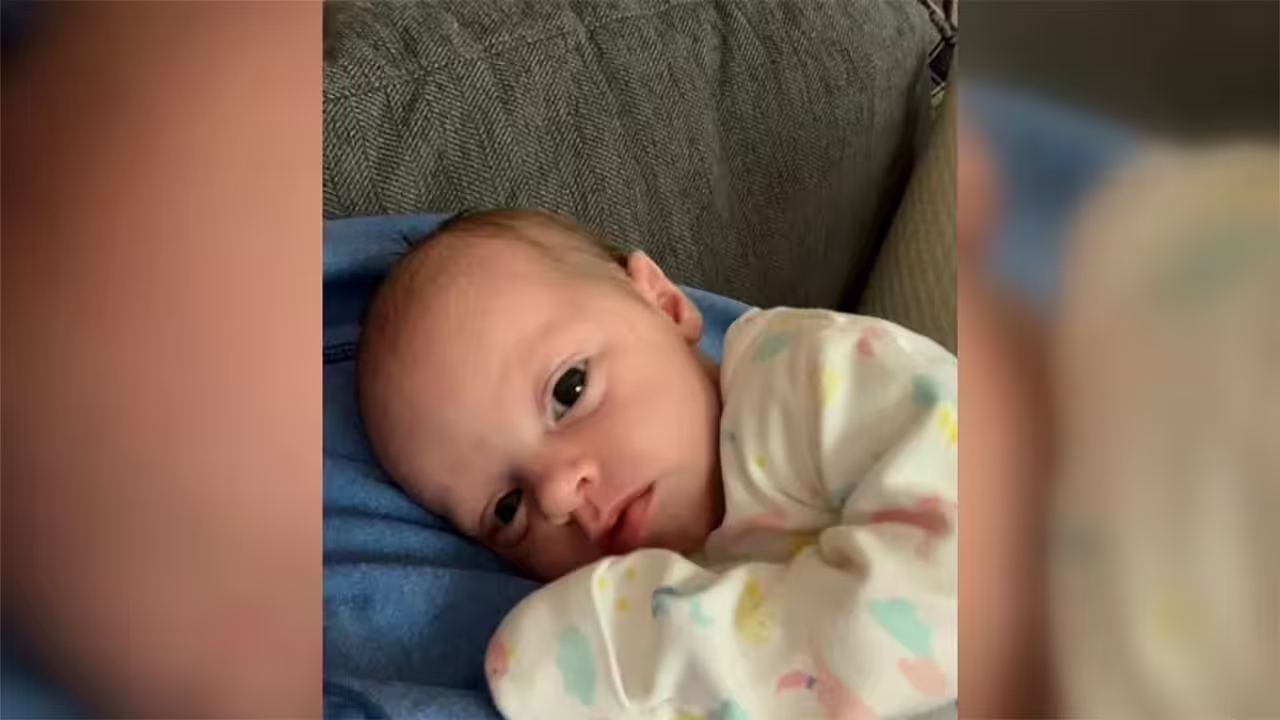
A pair of San Diego parents were sentenced Wednesday to 15 years to life in prison for the killing of their baby girl, Delilah, after being convicted of second-degree murder in March.
Brandon Copeland and Elizabeth Ucman have been in jail since the infant died in late 2021. Prosecutors claim their three-month-old weighed less than four pounds at the time of her death, which is half of what she weighed at birth.
Delilah’s lifeless body was seen on body camera video by San Diego police in a dirty apartment in City Heights. Crime scene photos revealed piles of trash, rotting food, and animal feces scattered throughout the residence.
Though the couple was first charged with first-degree murder, prosecutors changed the charge throughout the trial, seeking only a second-degree murder conviction.
During the trial, defense attorneys argued that a combination of mental health concerns for the parents and perceived failures by social workers was sufficient to lessen the punishment. Jurors disagreed, siding with evidence prosecutors said demonstrated the parents’ full comprehension of the harm they caused their helpless baby.
The involvement from county social workers
Delilah spent the first month of her life with her great-aunt, who begged to accept the kid until the parents cleaned their flat. During that period, reports were submitted to the San Diego County Child & Family Well-Being Department (formerly Child Welfare Services).
Much information from the trial was exposed after NBC 7 Investigates gained a court order granting access to the county’s social worker case files. They discovered that social workers developed a safety plan for Delilah, which her parents agreed to as part of the county’s Voluntary Services program.
This is a sort of social worker monitoring in situations when children are in danger of abuse, neglect, or exploitation. Children can either stay at home safely or participate in a voluntary out-of-home placement.
According to the documents, the parents agreed that Delilah would not return until the house was clean and safe. A month later, despite the ardent appeals of family members, who told social workers that both Copeland and Ucman were unsuited due to immaturity and a variety of mental health difficulties.
While they originally maintained communication with family members and social workers, prosecutors claim they cut off contact over the next few months.
The case files revealed that Delilah was last seen by a social worker 55 days before her death on November 10, 2021. Delilah’s great-grandmother, Adrienne Arnett, told NBC 7 Investigates that she believes the system failed her and that the county should have intervened to remove Delilah from the home.
During closing arguments, Deputy District Attorney Franciesca Balerio dismissed criticism of county social workers, stating, “The system broke down is what we hear … that is not what the evidence in this case showed.”
NBC 7 Investigates contacted the county several times in 2023, requesting a conversation about what transpired in this case and departmental policies. It consistently declined to comment or make staff available for queries.
The sentencing of Delilah’s parents
On June 17, 2026, Copeland and Ucman came before San Diego Superior Court Judge Robert Amador for their sentence.
Before sentencing, attorneys for both defendants asked for a mistrial, arguing that the court had oversimplified the legal issues provided to jurors, preventing them from reaching an accurate verdict.
Both Balerio and Amador refuted those claims. Amador emphasized that jurors made their conclusions after only one day of deliberation following weeks of testimony, demonstrating the gravity of the evidence.
The defendants were then given the opportunity to address the court. Ucman’s counsel made a written statement on her behalf, which included the following: “I know my actions caused my daughter’s death, and not a day goes by that I don’t think about it. I wish I could reverse what occurred or exchange my life for hers, but I can’t.”
Throughout the hearing, Ucman kept her head down, periodically sobbing and using tissues.
Copeland also addressed the court directly, stating, in part, “I just want to start by saying nobody knows how much this hurts me and how much grief I’ve experienced in four years.” He further added, “I want to say I’m sorry to everybody who was involved in this case, but most of all I’m sorry to my daughter.”
After evaluating the facts, witness testimony, and mental health reasons offered by the defense, Amador sentenced both defendants to 15 years to life in prison, in accordance with the prosecution’s proposal. The punishment includes credit for time already served.
Amador explained his choice, criticizing attempts to transfer accountability away from the parents. He stated, “Constantly, the defense is pointing the finger and blaming other individuals, whether it’s the prosecution in this case for their perspective, social services, or other parties who were present. ‘It was not the defendant’s fault.’ It’s their fault.
Amador stated that Copeland and Ucman will be eligible for release in approximately 13 years, or in 2039.
Both defendants retain their right to appeal. At least one defense counsel stated that they want to pursue a further assessment of the case.




Leave a Reply