

Louisville is responding to ongoing climate challenges by investing in heat-tolerant tree species from southern regions to help lower rising temperatures and strengthen the city’s tree canopy.
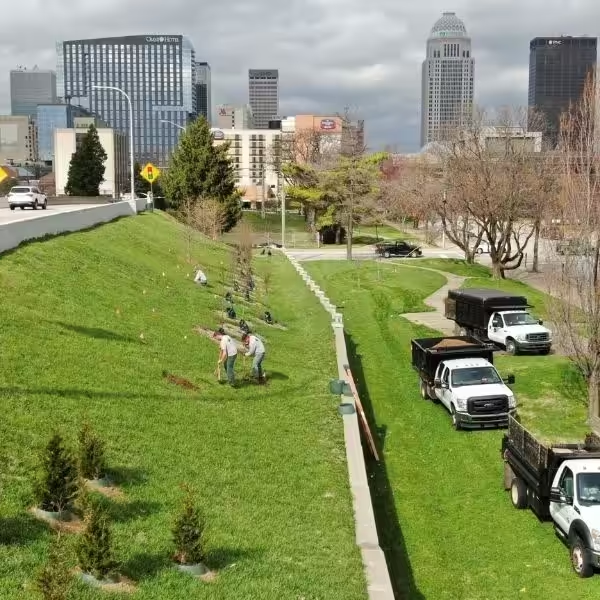
People plant tree seedlings along a grassy roadside in Louisville, with the downtown skyline visible in the background.
TreesLouisville, the city’s primary nonprofit organization focused on expanding and protecting the urban tree canopy, is shifting its planting approach by adding heat-tolerant tree species native to the southern United States.
According to Courier Journal reporter Connor Giffin, Louisville faces two connected environmental challenges: increasingly hot summers and insufficient tree canopy coverage.
As Giffin reports, “average summer temperatures in Louisville have increased by more than 3 degrees from 1970–2022, according to a Climate Central analysis, a trend experts expect to continue amid unchecked global emissions of greenhouse gases.” He also notes that “a lack of robust tree canopy contributes to the city’s oppressive heat, in the urban core and beyond.”
In response, TreesLouisville is turning to the bald cypress as a long-term climate adaptation strategy to help offset rising temperatures. Native to the Southeastern United States, the bald cypress is a heat-tolerant deciduous conifer known for its ability to thrive in hot, humid conditions as well as subzero winter temperatures.
If these southern, heat-tolerant trees succeed in Louisville, they could deliver significant environmental, social, and economic benefits. Giffin writes, “urban foresters and advocates count trees as part of Louisville’s critical infrastructure. The city’s tree canopy intercepts stormwater, filters air pollutants and absorbs carbon. Trees can lower energy bills by cooling neighborhoods, both through shade and evapotranspiration … In a past assessment, Louisville’s tree canopy was found to save the city an estimated $330 million every year.”
TreesLouisville Executive Director Cindi Sullivan stressed the long-term importance of the effort, saying, “these trees are an investment in Louisville’s next 100 years … as our city becomes hotter, we have to plan now for the trees that will shade our neighborhoods, cool our streets, and protect public health in the decades ahead.”




Leave a Reply