

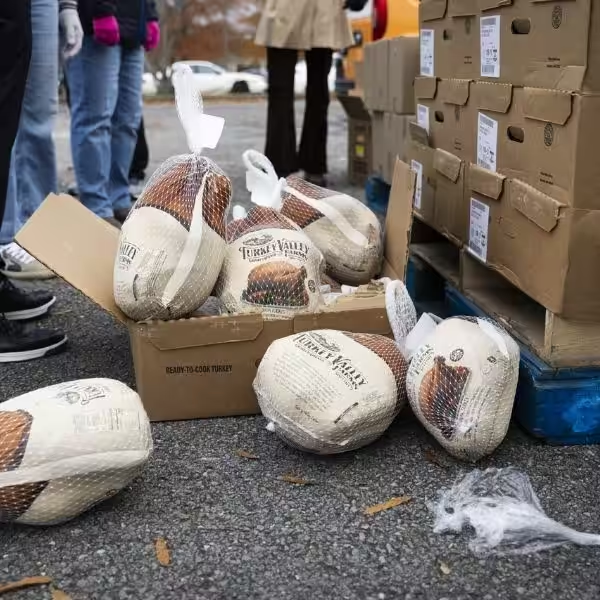
Many children in Kentucky continue to live in poverty levels that advocates call “unacceptable.” The 2025 Kids Count Data Dashboard, released this week by Kentucky Youth Advocates, shows about 21% of children live in food-insecure households, 20% live below the poverty line, and 44% live in low-income households. Kids Count is part of a national initiative by the Annie E. Casey Foundation that measures child well-being across education, family life, trauma, incarceration, and more.
In Eastern Kentucky, around 40% of children are growing up in poverty, according to Terry Brooks, executive director of Kentucky Youth Advocates. “Rates of poverty for Black kids in Kentucky continue to be at an unacceptable disproportionate rate in every corner of the state,” Brooks said. About 31% of Black children and 23% of Latinx children live in poverty, compared with 17% of white children.
Key Findings from the Report:
-
In 2023, child poverty rates improved in 111 of 120 counties compared to five years earlier, yet 1 in 5 children statewide still live in poverty. Five counties in Eastern Kentucky report child poverty rates above 40%.
-
From 2019-2023, 45% of households had a high rental cost burden, with renters spending 30% or more of income on rent and utilities. During this period, 70 counties saw improvements compared to 2014-2018.
-
The high school graduation rate rose to nearly 94% in the 2024-2025 school year, up from about 91% in 2019-2020.
-
About half of fourth graders were proficient in reading, with 89 of 169 school districts reporting lower proficiency rates than the previous year.
-
Approximately 40% of eighth graders were proficient in math.
-
In 2023, around 97% of Kentucky children had health insurance. From 2021-2023, 1 in 10 mothers smoked during pregnancy, an improvement from 2016-2018.
-
From 2022-2024, Kentucky’s foster care rate was 39.4 per 1,000 children, lower than in 2017-2019, with 38% of children exiting foster care to reunification with a parent.
“Let’s be very clear: This data is critical if you care about kids. It can and it should shape our direction as a state,” Brooks said. “Turning ‘can shape’ into ‘will shape’ requires decisive action from lawmakers and Gov. Beshear when the legislative session begins in January, including budget investments and smart policy decisions that make kids a priority in measurable ways.”
Food Insecurity and Its Hidden Challenges
Karena Cash, data and research director at Kentucky Youth Advocates, said food insecurity is often linked to higher rates of obesity. “Food insecurity in Kentucky can be hidden. Parents may skip meals to ensure their children eat, or families must choose between paying utility bills or buying groceries. This often forces reliance on cheap, highly processed foods,” Cash said.
She added that limited access to grocery stores also affects children’s nutrition. “The neighborhood a child grows up in, and proximity to a grocery store, strongly influences access to healthy foods.”
Most Kentucky schools provide free meals through the Community Eligibility Provision. “Schools are a significant source of healthy meals, with research showing some of the healthiest meals kids eat daily come from their school cafeteria,” Cash said.
Aliete Yanes Medina, a senior at Fern Creek High School in Louisville, tutors students facing food and housing insecurity. “This data is powerful because it unites us and shows tangible progress in our community,” Medina said. “But it also reminds us that behind every number is a story, a challenge, and a person who deserves support and opportunity.”
This article has been carefully fact-checked by our editorial team to ensure accuracy and eliminate any misleading information. We are committed to maintaining the highest standards of integrity in our content.












Leave a Reply