

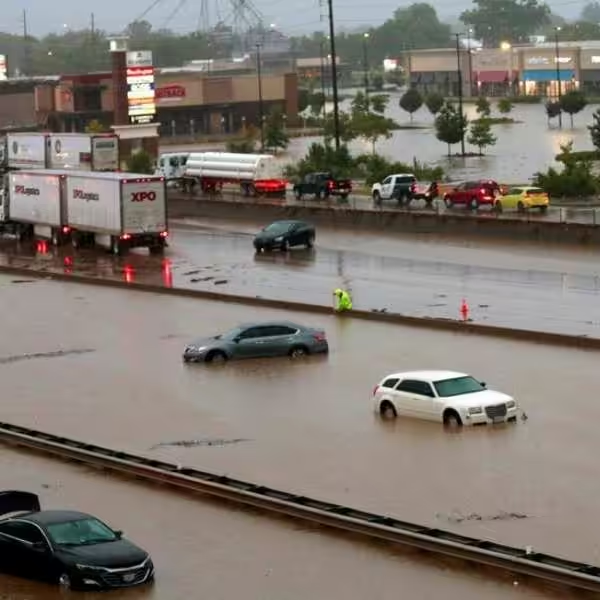
UPPER MIDWEST, UNITED STATES — A persistent stretch of rainfall from April 14 through April 20, 2026 dropped 3 to 5 inches or more across parts of the Upper Midwest, impacting cities like Chicago, Green Bay, Wausau, Lansing, and Detroit. In contrast, the southern portions of Indiana, Ohio, and Kentucky saw very little precipitation, with totals staying below 0.5 inches during the same period.
Chicago and Upper Midwest core take the hardest hit
Seven-day rainfall data shows the heaviest totals concentrated in a corridor stretching from Minneapolis and Sioux Falls eastward through Green Bay, Chicago, Wausau, Lansing, and Saginaw, where widespread amounts reached 3 to 5 inches or more. Some locations in Wisconsin and northern Illinois likely saw even higher totals due to repeated bands of heavy rain.
The broader rain shield extended south into areas like Cedar Rapids, Des Moines, Peoria, and St. Louis, where 1 to 3 inches fell over the same timeframe. While still above average for a week, these totals were noticeably lower than those in the northern core.
Southern Indiana, Ohio and Kentucky remain largely dry
In sharp contrast, the southern half of Indiana, most of Ohio, and Kentucky recorded less than 0.5 inches of rain over the entire seven-day period. Cities such as Indianapolis, Cincinnati, Columbus, Evansville, Louisville, and Nashville were all within this dry zone, underscoring the sharp precipitation divide across the region.
Zone — 7-day rainfall total — Key cities
Upper Midwest core — 3 to 5 inches or more — Chicago, Green Bay, Lansing, Saginaw
Central Midwest — 1 to 3 inches — Des Moines, Peoria, St. Louis
Southern IN, OH, KY — Less than 0.5 inches — Indianapolis, Cincinnati, Evansville
Relief arrives for soaked northern areas
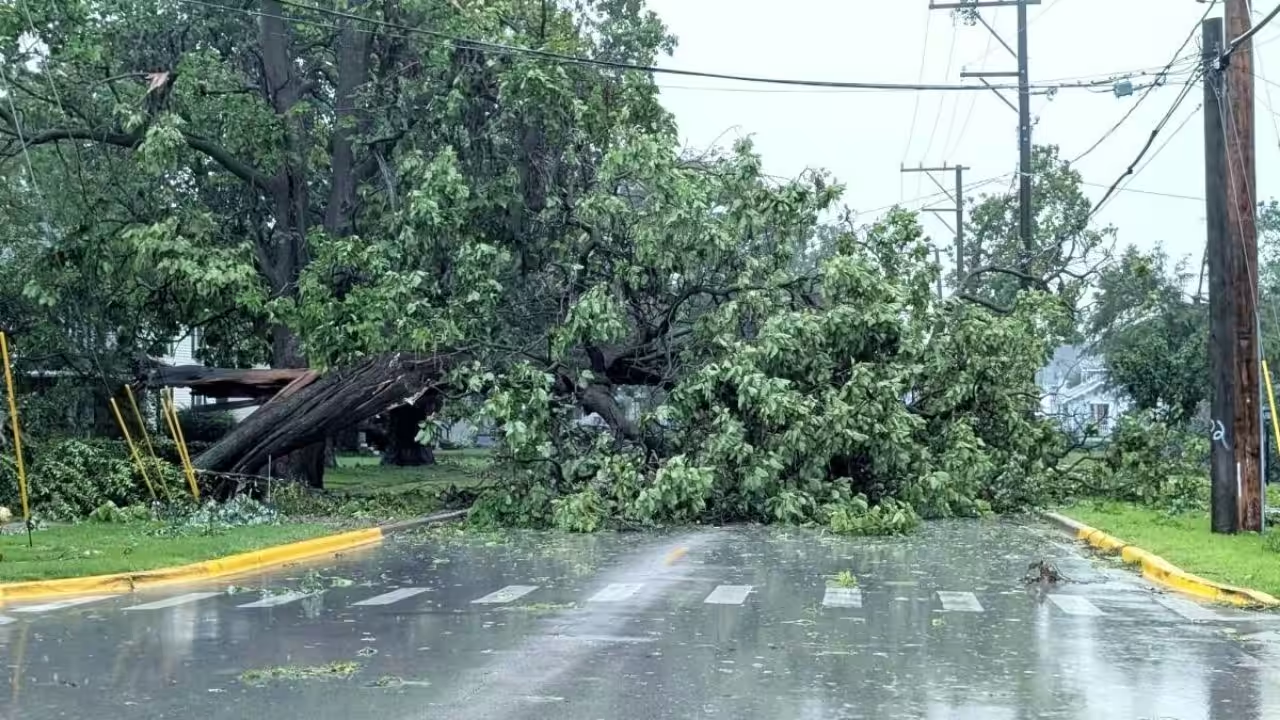
After a full week of heavy rainfall, drier conditions are expected to bring relief to the hardest-hit areas across the Upper Midwest. This break will allow saturated ground, swollen rivers, and flood-affected communities time to recover before the next system moves in.
Meanwhile, parts of southern Indiana, Ohio, and Kentucky may finally see increased rainfall as the weather pattern shifts, helping to offset the recent dry spell.






Leave a Reply