

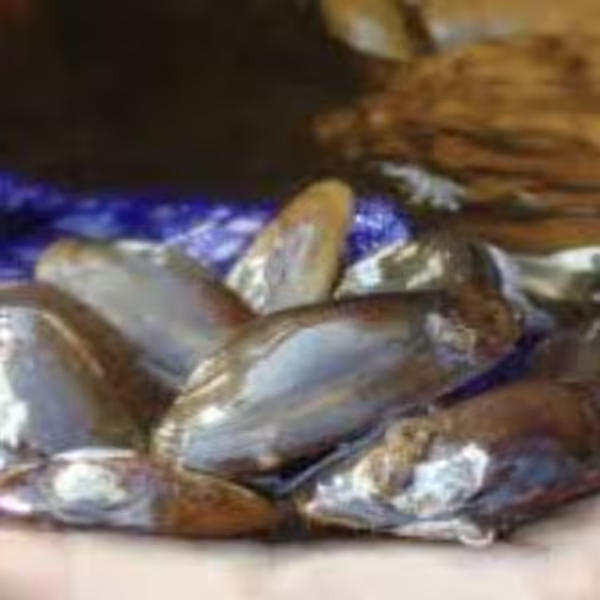
A new lawsuit alleges the U.S. Fish and Wildlife Service has failed to protect salamander mussels, a small but vital freshwater species whose populations in Kentucky streams face threats from pollution and habitat loss.
The Center for Biological Diversity, a national organization advocating for endangered species, filed the complaint on April 23, citing years of delay in finalizing protections for the salamander mussel under the Endangered Species Act.
In 2023, the U.S. Fish and Wildlife Service proposed listing the salamander mussel as endangered and designating more than 2,000 miles of waterways as critical habitat. More than 400 of those miles would include rivers and streams in Kentucky, including a significant stretch of the Licking River in the northeast.
According to the lawsuit, the agency missed the one-year deadline required under the Endangered Species Act to finalize the listing. Nearly three years later, the protections remain unresolved, leaving the species in limbo.
Endangered species protections and critical habitat designations are intended to safeguard vulnerable species and serve as a “crucial first step” toward recovery. These protections influence permitting and other actions that could affect at-risk populations but do not change land ownership.
“Salamander mussels once lived in 14 states from Tennessee to Michigan, but they’ve been lost from 40% of their historic range,” the Center for Biological Diversity said. “Roughly 80% of remaining populations are at high risk of disappearing.”
The species gets its name from its unique reproductive process, which depends on a host—the mudpuppy salamander. The mussel’s larvae attach to the salamander’s gills to absorb nutrients before dropping into the streambed, where they can live for up to a decade.
During that time, salamander mussels help clean waterways. Growing to about two inches long, they filter bacteria, algae, and contaminants, improving water quality. However, excessive pollution can overwhelm them, and their decline often signals broader environmental issues.
“They improve water quality in the same rivers and streams that our communities rely on,” said Michael Washburn, executive director of the Kentucky Waterways Alliance. “When a species like the salamander mussel is in trouble, it’s not just a biodiversity issue, it’s a water quality issue.”
Their specialized reproductive process and habitat needs make them especially vulnerable. Declines in mudpuppy salamanders, habitat disruption, or pollution can quickly threaten their survival and ecological role.
“When the fabric of an aquatic ecosystem begins to fray, mussels are often one of the first things to go,” Washburn said, noting that the loss of one species can trigger broader ecological damage.
“Salamander mussels will slide further toward extinction if the Trump administration continues to stall protections for this remarkable little animal,” said Laurel Jobe, an attorney with the Center for Biological Diversity. “These mussels filter contaminants from rivers and help keep our water clean. By protecting them, we’re also protecting the health of our communities.”
‘Delay isn’t neutral’
Most known salamander mussel populations in the U.S. are located in the Ohio River basin, which covers much of Kentucky. A 2023 U.S. Fish and Wildlife Service assessment identified 35 populations in the basin, many at high risk due to pollution such as agricultural runoff. Human alterations to waterways, including dams and channelization, also threaten their habitat.
Data on some populations remains uncertain, often based on decades-old surveys. In some high-risk areas in and around Kentucky, officials have not confirmed the presence of salamander mussels in more than 20 years.
Coal mining in Appalachia has also significantly impacted mussel populations, introducing toxic metals and contaminants into waterways and degrading hundreds of miles of streams.
Climate change adds further stress, with shifting rainfall patterns leading to flash flooding and drought, both of which disrupt aquatic habitats.
Kentucky’s State Wildlife Action Plan lists the salamander mussel as a high-priority species for conservation, citing pollution and ecosystem changes as major threats. The state has attempted to rebuild populations through hatchery programs at its Center for Mollusk Conservation.
On April 24, the U.S. Fish and Wildlife Service announced critical habitat designations across more than 3,800 river miles for four other endangered freshwater mussel species—rayed bean, sheepnose, snuffbox, and spectaclecase—including areas in Kentucky.
However, the salamander mussel was not included in that announcement, and the agency did not respond to requests for comment.
The agency has long faced a backlog of species awaiting Endangered Species Act decisions. According to the Center for Biological Diversity, no new species received federal protections in the past year—marking the first such lapse since 1981.
Meanwhile, waterways in Kentucky continue to face pressure from development, industrial pollution, and agricultural runoff, alongside efforts at both state and federal levels to scale back environmental regulations.
As legal and policy debates continue, advocates warn that delays in protection could have lasting consequences.
“Delay isn’t neutral when it comes to water and public health,” Washburn said. “Delay is a decision. And what that decision usually means is more pollution and fewer protections.”










Leave a Reply