


A magnetics company operating in Louisville will pay about $1.3 million to the federal government to resolve claims that it transferred sensitive military-related information to a Chinese firm without proper authorization and committed visa fraud.
Quadrant Magnetics will also pay an additional $1 million in fines tied to the allegations and a separate visa fraud charge, bringing the total to approximately $2.3 million.
The company will remain under federal supervision for two years. It must establish a compliance program to prevent violations of U.S. export laws and destroy any confidential information it holds in China.
Headquartered in San Diego, California, Quadrant opened its Louisville office in 2001. It manufactures magnets used in devices such as computers and smartphones, as well as in more advanced applications within the oil and energy sectors.
In a plea agreement reached in December, Quadrant pleaded guilty to one count of conspiracy to export and one count of conspiracy to commit visa fraud. Prosecutors dropped other charges, including wire fraud, smuggling goods from the U.S., and exporting technical data without a license.
The company admitted that between August 2017 and November 2018, it transferred schematics of rare earth magnets to a Chinese company without securing the required license from the U.S. State Department. General Electric Aviation Systems (GE Aviation) and General Dynamics, companies that work with the Department of War, formerly the Department of Defense, supplied the drawings. The documents included warnings stating that transferring them outside the U.S. required authorization.
Prosecutors said Quadrant sent the drawings to Hangzhou X-Mag and its non-U.S. employees to manufacture magnets in China. The Department of War requires rare earth magnets to be processed in the U.S. or another approved country, but prosecutors said the magnets involved in this case were processed in China.
According to prosecutors, the drawings were used in components for fighter jets, submarine systems, weapons motors, targeting systems, and infrared systems.
Quadrant also admitted to knowingly committing visa fraud from September 2014 to November 2021. The company acknowledged providing false information about an employee’s address, employment status, work location, and management responsibilities in an L-1 visa petition related to a November 2021 site visit. The L-1 visa allows multinational companies to temporarily transfer executives and managers from foreign offices to the U.S.
The charging documents and plea agreement identify the employee only as “C.Q.”
The plea agreement came about nine months after a federal judge declared a mistrial in a jury trial against Quadrant. Chief Judge David Hale of Kentucky’s Western District cited concerns that prosecutors failed to disclose all relevant material during discovery and did not provide all recorded witness statements before trial.
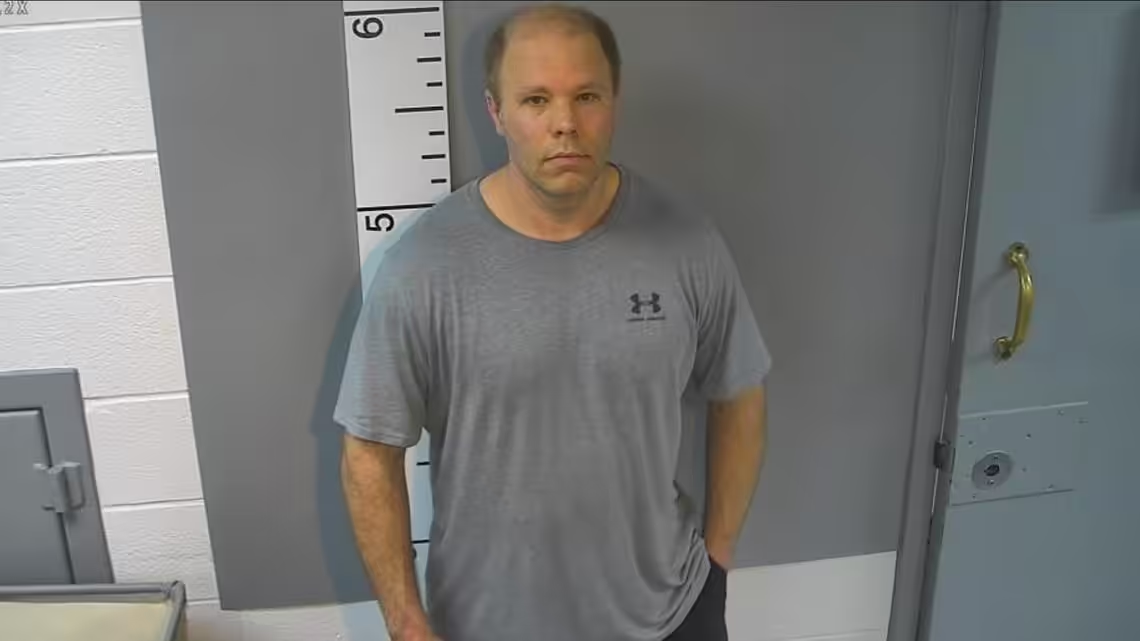
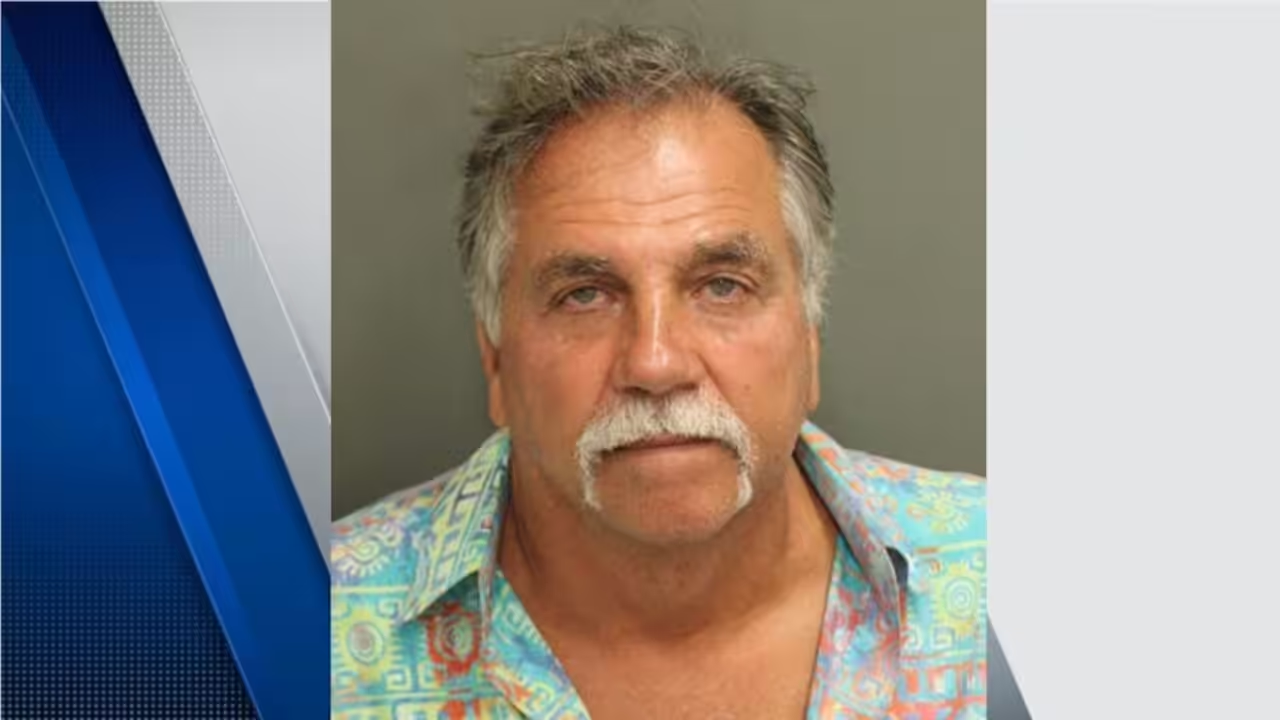
Two former executives at Quadrant’s Louisville facility — former president Phil Pascoe and Scott Tubbs, former vice president of sales and marketing — pleaded guilty separately in March 2025 to knowingly sending confidential drawings to Hangzhou X-Mag and concealing where the company processed and produced its magnets.
Pascoe received a 19-month prison sentence, while Tubbs was sentenced to three years of probation.
A third individual, former accounting manager Monica Pascoe, had previously pleaded guilty to conspiracy and received six months of pretrial diversion. The charge was dismissed in September 2024 after she completed the diversion period.










Leave a Reply