

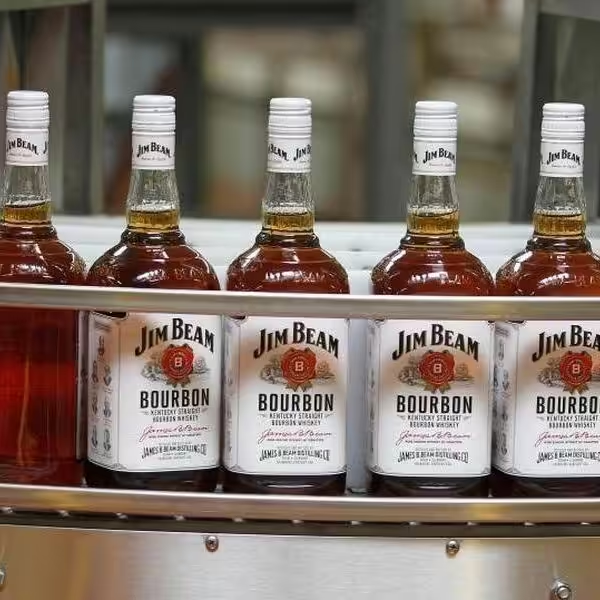
The ambition to build a bourbon empire has unraveled for a Kentucky distillery, as Luca Mariano Distillery in Danville is now mired in bankruptcy proceedings with more than $34 million in debt weighing it down.
The facility, which embodied the kind of vision that continues to draw entrepreneurs to Kentucky’s storied bourbon industry, has gone silent. Its parent company, LMD Holdings, filed for bankruptcy protection in July 2025, and the distillery itself followed just a few months later in November 2025. With creditors seeking to recover their losses, the entire operation is now headed to auction.
The downfall of Luca Mariano serves as a sobering reminder that not every distillery journey ends with aged bourbon flying off shelves and crowds lining up for tastings. The bourbon boom that has reshaped Kentucky over the past decade has produced both winners and losers, and Luca Mariano clearly falls into the latter group.
The newly built Danville facility was intended to represent Kentucky’s next wave of craft distilleries. Located in the heart of bourbon country, Danville benefits from limestone-filtered water and generations of distilling expertise that create ideal conditions for producing America’s native spirit. Like many towns across the state, it has watched the bourbon revival bring jobs, tourism revenue, and renewed pride in a tradition that stretches back centuries.
However, starting a distillery from the ground up demands massive upfront investment. Equipment such as copper stills, fermentation tanks, barrel warehouses, and bottling lines can cost millions before a single bottle is sold. Compounding the challenge is bourbon’s aging process, which requires years in barrels, forcing distillers to absorb ongoing expenses long before any revenue arrives.
The $34.5 million debt accumulated by Luca Mariano reflects a business unable to close that gap. Whether due to construction costs exceeding expectations, higher-than-anticipated operating expenses, or difficulty securing distribution and market share, the financial equation never balanced.
The timing of the collapse stands out. While bourbon sales continue to grow at home and abroad, competition has intensified. Kentucky’s distillery count has surged from fewer than a dozen in the early 2000s to well over 100 today. Industry giants such as Jim Beam, Maker’s Mark, and Wild Turkey command most of the shelf space, leaving craft producers to compete fiercely for what remains. Standing out requires more than quality whiskey—it demands sizable marketing budgets, strong distribution channels, and years of brand building.
For a new operation like Luca Mariano, those obstacles proved too great. The company failed to generate sufficient cash flow to service its debt, leading to bankruptcy filings that will now see the property sold to satisfy creditors. Any bourbon currently aging in barrels will likely be included in the bankruptcy estate, potentially bottled under another label or sold in bulk to other distillers.
Despite the failed venture, the facility itself still holds value. A modern, fully constructed distillery with permits and infrastructure could appeal to an established producer seeking more capacity, a private equity firm targeting distressed assets, or another entrepreneur confident they can succeed where Luca Mariano did not.
Distillery bankruptcies are not unprecedented in Kentucky. In recent years, several craft operations have stumbled as the market matured and early excitement gave way to tougher realities. Some were acquired and relaunched under new ownership, while others were dismantled, their equipment sold piece by piece.
For Danville, the shutdown represents a missed opportunity. Many small Kentucky towns have pinned economic hopes on bourbon tourism, aiming to capture even a small share of visitors drawn to the Kentucky Bourbon Trail. An operating distillery brings local jobs, attracts tourists who spend at nearby businesses, and generates tax revenue. A vacant facility does none of that.
The bankruptcy case will proceed in federal court, where creditors will file claims and the distillery’s assets will be assessed and valued. The property is expected to be sold through a court-supervised auction designed to maximize returns for creditors. The final sale price will depend on market conditions and the level of buyer interest.
Looming over the sale is a broader question about the bourbon industry’s direction. Is Luca Mariano’s failure simply the result of poor execution and misfortune, or does it hint at a wider market correction? Rapid expansion over the past 15 years has raised concerns about oversupply, especially as distilleries built during the boom begin releasing aged products into an already crowded market.
Bourbon consumption continues to rise both domestically and internationally. Exports of American whiskey have grown significantly, with strong demand in Europe, Asia, and other regions. Still, the pace of new distillery construction may have outstripped demand growth, creating challenges for smaller producers without scale or strong brand recognition.
For investors and entrepreneurs considering entry into the bourbon business, Luca Mariano’s collapse is a clear warning. The romance of bourbon making—gleaming copper stills, aging warehouses, and deep ties to Kentucky heritage—can mask the harsh financial realities. Achieving success requires deep capital reserves, realistic expectations for profitability, and the expertise to navigate a tightly regulated industry.
The distillery’s property and equipment will eventually find new owners, and the bourbon aging in barrels will reach the market. But the vision that launched Luca Mariano Distillery has ended, joining a long list of bourbon ventures that showed promise but fell short.
As bankruptcy proceedings continue and potential buyers assess the Danville site, the industry will be watching closely. The sale’s outcome will offer insight into asset values in a maturing market and signal whether investors still see opportunity in distillery projects today.
For now, Luca Mariano Distillery stands as a symbol of bourbon dreams delayed—a newly built facility that never had the chance to prove itself in an industry where reputation and time matter as much as what’s inside the bottle. The lingering $34.5 million question is whether anyone will step in to try writing a different ending.









Leave a Reply