

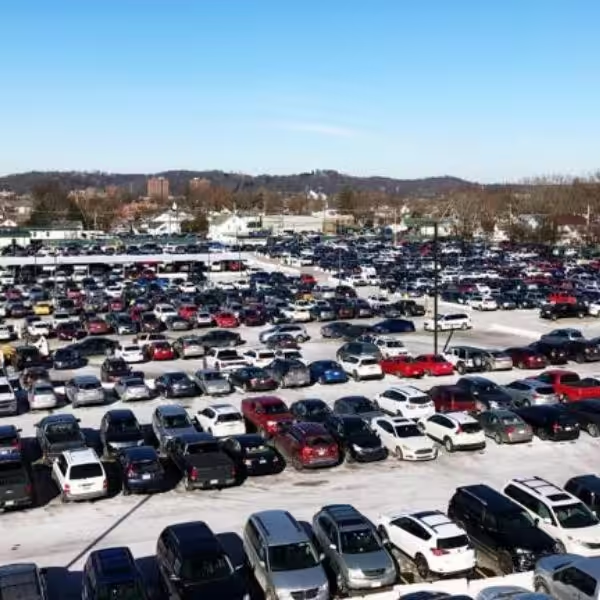
A sprawling subprime auto group has collapsed into bankruptcy after lenders uncovered what they describe as a $200 million fraud, leaving dozens of locations closed and thousands of borrowers uncertain about their loans. The alleged scheme, tied to a major loss at a regional bank, has become a cautionary tale of rapid expansion, weak oversight, and mounting stress among high-risk borrowers. While some reports cite 65 shuttered dealerships, that specific figure has not been independently verified.
The alleged $200 million scheme
The collapse began as what appeared to be a contained problem at a single lender. Fifth Third Bancorp later disclosed a roughly $200 million loss after tracing a network of falsified contracts and misrepresented collateral tied to a subprime auto operation. As investigators reviewed more accounts, the exposure widened, revealing inflated loan performance and concealed delinquencies used to keep credit lines open.
Lenders say executives relied on dealer-reported data that overstated borrower quality and vehicle values. When scrutiny increased, the funding that sustained the business evaporated, triggering a rapid unraveling across warehouse lenders and securitization markets tied to similar subprime structures.
A broader pattern of subprime failures
The implosion fits a wider trend in subprime auto finance. Tricolor Holdings, which focused on Hispanic and immigrant borrowers, filed for liquidation with more than $1 billion in liabilities after rising delinquencies and tighter funding conditions undermined its model. Analysts note that several subprime-focused lenders have faced similar pressures as higher interest rates, weaker consumer finances, and stricter capital markets narrowed the margin for error.
Dealership closures and disputed counts
While claims of 65 closed dealerships circulate, public records clearly document other large-scale shutdowns. USASF, a buy-here, pay-here operator, closed its 31 dealerships across the Southeast after filing for bankruptcy following a federal enforcement action that included a $42 million penalty. The discrepancy highlights how opaque the sector can be, especially when chains operate under multiple brands or structures.
What remains clear is that dozens of storefronts have gone dark nationwide, leaving customers with loans transferred to distant servicers and vehicles potentially subject to aggressive repossession efforts.
Familiar fraud tactics
Investigators say the alleged misconduct mirrors tactics seen in past real estate and retail finance scams: falsified applications, inflated asset values, and selective reporting to satisfy automated underwriting. These practices tend to flourish in high-volume environments with limited verification, where short-term growth incentives outweigh long-term risk controls.
Fallout for consumers and the economy
The scandal is unfolding amid broader credit stress. Rising delinquencies have prompted lenders to tighten standards, while higher funding costs have strained businesses that depend on leveraged consumers. Similar pressures are appearing across retail and industrial sectors, where limited access to liquidity has pushed more companies toward restructuring or bankruptcy.
What borrowers should do
For consumers caught in the middle, the immediate concern is identifying who now services their loan and what terms apply. State attorneys general and consumer protection offices handle complaints related to auto financing, repossessions, and deceptive practices. Borrowers are urged to document all communications, monitor accounts closely, and file complaints promptly if issues arise.
Experts also warn that large failures often attract secondary scams, including aggressive debt collection and payment fraud. Consumers should review statements regularly, obtain credit reports, and remember that legal protections remain in place even when a dealer or lender collapses.







Leave a Reply