

An Indianapolis man has been sentenced for threatening to shoot a Marion County judge.
Jordan Williams was sentenced to three years in home detention and two years on probation by a Hancock County special judge.
Williams admitted in a plea deal to threatening to shoot a judge.
As part of the plea agreement, Williams pleaded guilty to intimidation and had a cocaine possession charge dismissed.
According to court filings, Williams made the threat while on the phone with his girlfriend on February 9th, when she was an inmate at the Marion County Adult Detention Center. The next day, she was sentenced to a year in prison for violence with bodily harm to a public safety officer.
During the phone call, Williams’ girlfriend allegedly told him that the judge was likely to sentence her to prison. This is when he allegedly threatened the judge.
Every jail call is recorded. According to the transcript, Williams stated, “If they do, I’m shooting the f****** judge, and you’re getting out.”
Williams was already on probation and not permitted to possess a firearm. Later that day, police captured him at a home on South Randolph Street on Indianapolis’ south side. They allegedly discovered illegal substances on Williams, but no firearms.
All Marion County Superior Court judges were recused from the case. The case has been assigned to Hancock County Judge D.J. Davis, a special judge.
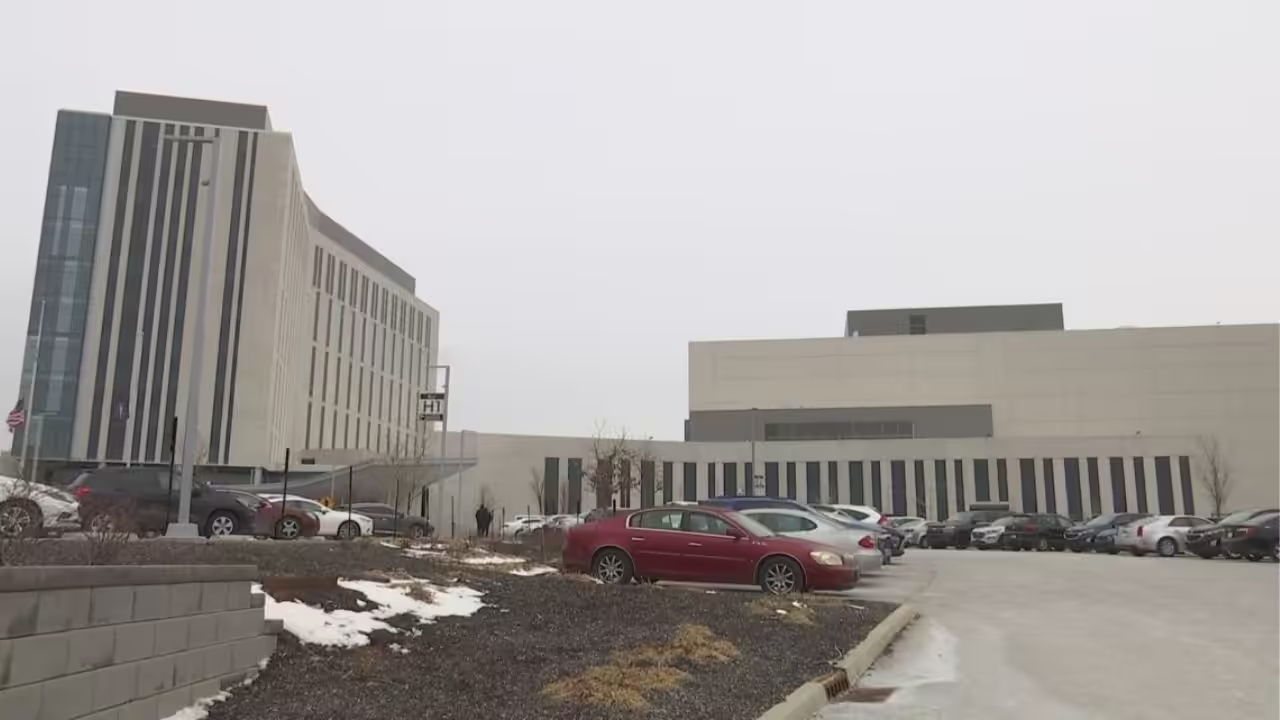
The Marion County Community Justice Campus began less than four years ago and has various security features not found in most regular courthouses. There is no public access to court offices or judges’ chambers.Concerns about judicial safety persist, according to Luke Britt, legal counsel and public information officer for the Marion County Superior Courts. “Internally, we have a rather solid set of protocols. We collaborate with both local law enforcement and the state court administration to give as much attentiveness as feasible to judicial personnel.”
The Marion County Sheriff’s Office oversees security at the Community Justice Campus.It is clearly at the top of our priority list to ensure that courthouse processes are conducted in a safe manner, not just for judicial officers and staff, but also for visitors to the courthouse,” Britt stated.
The Indiana Supreme Court issued a statement on Tuesday, February 24:
“According to the Code of Judicial Conduct, judges are not permitted to speak on the facts of a pending case. We continue to believe that the safety of our judges is of the utmost priority. Our judges across the state have resources available to assess the safety of their courthouses and homes. We are encouraged that legislation to protect the personal information of judges is being advanced through the House and Senate. We are grateful for all law enforcement that provide security in communities across the state. We are focused on enabling our judges to be safe and feel safe.”







Leave a Reply