

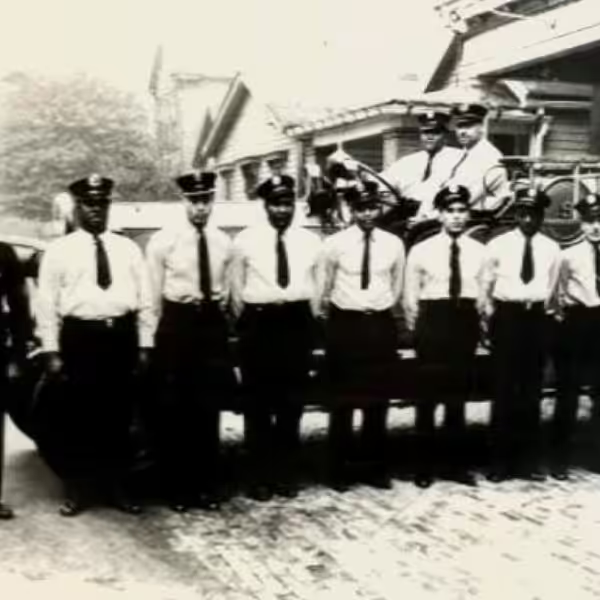
Their impact lives on in every station and shift within a department that now employs more than 500 firefighters.
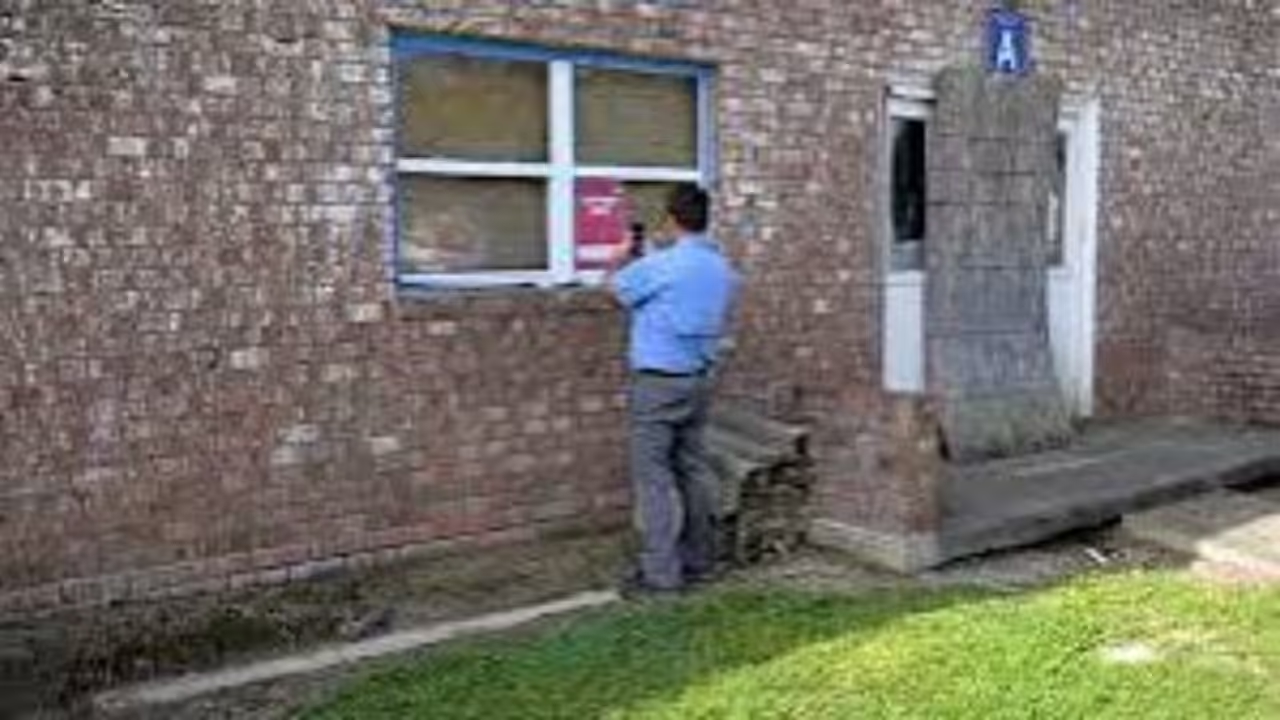
LOUISVILLE, Ky. (WDRB) — A century-old brick building on 13th Street, just south of West Broadway in Louisville’s California neighborhood, stands as a reminder of the city’s segregated past.
In December 1923, the building became home to Louisville’s first eight Black firefighters.
“Their footprint is forever a part of the Louisville fire service,” Donovan Sims said Wednesday.
Old Louisville Firehouse — Engine Eight
The building at 725 S. 13th St. housed Engine Eight, where those eight pioneers served. They fought fires alongside their white colleagues but worked separately because of segregation.
“They were doing something that was just unheard of,” Sims said. “It was bold. They were coming into a service that there was no one that looked like them.”
Soon after, Engine Nine opened as another Black firehouse. Sims said that station remains operational today.
For decades, the firefighters worked with unequal equipment, fewer opportunities for promotion and heavier workloads. The department did not integrate until the mid-1950s.
Around that time, Larry Bonnafon joined the Louisville Fire Department at just 18 years old, becoming the youngest recruit in its history.
Bonnafon advanced quickly through the ranks and, in 1979, became the department’s first Black chief.
“He was a great leader. He was compassionate,” Sims said. “First and only (Black chief) still today. Stepping up to the plate in the 70s, there were still a lot of things going on at that time.”
Bonnafon retired in 1986. His leadership — along with the legacy of Engines Eight and Nine — helped open doors for dozens of African American firefighters, including Sims.
“How can I not be thankful for someone taking that chance?” Sims said Wednesday.
Their legacy continues in every station and shift across a department of more than 500 firefighters, ensuring that every child and community member can see themselves represented in uniform.
“We want to embody what our city looks like,” Sims said. “They can see, like, ‘Hey, there’s somebody who is like me that is here to help me.’”
This article has been carefully fact-checked by our editorial team to ensure accuracy and eliminate any misleading information. We are committed to maintaining the highest standards of integrity in our content.










Leave a Reply