

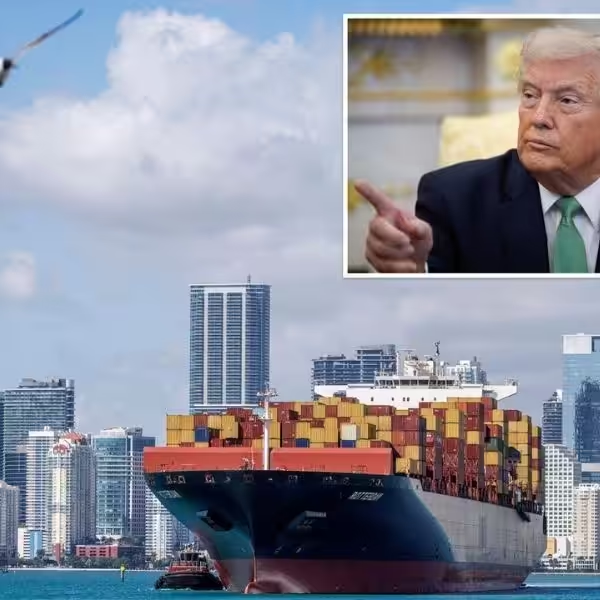
President Donald Trump has temporarily waived the Jones Act in an effort to ease rising costs of oil, gas, and other commodities amid tensions in the Strait of Hormuz that have pushed global oil prices higher.
Here’s what to know.
What is the Jones Act?
The Jones Act, formally known as the Merchant Marine Act of 1920, regulates shipping between U.S. seaports.
It requires that only American-built, American-owned, and primarily American-crewed ships transport goods between U.S. ports.
This law has limited impact on the continental U.S., where most goods move by land, but it plays a major role in places like Puerto Rico, Hawaii, Alaska, and Guam, which rely more on maritime shipping.
Lawmakers passed the act after World War I to reduce reliance on foreign vessels during wartime and strengthen the domestic shipping industry.
Did Trump suspend the Jones Act?
White House press secretary Karoline Leavitt said a 60-day waiver is intended to “mitigate the short-term disruptions to the oil market” as U.S. military operations continue under Operation Epic Fury.
U.S.-flagged shipping is generally more expensive than foreign alternatives, which is why the waiver could affect fuel costs.
What it means for gas prices
The temporary waiver could slightly lower gasoline prices along the East Coast—by about three cents per gallon—according to an analysis by the Center for American Progress. However, it could also raise costs in the Gulf Coast region.
Overall, the move aims to provide short-term relief in energy markets as global supply pressures continue.










Leave a Reply