

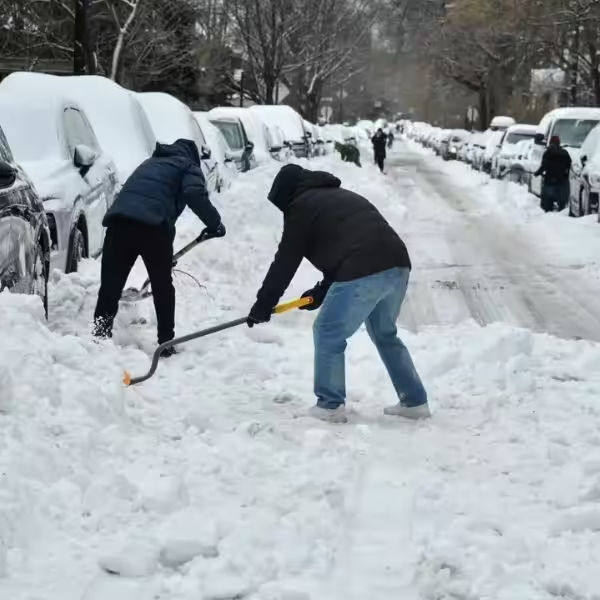
A winter storm that brought snow and ice across the South last weekend left some residents in Kentucky and Tennessee puzzled after experiencing a rare weather phenomenon known as a frost quake.
Ashley Lloyd felt her first frost quake on Monday, Jan. 26, 2026, at her rural home in Warren County near Richardsville. Sitting in her living room that night, she was startled by a sudden, powerful noise.
“It sounded like the house was falling in. It was the loudest boom,” Lloyd told WKU Public Radio. “It sounded like a dresser fell over in just one boom, and there was kind of a rocking sensation in the house.”
The event was a frost quake, often mistaken for an earthquake. Meteorologist Shane Holinde of the Kentucky Climate Center at Western Kentucky University explained that the scientific term for the phenomenon is cryoseisms, meaning cold quakes.
“These loud booms were caused by moisture seeping into the soil during the weekend storm that brought snow, sleet, and freezing rain,” Holinde said. “After the storm, temperatures dropped quickly into the single digits and near zero. That rapid freezing caused the ground to expand, creating the booming sound.”
According to the National Weather Service in Louisville, frost quakes can sound like a cannon blast, gunshot, or fireworks. The vibrations can be strong enough to shake buildings and rattle windows. Lloyd said the quake at her home lasted only a second or two but left visible damage, including three cracks in her living room wall near a wood-burning stove.
“It goes all the way down,” Lloyd said. “There’s a crack here in the middle and another along this side. It almost reaches the floor. You can’t miss it.”
Weather experts say frost quakes are uncommon and rarely cause serious structural damage. They are more frequently reported in colder regions, particularly in the northern United States and Canada.
Louisville meteorologist Marc Weinberg also shared video on social media showing a frost quake occurring in southern Kentucky.
Meteorologists note that as long as the ground remains moist and temperatures drop rapidly, additional frost quakes are possible, especially overnight when temperatures are lowest. While they can be alarming, experts say frost quakes are generally harmless.





Leave a Reply