

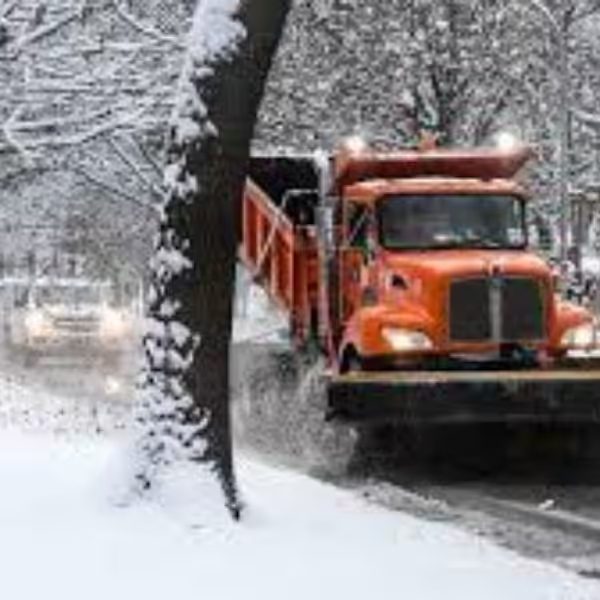
Cold temperatures and snowy conditions are expected in the Louisville area over the next few days. If ice builds up on power lines and trees, it could lead to power outages across the region.
Here’s how to prepare in case you lose power during freezing weather.
How to prepare for a power outage
The American Red Cross recommends keeping the following items in an emergency preparedness kit:
Coolers, either Styrofoam or reusable
Ice to help keep food cold and safe to eat for a longer time
A digital food thermometer to check internal food temperatures
Water, at least one gallon per person per day for two weeks. Bathtubs can be filled for non-drinking water
Flashlights and extra batteries. Avoid using candles due to fire risk
A battery-powered or hand-crank radio, if available
A first aid kit
A seven-day supply of medications and medical necessities
A cell phone and portable power banks
Copies of personal documents, emergency contact numbers, and extra cash
A full tank of gas in your vehicle
What to do during a power outage
If the power is out for less than two hours, perishable food should still be safe to eat. If the outage lasts longer than four hours, food in the refrigerator should be thrown away. According to the Red Cross, food in an unopened freezer remains safe for up to 48 hours if the freezer is full, or 24 hours if it is mostly empty.
Additional safety tips during a power outage include:
Keep refrigerator and freezer doors closed as much as possible. Use food from the refrigerator before opening the freezer, and eat non-perishable food last
If the outage is expected to last more than a day, move some food into coolers with ice
Store food in dry, cool areas and keep it covered
Turn off and unplug unnecessary electrical equipment
Unplug appliances that were in use when the power went out to prevent damage from power surges
Leave one light on so you know when electricity has been restored
Avoid leaving your home unless absolutely necessary, as traffic lights may not be working and road conditions could be hazardous
If using a portable generator, plug equipment directly into the generator outlets and do not connect it to your home’s electrical system
Read and follow all generator safety instructions and ensure carbon monoxide alarms are working
Never use generators, grills, camp stoves, or fuel-burning devices indoors, and keep them away from doors, windows, and vents
What to do when the power returns
Once electricity is restored, avoid touching or going near any downed power lines. Any fallen lines should be reported to local authorities.
Red Cross officials advise against taste-testing food after a power outage. Throw away any food that has been above 40 degrees for more than two hours or shows unusual odor, color, or texture.
If the freezer temperature stayed below 40 degrees and ice crystals are still present, the food can be safely refrozen.
Appliances, lights, chargers, and other electrical items can be plugged back in after the power is fully restored.





Leave a Reply