

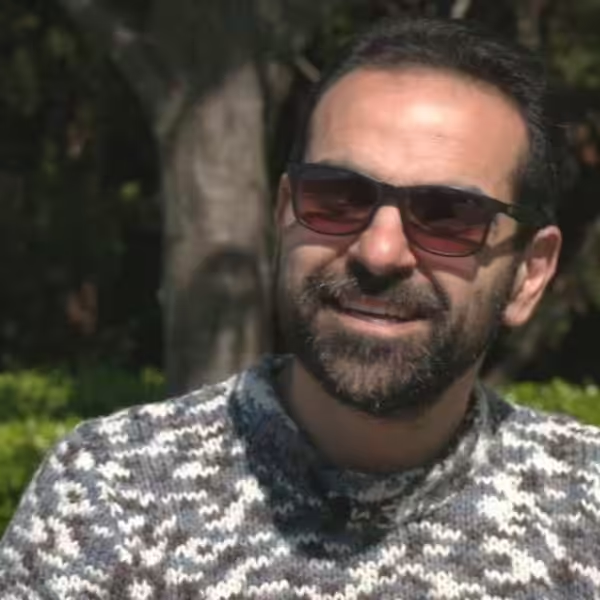
LOUISVILLE, Ky. (WDRB) — A man who grew up in rural Iran said the freedoms he discovered in America once felt unimaginable — even something as simple as helping fund a park bench.
Naeim Torkian moved to the Louisville area about 15 years ago after being sponsored by his employer. Now a U.S. citizen, his journey began in a small town roughly 300 miles from Tehran, a place he said is known for raising horses.
He came to the United States in pursuit of what he calls the American dream, especially the freedom to practice his religion. Torkian follows the Bahá’í faith, a minority religion that he said could have put his life at risk in Iran.
“Over there, I’m minority. Not here,” he said. “I’m enjoying the freedom. And I’m glad that I’m here.”
That sense of freedom led him and a group of friends to raise money for a park bench near the entrance to the Big Four Bridge in Jeffersonville. Though small, he said the act represents something meaningful that would not have been possible in Iran.
“You kind of donate that to the city… just have something good for good causes,” he said.
Torkian said openly practicing his faith or speaking publicly could have brought serious consequences in his home country. He believes both he and a reporter would have faced danger if the same conversation had taken place there.
“To me, because no one knows me, I will disappear forever, it happens to lots of people,” he said, describing what he views as zero tolerance for opposing voices.
Using Google Maps, he pointed out the street where he grew up. Some of his family and friends still live there, and he said several have recently been detained. He now tries to speak out on their behalf.
“I try to be their voice… they caught them a couple months ago and we don’t have any type of information. We don’t know where they are or what they are doing,” he said.
Staying in touch with his parents has become increasingly difficult due to limited communication access. Internet service is nearly unavailable, and phone calls are rare and brief.
“Right now… the way I’m communicating with them is through the landline that they could call maybe every other week,” he said. “The calls that I’m getting is about maybe one or two minutes — really limited, really bad quality.”
Despite these challenges, Torkian said he has no plans to return to Iran permanently, though he would consider going back one day to help rebuild if conditions improve.
He said opportunities in the U.S.—such as education, travel, and economic freedom—were out of reach for him before.
“I would never get a chance to go to university because of my religion. I would never get a chance to buy a car… buy a house… visit 25 countries,” he said. “The passport I used to have is not going to be as powerful as the U.S. passport that I have now. I have lots that I gained here.”
Torkian believes there is a clear distinction between the Iranian people and the country’s leadership.
“They say Islamic Republic versus people of Iran. These are two different groups. One is taken hostage by the other,” he said.
He worries that without change, Iran could become even more isolated. Still, he said he remains grateful for the life he has built in the United States and for the freedom to speak openly.






Leave a Reply