

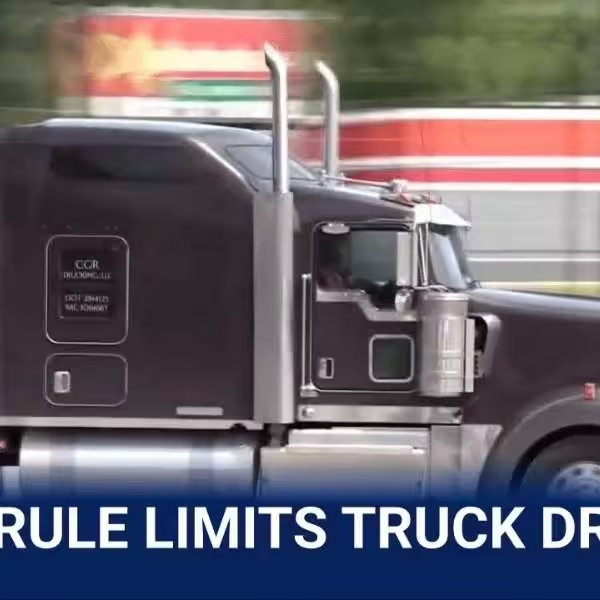
A recent shift in federal enforcement is reshaping the U.S. trucking industry, as new rules limit who can legally obtain or renew a Commercial Driver’s License (CDL). The changes, which took effect March 16, are already impacting training schools and aspiring drivers, especially foreign nationals.
The issue was highlighted in a YouTube report titled Federal rule limits foreign CDL drivers, which explored how the policy is unfolding in Oklahoma.
At the center of the change is a federal rule restricting CDL eligibility to specific visa categories. This marks a significant tightening compared to previous years, when a broader group of foreign drivers could qualify.
Under the updated guidelines, many individuals who were once eligible may now be disqualified when attempting to renew their licenses.
Impact on Training Schools
Training institutions are already feeling the effects. Oklahoma-based Superior Truck Driving Academy said it has turned away students who no longer meet the updated requirements. In some cases, the school refunded applicants who had already started enrollment before discovering they were no longer eligible.
According to the academy’s director, the issue goes beyond individual drivers. Many affected applicants had followed the rules in place at the time, only to be caught off guard by the sudden policy shift.
The situation is further complicated by concerns that some licensing authorities may not have consistently enforced stricter standards in the past.
Training Quality and Safety Concerns
The rule change also highlights broader concerns about the quality and oversight of truck driver training programs. Industry experts warn that not all schools maintain the same level of rigor.
Some programs reportedly allow students to take licensing tests with minimal hands-on driving experience. In extreme cases, drivers have had less than three hours of real driving time before attempting CDL exams.
These practices raise serious safety concerns, given the complexity of operating heavy commercial vehicles. In contrast, established training centers emphasize extensive preparation, including weeks of instruction and the use of advanced simulators.
Such simulators replicate real-world conditions, including navigating oil field terrain or handling partially loaded tanker trucks, where fluid movement can affect vehicle stability.
Oklahoma’s strong oil and gas industry adds another layer of complexity, requiring drivers to operate specialized equipment like tanker trucks and double trailers. Training programs that include this experience say it is critical for ensuring safety and competence.
The Bigger Picture
The debate reflects a broader challenge within the trucking industry. While the new rule aims to tighten eligibility and improve compliance, it could also shrink the driver pool at a time when labor shortages persist.
At the same time, concerns about inconsistent training standards suggest a need for stronger oversight to ensure all licensed drivers meet consistent competency levels.
Some industry voices argue that reforms should focus not only on restricting access but also on improving training and enforcement standards. Without uniform oversight, underqualified drivers could still end up on the road.
Transportation Secretary Sean P. Duffy voiced strong support for the new rule.
“Unqualified foreign drivers pose a significant safety threat to the driving public. These reforms will address safety concerns by preventing foreign drivers who have not been subject to consular and interagency screening from receiving a commercial driver’s license,” Duffy said.












Leave a Reply