

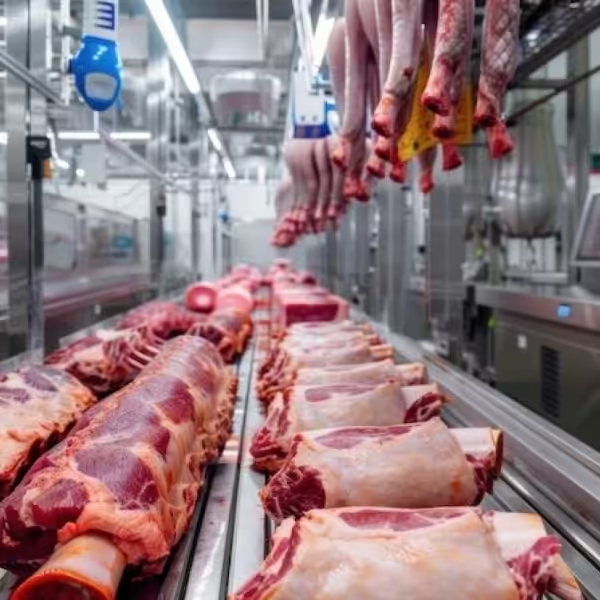
The final fairness hearing concluded this week in the class-action lawsuit Louisville residents filed against the JBS Swift pork plant in Butchertown. However, experts argue the proposed settlement would not resolve ongoing environmental and animal welfare concerns tied to industrial slaughterhouses.
Christine Ball-Blakely, senior staff attorney at the Animal Legal Defense Fund, said JBS ranks among the nation’s largest meatpacking corporations and has a long record of violations. She added that the Trump administration has signaled plans to further loosen slaughterhouse regulations.
“As a result of that, both human and animal welfare are compromised,” she said. “This case is a great example of how industrial animal agriculture harms humans, in addition to animals.”
The class-action lawsuit claims the facility releases “noxious odors” affecting nearby neighborhoods. Under the proposed settlement, the company would contribute $500,000 to a fund distributed to residents living within one mile of the plant who completed the claims process. JBS did not admit wrongdoing as part of the agreement.
Ball-Blakely said humane animal treatment directly connects to contamination risks and food safety, as well as air and water pollution. She noted research shows slowing slaughter speeds can reduce physical injuries among workers.
“Slaughterhouse work is extraordinarily dangerous,” she said. “It’s one of the most dangerous jobs that exists in the United States, and the folks who are doing that sort of work tend to be members of marginalized communities.”
Ball-Blakely added that nearly all meat, dairy and egg products sold in supermarkets originate from factory farms and are processed in large industrial facilities.
“The industry does not want the public to see how much animals are suffering in this system,” she said. “They don’t want us to see the unsanitary conditions in which the animals are confined, and transported, and ultimately processed.”
JBS has also drawn scrutiny from federal regulators over child labor violations. In 2025, the U.S. Department of Labor announced the company would pay $4 million to support individuals and communities impacted by unlawful child labor practices.



Leave a Reply