

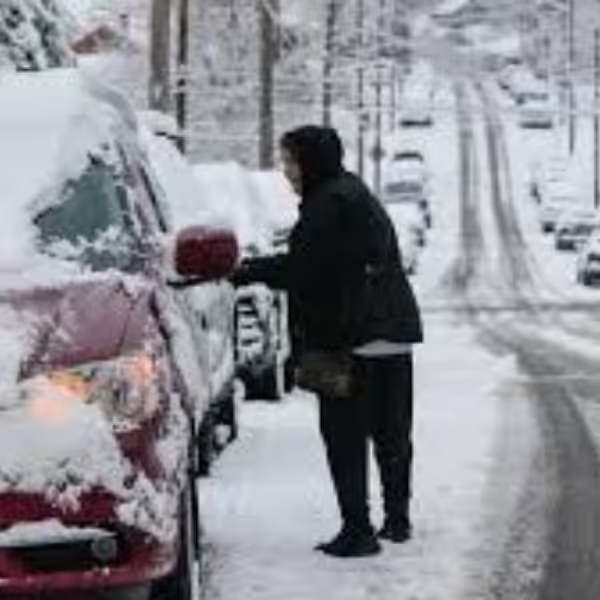
A major winter storm forming in the southwestern United States is expected to bring heavy snow, freezing rain, and sub-zero temperatures from New Mexico to New England over the coming days.
In Kentucky, some areas could receive more than 12 inches of snow, according to the National Weather Service in Louisville.
“This will be a large and potentially historic storm, with major impacts over a very large area, including more than two dozen states,” AccuWeather meteorologist Bob Larson said in an email to USA TODAY.
Several states, including Georgia, North Carolina, and Virginia, have already declared states of emergency ahead of the storm. Here’s what to know.
When does the snowstorm start?
While the exact timing will vary by location, forecasters say the storm, bringing widespread snow and ice, is expected to arrive Friday, Jan. 23, and continue into the weekend.
Snow is forecast to stretch from the Southwest to the Northeast. Larson said parts of Pennsylvania, Maryland, West Virginia, and Virginia could see up to 24 inches of snow or more.
In Kentucky, snow is expected to begin around 5 a.m. Saturday, Jan. 24. A winter storm warning will be in effect for all of Kentucky and parts of Indiana from 1 a.m. Jan. 24 through 7 a.m. Jan. 26. Louisville will also be under a cold weather advisory from 7 p.m. Jan. 23 until noon Jan. 24.
How long will the snowstorm last?
The National Weather Service said the system producing widespread heavy snow, sleet, and dangerous freezing rain will begin impacting the central United States on Jan. 23 before moving toward the East Coast through Jan. 25. The storm could linger in New England through Jan. 26.
Officials are urging people to stay home and avoid travel due to hazardous conditions.
See snowfall totals nationwide
Residents can track snowfall amounts by checking USA TODAY’s snowfall tracker.
Winter weather safety
The weather service warned residents to prepare for life-threatening cold, with the risk of frostbite and hypothermia increasing sharply by the weekend.
“These wind chills will pose a life-threatening risk of hypothermia and frostbite to exposed skin,” the weather service said. “Power outages caused by the winter storm could further increase this danger.”
Officials recommend preparing an emergency kit and ensuring emergency heat sources are properly ventilated to reduce fire risk. Anyone going outside should wear multiple layers, including hats, boots, and gloves. Staying dry, drinking warm beverages, and checking that carbon monoxide detectors are working properly are also advised.
Residents are encouraged to check on neighbors, protect pets, and learn the signs of hypothermia in case they become stranded in the cold.




Leave a Reply