

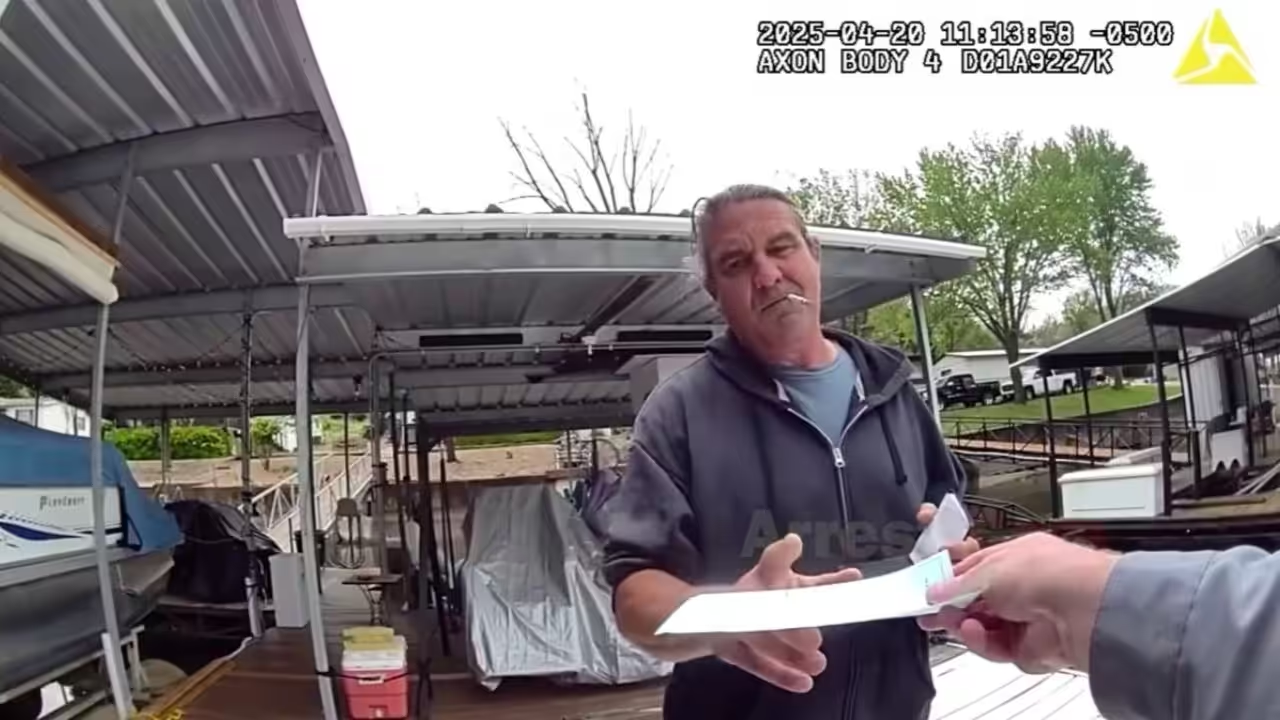
A Missouri angler received a citation, a fine and points on his fishing license after conservation agents got a tip that he might be keeping more crappie than the lake’s daily limit allowed, even though he was fishing from his own dock and initially believed he was following the rules.
The bodycam channel Arrest Cam featured the case, and its host said Missouri generally allows anglers to keep up to 30 crappie per day, but some lakes impose lower limits and different minimum-size requirements. On the lake involved in this encounter, the daily limit was 15 crappie per angler, with a possession limit of 30.
According to the channel, conservation agents responded after receiving an Operation Game Thief report indicating that a man fishing from his dock was likely over the legal daily limit.
Agent Finds 16 Crappie In The Basket
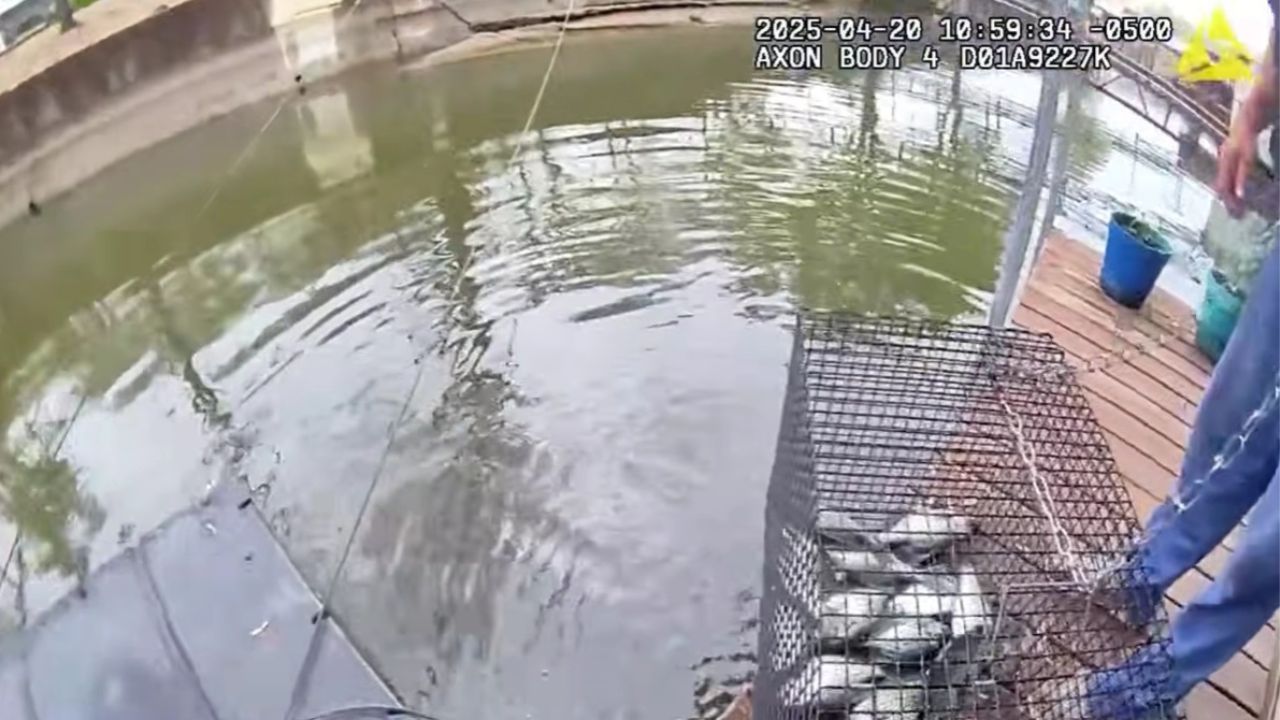
Bodycam footage shows a conservation agent approaching the fisherman casually and asking whether the crappie were biting before requesting to see his fishing permit.
The man said he had been using minnows and jigs and told the agent he had “a couple” of fish.
When the agent asked to look at them, however, the basket contained more than the angler initially estimated.
Agent Finds 16 Crappie In The Basket
After counting through the fish, officers eventually determined that there were 16 crappie in the basket.
The angler initially appeared to believe he and his wife could collectively possess more fish, telling the agents that his wife was there as well and asking whether they were allowed to have 30.
One officer explained that the lake’s daily limit was 15 per person, while the possession limit was 30.
The distinction turned out to be important.
The Angler Says Some Fish Were From The Night Before
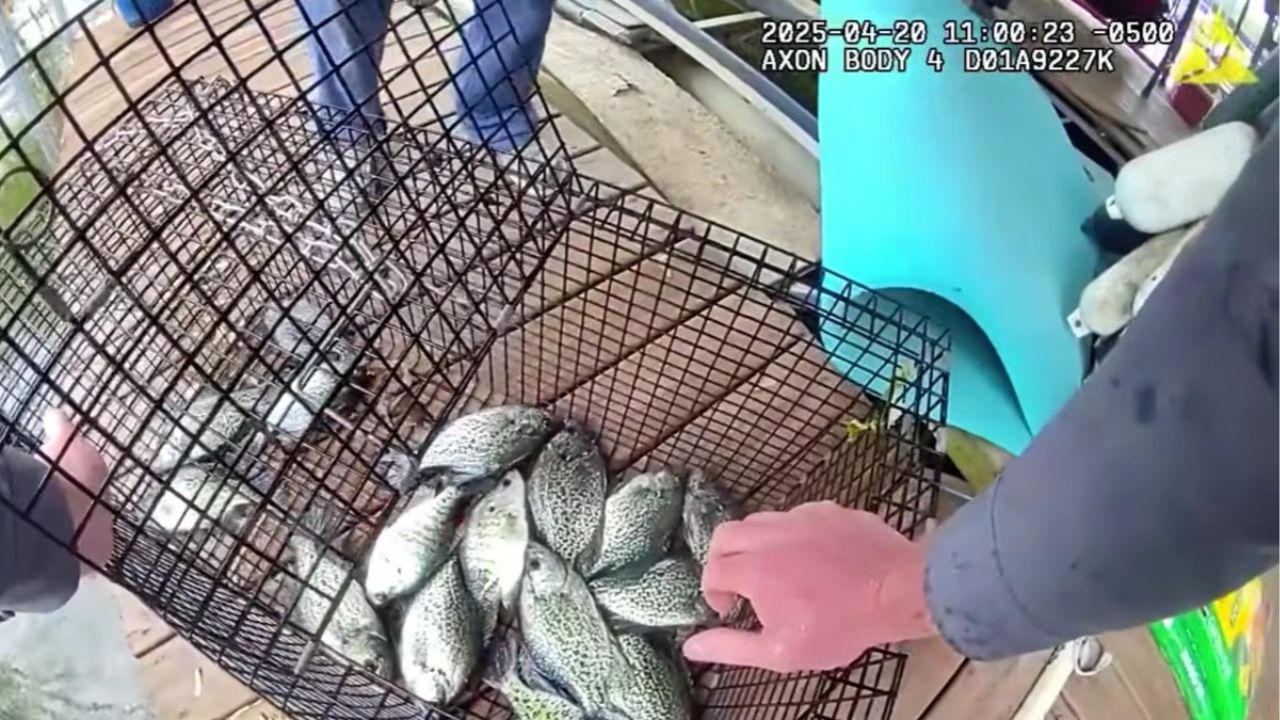
The fisherman told officers that some of the crappie had been caught the previous night, estimating that about eight of them came from that earlier fishing session.
The officers explained that the problem was that all of the fish were together in the same basket, leaving no way to determine which had been caught the previous day and which had been caught that day.
The man also acknowledged that he had personally caught all of them.
“So she didn’t catch any in here?” one agent asked.
“No,” the angler replied.
That answer effectively removed the possibility of dividing the catch between two people’s daily limits.
The officers told him that if he were sitting on the dock actively fishing with 15 crappie in his possession, they would simply tell him to stop fishing, but once the count reached 16, he was technically over the lake’s daily limit.
The situation offers a good example of how fishing regulations can become more complicated than simply knowing a statewide number. Daily limits, possession limits and rules about identifying which angler caught which fish can all matter, especially when multiple people are fishing together.
Officers Explain Why The Fish Must Be Identifiable
The agents also explained that if the fisherman and his wife wanted to keep fish together, they needed some way to identify which fish belonged to which person.
That did not necessarily mean two completely separate baskets, although that would have solved the problem.
Officers Explain Why The Fish Must Be Identifiable
Instead, one officer said the law requires catches to be separate or otherwise identifiable.
He gave examples of anglers using a hole punch on a fin or clipping fins in a particular way so that an officer could immediately determine whose fish were whose.
“If I reach in and pull one out, you have to say, ‘Well, that one’s mine,’” the agent explained, adding that the angler would need some objective way of proving it.
Because the fisherman said all 16 belonged to him, that issue became secondary in this case, but it still offered useful guidance for future trips.
One Fish Is Removed Before Citation Is Issued
After confirming the count and talking through the rules, an officer removed one of the smaller crappie from the basket so the fisherman would no longer remain over the limit.
The agents then issued him a citation for possession of crappie in excess of the daily legal bag limit.
The exchange remained calm throughout.
The officer explained that the fisherman could either resolve the citation online or appear in court, and he provided paperwork listing a June 24, 2025, court date in Camden County.
The fisherman did not argue with the officers or dispute the citation once they explained the rule.
That low-key interaction stands out because the underlying violation involved only one fish over the limit, yet wildlife regulations generally get enforced by the number, not by how close someone came to staying legal.
The Arrest Cam host said the angler later pleaded guilty to the violation.
A judge ordered him to pay $147.50 in fines and court costs, which the channel said he later paid.
He also received four points on his fishing license.
Arrest Cam Says He Later Pleaded Guilty
The case therefore ended without an arrest or any larger confrontation, but it still carried consequences beyond simply throwing one fish back.
For anglers, the lesson is fairly straightforward: knowing the statewide crappie limit is not enough if the lake being fished has its own lower bag limit.
In Missouri, Arrest Cam noted that the general daily limit is 30 crappie, but some waters reduce that number to 15 and may also impose minimum-size requirements of nine or 10 inches depending on the location.
A Neighbor Tip Led To The Check
The enforcement contact began because someone reported the angler through Operation Game Thief, according to the channel.
That detail makes the encounter somewhat unusual because officers didn’t stop the man while he was traveling with a cooler or check him at a boat ramp; conservation agents came directly to his dock after receiving information that he may have been over the limit.
From there, the officers simply counted the fish and compared the number with the lake’s regulations.
The fisherman’s explanation that some crappie had been caught the night before did not resolve the issue because the officers could not distinguish those fish from the ones caught during the current day.
In the end, the difference between being legal and receiving a citation came down to a single crappie.
The case shows why bag limits can become surprisingly technical once possession rules enter the picture, especially for people who fish from home and keep multiple days’ catches in the same place. A person may believe they are under the total possession limit and still violate the daily limit if the fish cannot be clearly separated or identified.
For this Missouri angler, that misunderstanding ended with a guilty plea, $147.50 in costs and fines, and four points added to his fishing license.











Leave a Reply