

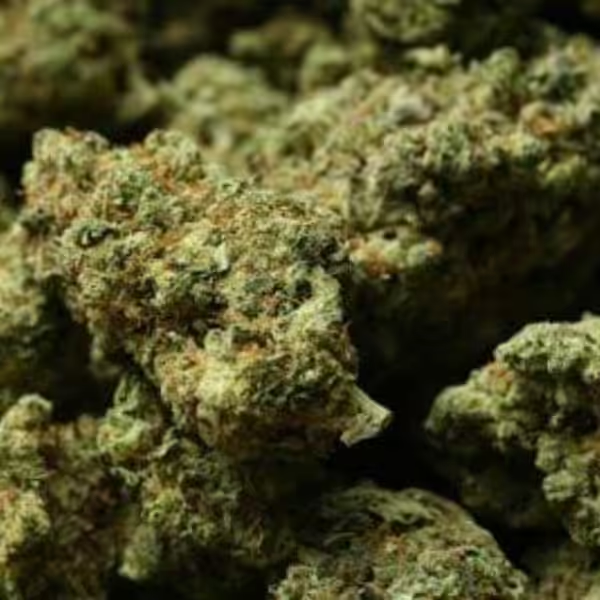
A major federal policy shift is changing how medical marijuana is regulated across the U.S., including in Kentucky. The U.S. Department of Justice has moved certain medical marijuana products from the strictest drug category to a less restrictive one—potentially reshaping research, access, and the industry.
What changed?
Acting Attorney General Todd Blanche signed an order on April 23 reclassifying state-licensed or FDA-approved medical marijuana from Schedule I to Schedule III under the Controlled Substances Act.
- Schedule I: Previously grouped with drugs like heroin and MDMA—considered to have no accepted medical use.
- Schedule III: Now aligned with medications like codeine combinations and certain controlled prescriptions.
👉 Important: This does NOT legalize marijuana federally, but it significantly loosens restrictions.
Why this matters
1. Easier medical research
Scientists have long faced barriers studying cannabis due to its Schedule I status. This change allows:
- More clinical trials
- Better data on safety and effectiveness
- Increased involvement from universities and medical institutions
2. Boost for the medical cannabis industry
Reclassification helps businesses by:
- Simplifying regulatory compliance
- Improving access to banking and tax structures
- Allowing easier registration with the Drug Enforcement Administration
3. Potential improvements in patient care
Doctors may gain:
- More reliable prescribing data
- Better understanding of dosage and treatment outcomes
Patients could benefit from:
- More standardized products
- Expanded treatment options over time
What it means specifically for Kentucky
Medical marijuana is already legal in Kentucky, after legislation signed by Andy Beshear in 2023, with the program launching in 2025.
Here’s how the new federal shift could affect the state:
- Faster program development: Producers and distributors may face fewer federal hurdles
- More research partnerships: Universities in Kentucky could expand cannabis studies
- Regulatory alignment: State systems may adapt to match updated federal guidelines
However, state officials have not yet outlined specific changes in response to the order.
What hasn’t changed
- ❌ Recreational marijuana remains illegal in Kentucky
- ❌ Marijuana is still not fully federally legal
- ❌ Strict regulations still apply to production and distribution
What happens next?
The federal government is moving toward a broader review of marijuana classification, with a hearing scheduled for June 29. That process could determine whether cannabis is reclassified nationwide—not just for medical use.
Bottom line
This shift doesn’t legalize marijuana, but it signals a major policy evolution. For Kentucky, it opens the door to:
- More research
- Stronger medical programs
- Gradual normalization of cannabis in healthcare
The real impact will depend on how federal agencies and state regulators follow through in the coming months.












Leave a Reply