

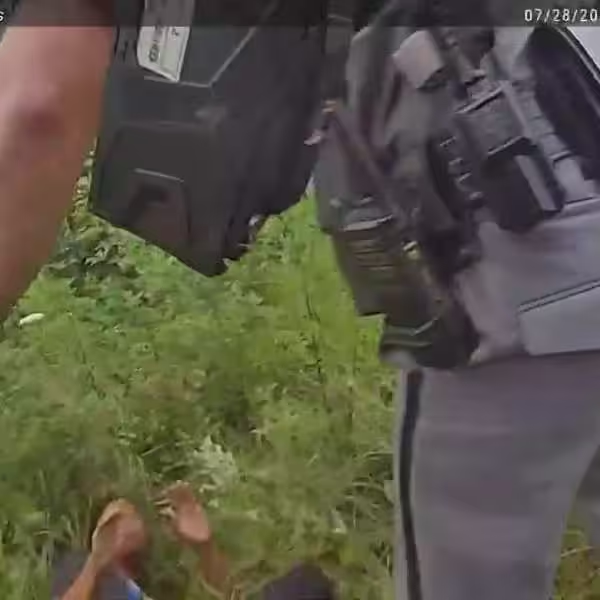
Newly released body camera footage from Kentucky State Police shows why former Trooper Hayden Kilbourne ultimately lost both his job and his freedom, according to civil rights attorney John Bryan.
Bryan, known for analyzing police conduct cases, described the footage as “unacceptable,” saying Kilbourne’s actions were “out of line and rightfully prosecuted.” After reviewing the video, he argues the evidence clearly explains the outcome.
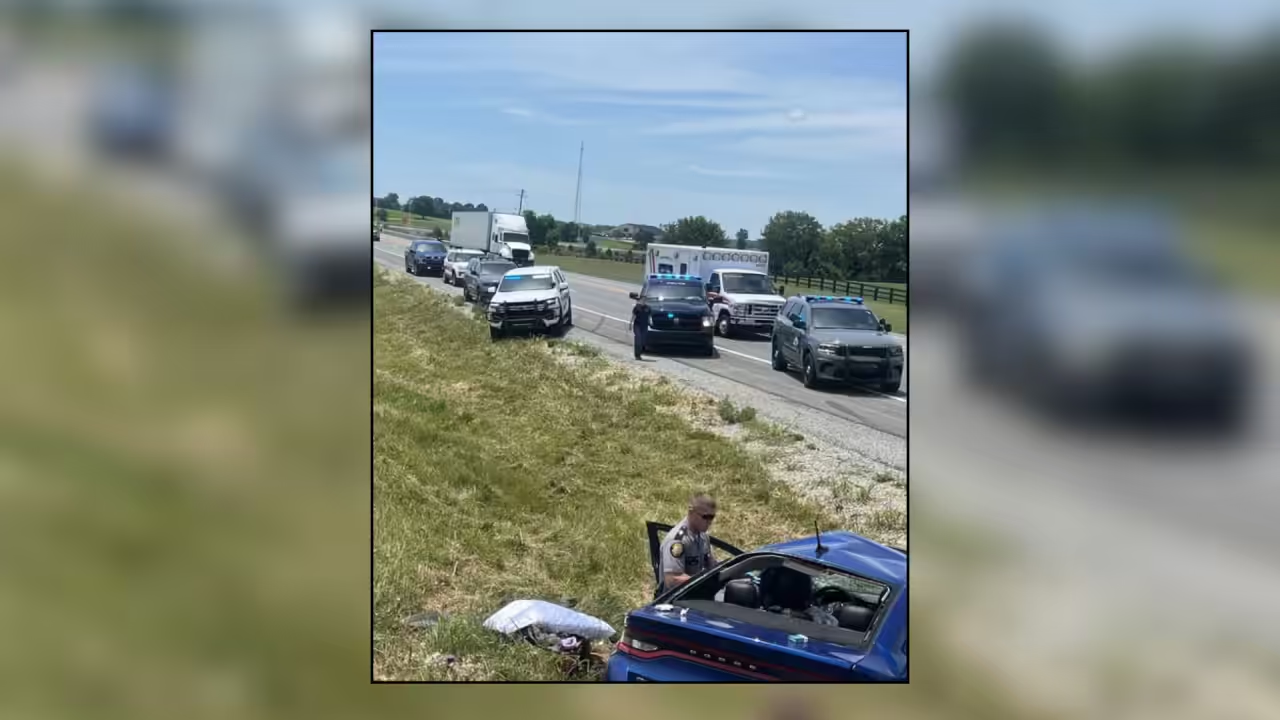
The incident dates back to July 28, 2023, when Kentucky State Police pursued a suspect reported to be armed and driving a stolen vehicle. Officers used a tire deflation device to slow the car before forcing it to stop. The suspect, later identified as Robert Kidd, then fled on foot into a wooded area.
Bryan acknowledged the situation was dangerous. Kidd had led a pursuit, was believed to be armed, and continued to flee. Under those conditions, officers are allowed to use force. However, Bryan argues the legal justification changed once the suspect was no longer resisting.
What the footage shows
During the chase, Kilbourne can be heard issuing repeated commands along with threats, including, “Show me your hands. I will kill you.” Bryan says those statements help reveal the trooper’s mindset.
Kilbourne eventually used a taser, which caused Kidd to fall. Bryan noted that this use of force was likely justified at that stage since the suspect was still fleeing.
But the situation shifted after Kidd went to the ground.
According to Bryan, the footage shows Kidd attempting to comply by showing his hands. Instead of moving to handcuff him, Kilbourne repeatedly struck him with a baton while continuing to shout commands.
Bryan points to this moment as the turning point in the case.
Why the force was considered excessive
Bryan analyzed the incident using the legal standard from the U.S. Supreme Court case Graham v. Connor, which evaluates use of force based on the severity of the crime, threat level, and whether the suspect is resisting.
He said the first two factors could support police action. However, the third — whether the suspect was actively resisting — became decisive.
Bryan argues the footage shows Kidd was no longer fleeing or resisting in a way that justified continued force. Instead, he appeared to be complying while being struck.
In Bryan’s view, once resistance ended, the continued use of a baton crossed the legal line.
Discipline, charges, and prison sentence
Kentucky State Police initially handled the case internally. On August 2, 2023, the agency determined Kilbourne used excessive force, and Commissioner Phillip Burnett issued an intent to terminate him.
However, Kilbourne challenged the decision, and a trial board instead imposed a six-month unpaid suspension.
The case later moved into the criminal system. Kilbourne was charged with second-degree assault and third-degree terroristic threatening and arrested in September 2023.
He remained employed in a limited role while the case proceeded.
In January 2026, Kilbourne pleaded guilty and was later sentenced to five years in prison. He is now incarcerated in the Laurel County Detention Center and is no longer eligible to work in law enforcement.
Questions remain about accountability
Bryan also raised concerns about another trooper, Jake Noel, who was reportedly present during the incident but was not disciplined. According to the suspect’s attorney, Noel did not intervene during the beating.
Bryan noted that officers have a duty to step in if another officer uses unlawful force, suggesting this aspect of the case raises additional legal and ethical questions.
He also questioned whether the outcome reflects true accountability or whether the clarity of the video evidence forced action.
A rare but revealing case
Bryan concluded that the footage leaves little doubt about Kilbourne’s actions and justifies the criminal conviction.
However, he emphasized that the case is not a perfect example of accountability. The suspect, Robert Kidd, also pleaded guilty and received a three-year sentence, and his federal lawsuit remains ongoing.
According to Bryan, the case stands out because clear video evidence, criminal prosecution, and a prison sentence are still relatively uncommon in police misconduct cases.
He argues the incident highlights what accountability can look like when the evidence is too clear to ignore—even if broader questions about the system remain unanswered.









Leave a Reply