

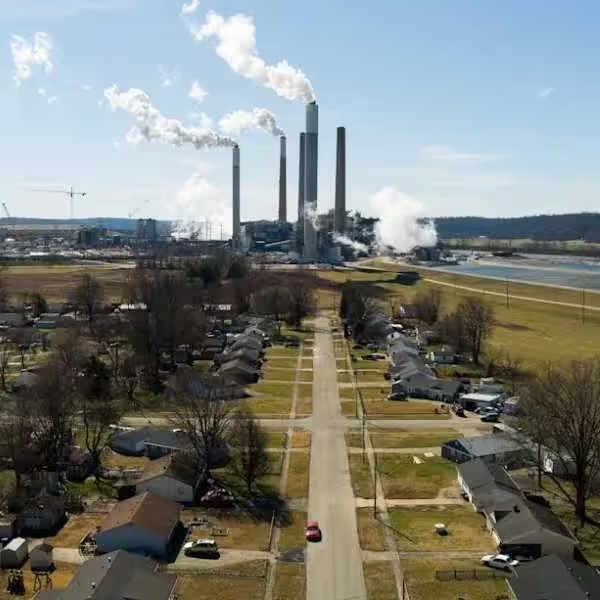
Kentucky environmental advocates have joined a coalition suing to block the Trump administration’s move to loosen regulations on harmful air emissions from power plants, including neurotoxic metals such as mercury and lead.
The petition, filed March 30 in the U.S. Court of Appeals for the D.C. Circuit, was brought by several environmental organizations along with health groups like the American Academy of Pediatrics, American Lung Association, and American Public Health Association. The coalition is also challenging a rollback in emissions monitoring requirements, saying the agency’s reversal “abandons safeguards that protect communities living near coal plants and downwind of their pollution.”
“This dangerous repeal of protections is a giveaway to coal plants, allowing them to emit more neurotoxic mercury into our air while keeping vulnerable communities in the dark about what pollution is coming from smokestacks,” said Ashley Wilmes, executive director of the Kentucky Resources Council, in a statement. The group is represented in the filing by Earthjustice.
The U.S. Environmental Protection Agency announced in February that it would roll back strict emissions standards for power plants introduced during the Biden administration. Those rules were expected to reduce thousands of pounds of mercury and other metals, including carcinogens and neurotoxins, along with fine particulate matter, commonly known as soot.
Instead, the administration is reinstating the less stringent standards from the Obama era, which still led to a significant reduction in toxic emissions from coal plants in Kentucky and across the country more than a decade ago.
EPA Deputy Administrator David Fotouhi announced the rollback in February at LG&E’s coal-fired generating station in southwest Jefferson County. He said the move would relieve the coal industry from what he described as overly burdensome regulations imposed by the previous administration.
Coal industry groups, including the Kentucky Coal Association and America’s Power, supported the rollback and attended the February announcement along with Kentucky officials and representatives from LG&E and KU. U.S. Rep. Andy Barr, a Republican running for the seat of U.S. Sen. Mitch McConnell, said the change would lower living costs and help ensure a stable power supply to “win the race for AI.”
An analysis by the Biden-era EPA found the stricter standards would not have significantly impacted electricity prices or forced coal plants to shut down, a conclusion the current EPA disputes.
“In keeping with a longstanding practice, EPA does not comment on current or pending litigation,” the agency said in a statement.
Looser emission standards could pose greater health risks in coal-dependent regions like Kentucky, which continues to mine significant amounts of coal and relies heavily on it for electricity generation.
In 2024, nine Kentucky power plants reported mercury emissions, the most recent EPA data shows. More than 30,000 people live within three miles of those facilities.
Mercury exposure in humans, which can affect the brain, cardiovascular system, and nervous system, often occurs through consuming contaminated fish and shellfish. Emissions from coal plants can settle in waterways, where mercury accumulates in fish tissue.
When the Obama-era standards were first implemented about a decade ago, research suggested Jefferson County saw fewer premature deaths due to reduced particulate matter, along with fewer asthma attacks, emergency visits, and lost workdays. The expanded protections under the Biden administration were expected to build on those improvements.
“The repeal of these protections will mean more asthma attacks, emergency room visits, and premature deaths,” the coalition said in a statement, adding that allowing toxic emissions with limited monitoring represents “a betrayal of the EPA’s core mission.”
The rollback follows regulatory exemptions granted by the Trump administration to coal-fired power plants nationwide, including those in Kentucky. According to an analysis by the Natural Resources Defense Council, exempted plants in Kentucky reported a 27% increase in sulfur dioxide emissions last year, which the group described as a “free pass to pollute.”












Leave a Reply