

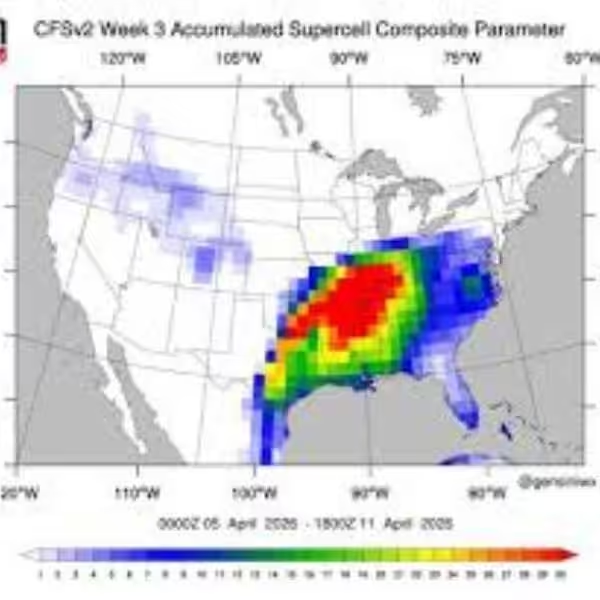
UNITED STATES — A powerful and active weather pattern is setting up across the central and eastern United States as April begins, bringing multiple rounds of rain and potential severe weather across a wide region. The heaviest rainfall is expected to focus on the Plains, Ohio Valley, and Deep South.
This forecast is based on the ECMWF ensemble model initialized March 29, 2026, and valid through Friday, April 10.
How This Pattern Develops
The pattern begins early in the week with some limited severe weather potential across the central United States. However, this initial phase is relatively weak and not expected to produce major impacts on its own.
Conditions shift significantly later in the week. A series of upper-level atmospheric waves will move across the country, providing the energy needed for stronger and more organized thunderstorms. At the same time, moisture from the Gulf of Mexico will already be in place, creating an ideal environment for storm development.
Forecasters are closely watching two key periods — one during the middle to late work week and another from Friday into the weekend — both of which could bring more impactful weather.
What the ECMWF Rainfall Forecast Shows
The ECMWF ensemble precipitation outlook through April 10 highlights an unusually strong rainfall signal across much of the central and eastern United States.
A broad zone of 6 to more than 20 inches of rain is projected across Oklahoma, Kansas, Missouri, Arkansas, Tennessee, Mississippi, and Alabama. The heaviest totals extend into parts of the Ohio Valley, including Kentucky, Indiana, and southern Illinois, while another area of significant rainfall spreads into the Southeast.
For comparison, many of these regions typically receive only 3 to 5 inches of rain during an average April. The current forecast suggests totals that could double or even triple that amount within about two weeks.
Rainfall Outlook by Region
- Oklahoma / Kansas — 6 to 12+ inches
- Missouri / Arkansas — 8 to 16+ inches
- Tennessee / Mississippi — 8 to 20+ inches
- Alabama / Georgia — 6 to 12+ inches
- Kentucky / Indiana / Ohio — 4 to 10+ inches
- Louisiana — 4 to 8+ inches
- Southeast coast — 2 to 6+ inches
Forecast Confidence
Confidence is high that a wet and active pattern will develop across the central and eastern U.S., as multiple ECMWF model runs show consistent signals.
Confidence is moderate regarding exact rainfall totals, since storm tracks will determine where the heaviest amounts fall.
Confidence is lower on precise timing of severe weather, though the late-week period remains the primary concern. More clarity is expected by midweek.
Why This Rain Matters
The rainfall could bring much-needed relief to drought-affected areas across the Plains, Midwest, and Deep South.
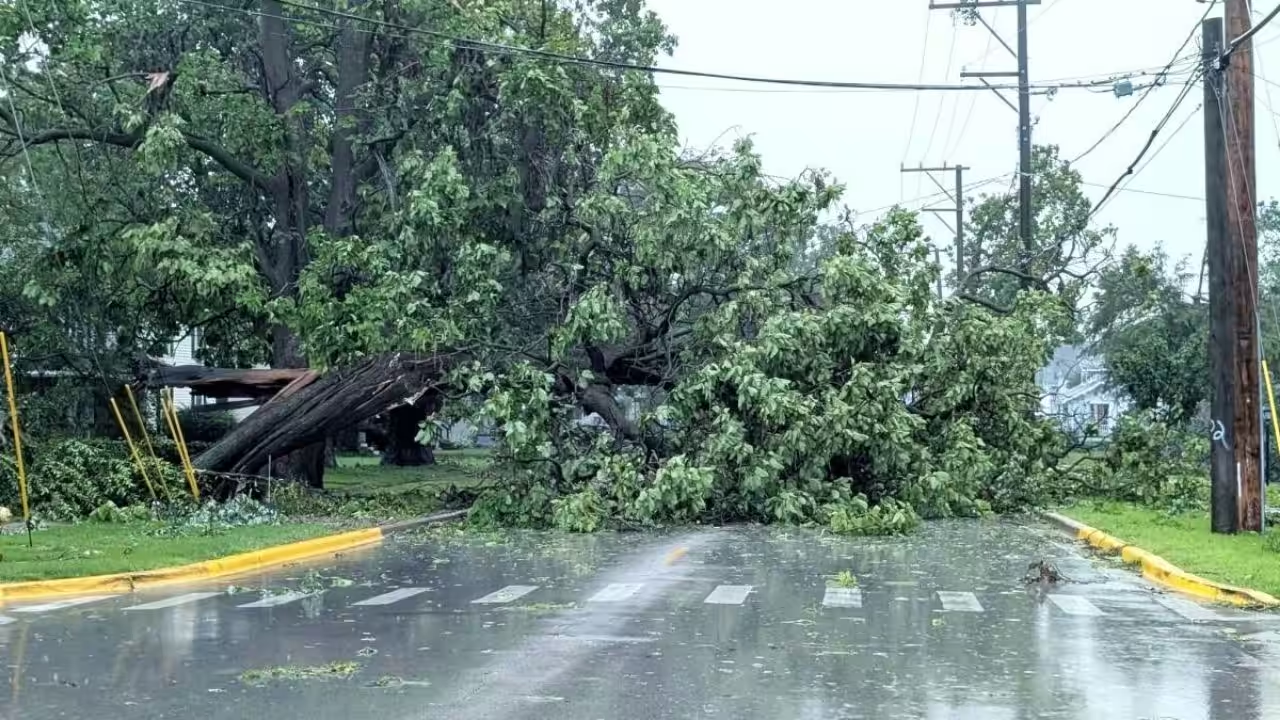
However, repeated rounds of heavy rain over the same locations increase the risk of flooding. Saturated soil, rising rivers, and overwhelmed drainage systems could lead to both flash flooding and longer-term river flooding.
Communities in Arkansas, Tennessee, Mississippi, Alabama, and the Ohio Valley should remain alert for potential flood risks.
What Residents Should Do
Stay updated with daily forecasts as the pattern evolves. Conditions will become clearer as the week progresses.
Understand your flood risk, especially if your area has experienced flooding in the past. Identify safe routes and higher ground in advance.
Avoid driving through flooded roads. Even shallow, fast-moving water can be dangerous.
Prepare for possible power outages if severe storms develop alongside heavy rainfall later in the week.
The Bottom Line
A prolonged and potentially impactful weather pattern is developing for early April across the central and eastern United States. The ECMWF model signals widespread rainfall totals of 6 to more than 20 inches through April 10 — far above normal for many areas. The greatest risk for severe weather and heavy rain is expected late in the work week and into the weekend. Stay alert and prepared as conditions continue to evolve.







Leave a Reply