


Major winter storm signal strengthens for Texas, Oklahoma, Arkansas, Missouri, Illinois, Indiana, Kentucky, Tennessee, and Ohio with snow, ice, and sleet risk next weekend
UNITED STATES — Forecast guidance is increasingly pointing to a potentially large winter storm developing next weekend, Jan. 24–26. Model trends suggest a broad area of snow and ice could stretch from the Plains through the Ohio Valley and into parts of the Mid-Atlantic and Southeast. While exact impacts remain uncertain, meteorologists say the signal for a widespread winter weather event is becoming clearer.
Forecast ensembles indicate a low-pressure system forming over the Southwest and southern Plains late next week, then tracking east-northeast across the central United States. This pattern places several states at risk for accumulating winter precipitation, though the exact storm track will determine where heavy snow falls versus areas that see a wintry mix.
Storm setup and current model trends
Latest ensemble guidance shows the system beginning to organize from Thursday into Friday, strengthening as it moves across the central Plains toward the Mississippi and Ohio Valleys. By Saturday into Sunday, the storm could reach the Mid-Atlantic and Southeast, expanding the affected area.
A major factor in this forecast is a strong high-pressure system expected to set up to the north, likely across Canada. This feature could force the jet stream south and support a more southern storm track. As a result, the heaviest snow axis is currently projected to remain south of northern Illinois, a key detail for the Midwest.
Snow corridor focused on the Ohio Valley
Current projections place the main snow corridor from Missouri through central and southern Illinois, extending into Indiana, Ohio, and farther east. These areas would remain north of the surface low, where colder air favors mostly snow.
Forecasters note that moderate to locally heavy snow is possible, but extreme snowfall amounts do not appear likely at this time. A more typical large-storm scenario, with several inches of snow spread across a wide region, is the more probable outcome if trends continue.
Ice and mixed precipitation threat to the south
Farther south, warmer air aloft may lead to sleet and freezing rain, especially across portions of Kentucky, Tennessee, Arkansas, and the Deep South. The southern edge of the storm is expected to feature a sharp transition zone, where small shifts in track could result in significant changes to impacts.
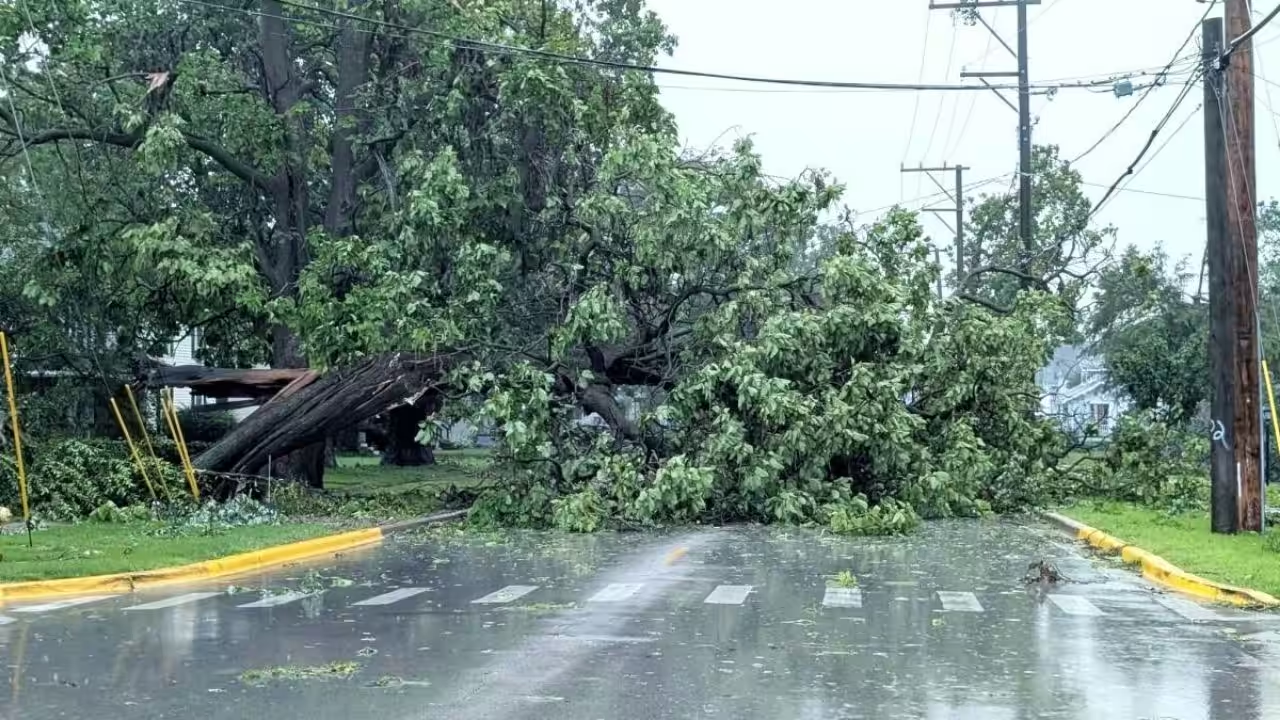
These areas could see travel problems and possible power issues if ice accumulates. Forecasters caution that ice placement remains one of the most uncertain aspects of the outlook.
What this means for Illinois and the Midwest
Despite online claims suggesting the storm will heavily impact the entire Midwest, northern Illinois currently sits on the northern edge of the precipitation shield. If the southern track holds, locations near Chicago and far northern Illinois could see little or no snow, while heavier impacts stay farther south.
Central and southern Illinois, however, remain within the favored snow zone based on current ensemble guidance. Forecasters stress that there is no data support at this time for guaranteed heavy snow in northern Illinois.
Forecast confidence and key uncertainties
Confidence continues to grow that a large storm system will develop, but uncertainty remains high regarding specific snow and ice totals. Small changes in:
-
the position of the surface low
-
the strength of the northern high-pressure system
-
temperature profiles aloft
could shift the heaviest snow and ice hundreds of miles north or south.
With the storm still several days away, daily forecast updates will be important as more detailed data becomes available.
What to watch going forward
People across the central and eastern United States are encouraged to closely follow forecast updates through the coming week. One key factor to monitor is whether models maintain a southern track or begin trending north, which would significantly alter expected impacts.
For now, the message remains the same: a high-impact winter storm is possible, but the details are still evolving.





Leave a Reply