

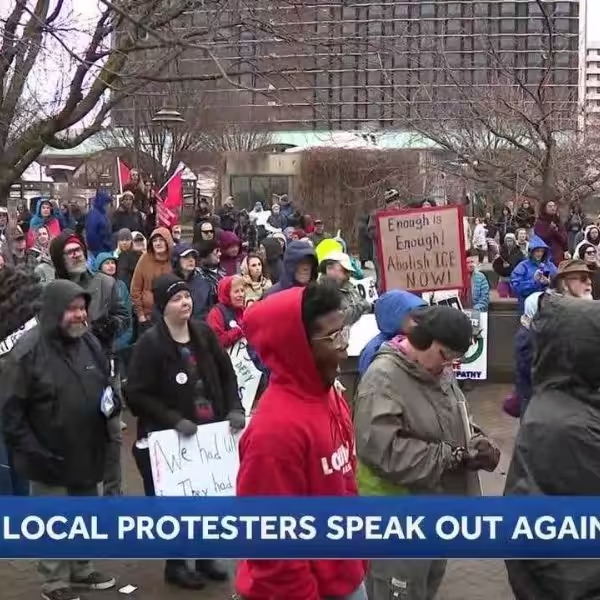
Protesters hold signs during a rally for Renee Good, who was fatally shot by an ICE officer in Minneapolis the day before, Thursday, Jan. 8, 2026, in Kansas City, Mo. (AP Photo/Charlie Riedel)
Leaders in Lexington and Louisville are responding to the fatal shooting of a Minneapolis woman by an ICE agent, an incident that sparked rallies across the country over the weekend. The situation has raised questions about whether cities have any authority to rein in ICE actions within their communities.
Lexington council member Emma Curtis wrote that while the city cannot “abolish ICE” at the local level, it can ensure local laws protect the “safety, freedom, and liberty of all of our residents to the fullest existent.” In her statement, the Fourth District representative indicated that legislation could be introduced in the coming weeks, though she did not provide details.
A similar discussion is unfolding in Louisville, where Metro Councilmember JP Lyninger previously pushed for an ordinance that would have banned law enforcement officers from wearing face coverings while on duty. That proposal ultimately failed.
Lyninger told Spectrum News that the rise in ICE raids and confrontations is likely to reach the state’s largest city.
“It will come here eventually and we will have to deal with it,” he said. “I don’t think that we need to wait until Louisville has a structure fire before we take preventative measures.”
What cities can do, however, remains unclear. A spokesperson for the Metro Council’s minority caucus said local governments lack the authority to regulate federal agents when they are acting in their official capacity.
At the state level, proposed legislation moving through the GOP-led General Assembly calls for increased cooperation with ICE, rather than restrictions.
The measure would require all local law enforcement agencies and state police to participate in a program that allows local officers to be deputized and act as federal immigration agents during routine policing. Rep. TJ Roberts said the role of local officers would be limited.
“This is not independent raids. This is in they pull someone over for, suppose, a DUI, they are called for any other type of case, that they are then able upon reasonable suspicion to investigate whether or not the individuals are here legally,” the Republican said.
At least 10 Kentucky counties have already joined the program voluntarily.






Leave a Reply