

More than two dozen people across 13 states have fallen ill due to a salmonella outbreak, with some cases involving antibiotic-resistant strains, according to the Centers for Disease Control and Prevention.
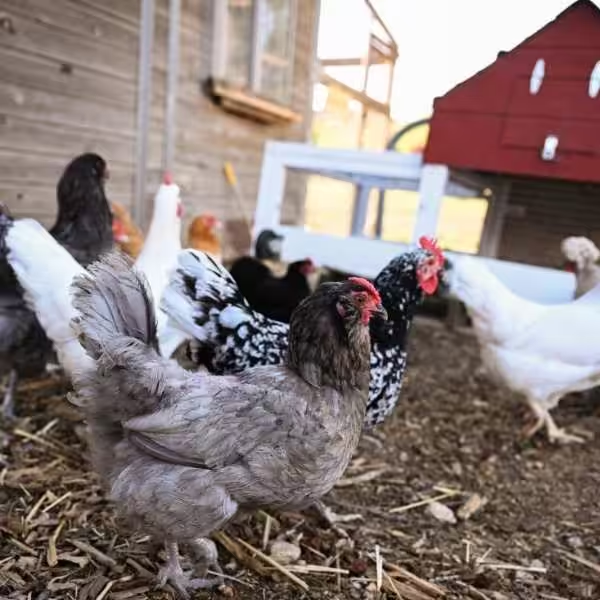
Between February and March, 34 infections were reported over about a month. Most cases were linked to contact with backyard poultry, including chickens, ducks, turkeys, and geese. Around 13 people required hospitalization.
Although no deaths have been reported, health officials urge people to take precautions. These include washing hands thoroughly after handling poultry or eggs, practicing safe egg handling, keeping backyard birds at a safe distance, and closely supervising children.
Children appear especially vulnerable. About 41% of those infected were under the age of 5, a group more likely to develop severe illness from salmonella.
The outbreak has raised concern because the strain shows resistance to multiple antibiotics, including fosfomycin, chloramphenicol, streptomycin, sulfisoxazole, and tetracycline. Antibiotic-resistant infections can be harder to treat and may require more complex medications with stronger side effects.
Investigators are still working to trace the exact source. Of the 29 people interviewed, 23 reported contact with backyard poultry in the week before falling ill. About 14 said they owned such birds, most of which were recently acquired after January 1.
Cases have been identified in several states, including Indiana, Kentucky, Michigan, Ohio, and Wisconsin, along with others such as Florida, Illinois, Maine, Maryland, Mississippi, New Hampshire, Tennessee, and West Virginia.
Officials caution that the real number of infections is likely higher than reported.
According to the Food and Drug Administration, salmonella remains the leading cause of food poisoning-related hospitalizations and deaths in the United States, with an estimated 1.35 million cases each year. While most people recover without treatment, about 26,500 are hospitalized annually, and around 420 die from the infection.










Leave a Reply