

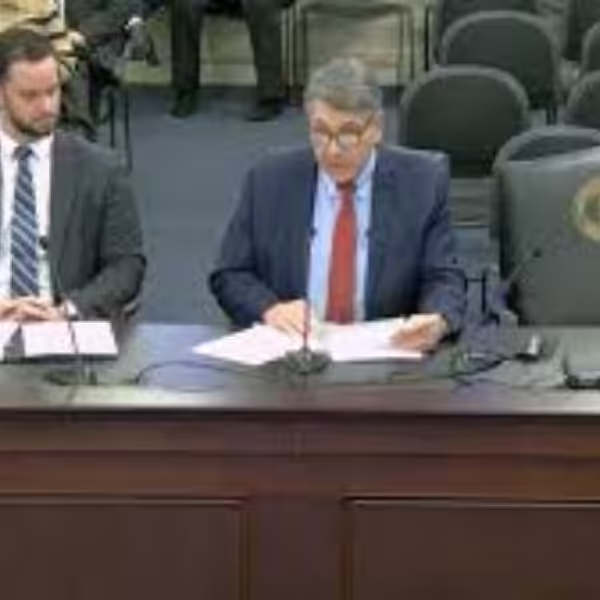
Budget testimony focused on staffing data, recruitment challenges, and the Kentucky Department of Juvenile Justice’s plans to expand facilities.
LEXINGTON, Ky. — The Kentucky Department of Juvenile Justice is working to address staffing shortages, but the loss of traditional state pensions and the stress of the job have made it difficult to recruit and retain enough employees, the agency’s commissioner told lawmakers Tuesday.
Juvenile Justice Commissioner Randy White discussed staffing issues during testimony before the House Budget Review Subcommittee on Justice, Public Safety and the Judiciary.
On Monday, the Herald-Leader reported that nearly all eight of Kentucky’s state-run juvenile detention centers operated through much of 2025 with insufficient staffing, particularly in security roles, based on monthly activity reports submitted by facility managers.
Managers repeatedly warned that inadequate staffing worsened conditions for both youths and employees. In some cases, detention centers failed to meet federal Prison Rape Elimination Act requirements, which mandate minimum staffing levels during both day and night shifts.
Subcommittee Chair Rep. Stephanie Dietz, R-Edgewood, questioned White about the department’s request for state funding to build two new juvenile detention centers for girls, each estimated to cost $45 million.
“If we can’t staff the facilities we have now, are you confident you can staff new ones?” Dietz asked.
White disagreed with the premise, saying staffing levels are improving in 2026.
“The numbers show we’re on an upward trend right now,” he said.
White explained that the department is seeking two new centers for girls because the legislature directed it three years ago to return to a regional model, placing youths in custody closer to their home counties.
Currently, he said, there is only one juvenile detention center for girls, located in Boyd County, requiring girls in state custody to be transported across the state to Ashland in northeastern Kentucky.
Regarding staffing for the proposed facilities, White said some women in corrections prefer working in centers housing teen girls rather than teen boys.
“I feel very confident that we can staff those types of facilities,” White said. “If we build female facilities, we will attract employees who may be less interested in working in a male environment.”
As of Jan. 14, White told lawmakers, the department had 1,339 funded positions, with 1,157 filled, resulting in a 14% vacancy rate. At juvenile detention centers, 524 positions were funded and 450 were filled, also reflecting a 14% vacancy rate.
White added that a class of 30 correctional officers is currently in training and expected to begin work soon.
“Right now, we have momentum, and we’re filling positions,” he said.
However, detention center managers noted in last year’s reports that official vacancy rates do not account for employees on medical leave, military leave, or other approved absences who are counted as filled positions but are unavailable to work.
When asked about recruitment challenges, White pointed to the elimination of Kentucky’s more generous “Tier 1” defined-benefit pension plan for employees hired after 2008.
State workers hired since 2014 are enrolled in the less generous “Tier 3” hybrid cash-balance plan, which White said is less attractive to potential recruits.
“The feedback I get is concern about what retirement will look like,” White said. “There isn’t much confidence in an IRA-type outcome.”
He also said the correctional work environment can be more stressful and restrictive than applicants expect. Employees must leave personal cell phones and tobacco products at security checkpoints and remain alert at all times while on duty.
Many new hires, he said, prefer a more relaxed workplace, making it difficult to keep them interested in the job.












Leave a Reply