

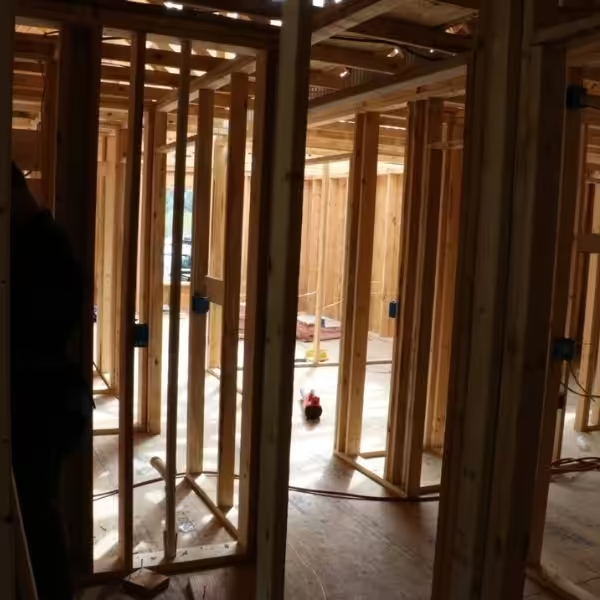
A four-bedroom, solar-powered home under construction in Letcher County in 2024 highlights ongoing efforts by nonprofit Homes Inc. to expand affordable housing options.
State lawmakers are recommending that the General Assembly continue reducing regulations for housing developers and consider providing funding to incentivize new housing and infrastructure projects as Kentucky faces a severe housing shortage.
During a Monday meeting, members of the Kentucky Housing Task Force stressed the urgency of the issue as the panel released recommendations ahead of the legislative session starting in January.
A national research firm hired by the Kentucky Housing Corp. estimated last year that the state needs more than 200,000 housing units, including rentals and homes for sale. Without significant construction or repair efforts, the shortage could exceed 287,000 units by 2029, with low-income renters experiencing the greatest strain.
Rep. Mike Clines, R-Alexandria, told lawmakers the legislature must respond. “I do think it’s time for us to really write some legislation that’s going to make some changes for our housing shortage,” Clines said.
The nine-page memo of recommendations, created after four meetings this summer, reflects input from organizations including the Kentucky Chamber of Commerce, the Mercatus Center, the Homebuilders Association of Kentucky, Americans for Prosperity and the Homeless and Housing Coalition of Kentucky.
Most recommendations for the 2026 legislative session focus on regulatory changes aimed at lowering construction costs by encouraging or requiring state and local governments to remove barriers to housing development.
Proposed regulatory changes include:
• A two-year moratorium on any changes to state building and electrical codes that would increase residential construction costs.
• Allowing regulated third parties to issue housing construction permits instead of the state.
• Reducing or eliminating local requirements for mandatory parking spaces in housing developments.
• Amending state building codes to lower costs for homebuilders. One proposal would allow only one staircase in multi-family buildings, arguing additional staircases provide minimal safety benefits while significantly raising costs.
• Allowing religious institutions to build housing on their own land with fewer regulations, similar to a bill introduced but not passed earlier this year.
Lawmakers said these changes would build on recently passed laws, including one that limits local restrictions on manufactured housing.
Sen. Robby Mills, R-Henderson, co-chair of the task force, told the Lantern that the main debate will be how far the state should go in directing local housing regulations. Mills said he generally supports local control but believes the state must intervene if communities don’t act.
“We’ve got to allow more building to take place in Kentucky. And if it doesn’t happen, then we need to step in, or we’re going to be, once again, falling behind,” he said. “I do believe the locals need to have an opportunity to act and react.”
The task force also suggests allowing local governments to create designated districts where developers and local officials would be incentivized to build.
Additionally, the panel recommends lawmakers consider allocating state funds, including creating a revolving loan fund for housing infrastructure similar to a model in Indiana and establishing a state low-income housing tax credit to pair with the federal credit.
Adrienne Bush, executive director of the Homeless and Housing Coalition of Kentucky, said she is “pretty pleased” with the memo, especially a recommendation to increase real estate transaction fees that support the Affordable Housing Trust Fund, which helps finance construction and renovation projects.
“We have this proven tool. It’s been working well for Kentucky,” Bush said. “It just really hasn’t kept pace with what is needed to build and repair and renovate.”
Bush emphasized that housing remains essential despite a challenging budget outlook. Republican leaders anticipate a tighter budget due to uncertain federal funding, while Democratic Gov. Andy Beshear has cited lower-than-expected state revenue.
“It is becoming clearer every day that without state financial intervention, Kentucky is going to continue to fall further behind in terms of our housing stock,” Bush said.
Mills noted that many priorities may “fall on the cutting floor” as the budget takes shape, particularly due to Medicaid and other major expenses. Still, he said he plans to push for funding to support affordable housing construction.
This article has been carefully fact-checked by our editorial team to ensure accuracy and eliminate any misleading information. We are committed to maintaining the highest standards of integrity in our content.












Leave a Reply