

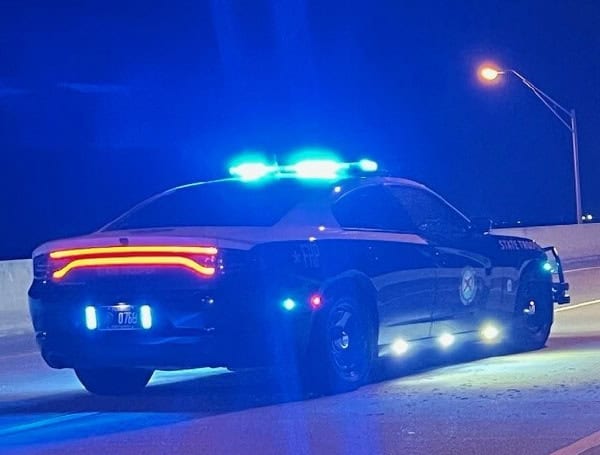
State and federal officers removed dozens of commercial trucks and drivers from Southeast highways over the weekend during a coordinated overnight safety sweep on Interstate 95.
The multi‑state operation, designated “Operation Saturday Night Fever,” occurred overnight on Saturday, September 26. Directed by the Federal Motor Carrier Safety Administration (FMCSA), the initiative targeted high‑risk commercial drivers, defective equipment, and illegal activity along major freight corridors in Florida, Georgia, South Carolina, and North Carolina.
By Sunday morning, officers had completed 552 commercial‑vehicle inspections across the participating states. The sweep led to 78 drivers being taken off the road and placed out of service, including 12 cited for English‑language‑proficiency violations. Inspectors also removed 25 unsafe vehicles from service, while the agencies recorded seven criminal arrests and 11 detentions by U.S. Immigration and Customs Enforcement (ICE).
During the operation, troopers from the Florida Highway Patrol’s Office of Commercial Vehicle Enforcement concentrated on driver fatigue, log‑book tampering, mechanical failures, distracted or impaired driving, and unsecured cargo.
The effort united the FMCSA and ICE with state law‑enforcement agencies, including the Florida Highway Patrol, the Georgia Department of Public Safety, the South Carolina State Transport Police, and the North Carolina State Highway Patrol.
Officials noted that conducting inspections across state borders prevents problematic drivers from evading enforcement simply by crossing state lines.
“This operation reflects the strength of our law enforcement partnerships and our shared responsibility to keep America’s roads safe,” FMCSA Administrator Derek D. Barrs said. “By working together and focusing our enforcement, we can identify unsafe drivers and vehicles, disrupt criminal activity, and protect the integrity of our transportation system. Our message is simple: safety comes first, and those who put the public at risk, will be held accountable.”
“Law‑abiding commercial motor vehicle operators should not be undercut by unsafe or unqualified operators,” said LaDeon Francis, field office director for ICE’s Enforcement and Removal Operations in Atlanta. “Through strong interagency partnerships, this operation helps identify unsafe vehicles and unqualified drivers, supports lawful commerce, strengthens the integrity of the commercial motor vehicle industry, and reinforces our shared commitment to public safety.”
“At the Florida Highway Patrol, we are proud to once again work alongside our law enforcement and public safety partners in combatting illegal, unsafe driving practices and taking unfit drivers out of service,” said FHP Colonel Gary Howze. “Our Commercial Vehicle Enforcement Troopers lead the way in keeping Florida’s roadways safe, enforcing rigorous standards that hold commercial drivers accountable and safeguard everyone who travels through our state.”
“Unsafe carriers do not stop at state lines, and neither should our partnerships,” said Major Andrew Montgomery of the Georgia Department of Public Safety’s Commercial Vehicle Enforcement division. “Operation Saturday Night Fever put those partnerships into action along the I‑95 corridor. By working together across state lines, our agencies can share information, focus resources where they are needed most, and take action when we find serious safety issues. The overwhelming majority of professional drivers take their responsibilities seriously every day. Our goal is to hold the bad actors accountable, protect everyone who shares the highway, and allow the drivers and carriers who follow the rules to keep freight moving safely.”
“Late‑evening and early‑morning hours are often when dangerous driving behaviors go unnoticed, and collisions can have serious , even deadly , consequences,” said Colonel Dwayne Wilson of the South Carolina State Transport Police. “Our goal, as always, is to reduce crashes while keeping trucks safely moving, recognizing that commercial vehicles are vital to South Carolina’s supply chain and to our nation’s economy.”
“Combining resources, sharing ideas and working in consort with law‑enforcement partners to promote the safe operation of commercial motor vehicles is not just practical, but indispensable in furthering our ongoing educational and enforcement efforts,” said Colonel Freddy L. Johnson Jr., commander of the North Carolina State Highway Patrol.




Leave a Reply