

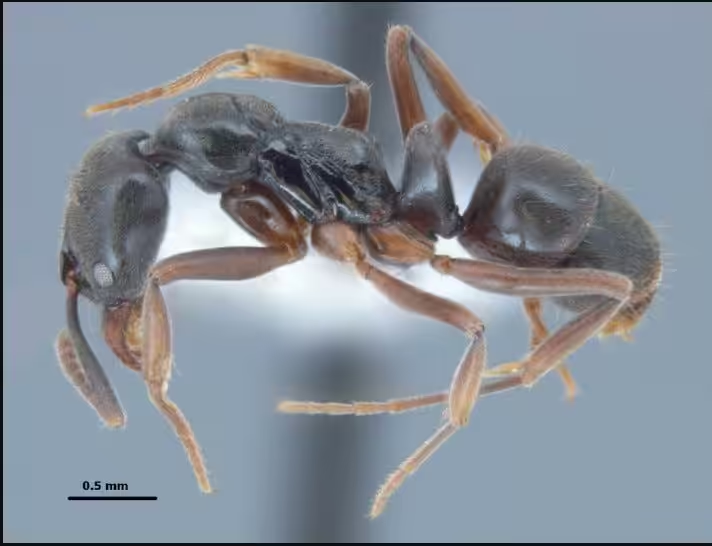
A newly confirmed invasive insect in Missouri could bring painful stings and cause ripple effects for forests and native species.
Missouri has now identified the Asian needle ant within its borders, and the species poses potential risks to people and ecosystems, according to a community announcement. The species, long established in other parts of the country, has begun drawing more attention as it expands its range.
University of Missouri Extension urban entomologist Emily Althoff said the ant was unfamiliar to many residents, including herself, until she began tracking reports of emerging insect issues. Her interest grew after she reviewed national coverage and started researching the species more closely.
The invasive ant, native to parts of East Asia, first appeared in the United States in the 1930s along the East Coast. It has since spread across nearly half of the continental U.S., often without anyone noticing.
“It’s very inconspicuous,” Althoff said in the announcement. “But its impact can be anything but small.”
Painful sting and ecological concerns
The Asian needle ant can deliver a sting that causes significant pain. In uncommon cases, the sting can trigger severe allergic reactions similar to those associated with bees or wasps.
Beyond risks to people, the species can disrupt ecosystems. According to the announcement, the ants compete with native species that play a key role in spreading seeds, potentially altering plant regeneration patterns.
The insect’s feeding habits may also have unintended consequences. The ants prey on termites, which are essential for breaking down dead wood in forests. Without termite activity, fallen trees and debris can accumulate, increasing available fuel that could contribute to wildfire risk.
Tracking spread in Missouri
Althoff began monitoring the ant more closely after it was reported just across Missouri’s southern border in Arkansas in fall 2025. She used the community science platform iNaturalist to track potential sightings and worked with partners including the USDA, U.S. Forest Service, Missouri Department of Agriculture and Missouri Department of Conservation to confirm its presence in the state.
Her current work focuses on identifying additional locations where the ant may be established and helping residents recognize it.
Residents can track known sightings through antmaps.org. To report suspected sightings, residents can send a photo to a local MU Extension center or email Althoff at [email protected].
Althoff’s “Bug Beat” YouTube content, including “Asian Needle Ant: What You Need to Know,” offers more information.












Leave a Reply