

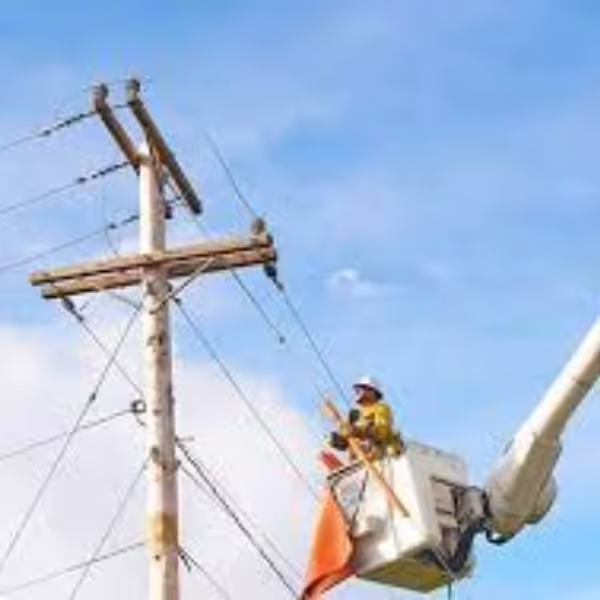
Kentucky Power has launched an effort to improve reliability in parts of its Eastern Kentucky service area that experience the most outages.
Crews are focusing on vegetation management, equipment upgrades, and new technology to reduce outages and speed up restoration times.
“Because affordability is such a concern in eastern Kentucky, this very targeted approach allows us to invest where our customers realize the greatest benefit,” said Michele Ross, vice president of operations at Kentucky Power. “We are keenly aware of the concerns our customers have but they also deserve reliable power.”
Crews are completing vegetation work along more than 1,600 miles of power lines, focusing on circuits where tree-related outages have caused the most issues. They are also upgrading infrastructure on 117 priority circuits by replacing aging poles, crossarms, and transformers to strengthen the system. Additionally, crews are installing new devices in more than 800 locations across the service area to reduce the number of customers affected and restore service faster.
“This work is very intentional,” Ross said. “We’re not approaching this broadly — we’re targeting circuits and areas where we know improvements will have the greatest impact for our customers.”
The effort relies on detailed data that identifies areas where customers have faced repeated or long-duration outages.
“We’re looking at each part of the system and asking where we can make the biggest difference,” Ross said. “One of those projects is located in Martin County where our crews are working on new tie line connections that will improve reliability for customers in the Dewey, Inez and Wolf Creek area.”
Tie lines connect circuits and allow power to be rerouted during outages. This enables crews to isolate issues and restore service to many customers more quickly, even before permanent repairs are completed. In mountainous, heavily wooded areas, this added flexibility can significantly reduce outage times and improve reliability.
“This kind of targeted work is happening across communities throughout our service area,” Ross said. “Fewer interruptions, shorter outages and more consistent service — those are the results our customers can expect.”











Leave a Reply