

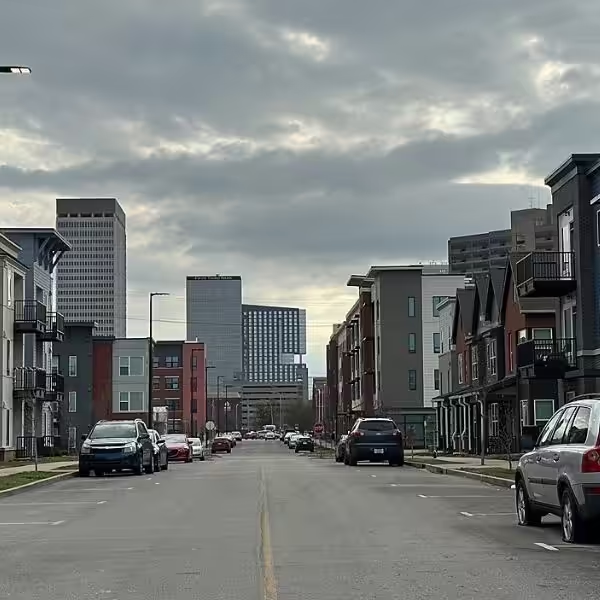
LOUISVILLE, Ky. — Lifelong Louisvillian Mark Pence has watched the city change over the years, but finding stable housing proved to be one of his biggest challenges.
What You Need To Know
-
The Louisville Metro Housing Authority (LMHA) says nationally, only one in four people who qualify for a Section 8 voucher ever receive one
-
Louisvillian Mark Pence said he struggled for nearly a decade to secure housing while waiting for voucher approval
-
He faced administrative hurdles and barriers while searching for stable housing
-
LMHA said about 90% of its budget comes from federal funding
Pence, a 32-year-old college graduate and chef who runs a nonprofit focused on community activism, said he spent nearly a decade struggling to find housing as a Section 8 applicant.
“The process was extensive because it almost felt like there was nowhere to go that made sense for somebody who’s in college, working in the community, and just trying to stay focused and stay on a path,” Pence said.
He first applied for a Section 8 voucher in 2013 but wasn’t accepted until 2022. During that time, Pence said he encountered repeated administrative obstacles and difficulty finding landlords willing to accept vouchers.
“Even just being told, ‘You got a voucher,’ the way some landlords look at that is, ‘Maybe we don’t want that at our property,’” Pence said. “They see it as less than, or question whether it’s the right fit. It was really extensive.”
While Pence now has stable housing, he said his experience is far from unique. Others have raised similar concerns, including the quality of life for those who eventually secure housing through the program.
Elizabeth Strojan, executive director of LMHA, said the challenges public housing authorities face are largely driven by federal limitations rather than local efforts.
“The realities of what we can accomplish with our Section 8 program are really set by the federal government,” Strojan said. “We have a set number of dollars and a set number of vouchers based on federal funding. Nationally, only one in four people who qualify for a Section 8 voucher ever get it.”
Strojan said roughly 90% of LMHA’s budget comes from federal sources. Combined with what she described as decades of underfunding and continued budget cuts, she said housing authorities are limited in how much support they can provide.
“Until we see a larger Section 8 program nationally, there’s only so much we can do here,” she said.
Despite those constraints, Strojan said LMHA has several redevelopment priorities planned for the year ahead.
“We hope this year to demolish the vacant First Link grocery store site and begin rebuilding housing there,” she said. “Dosker will be empty this year, and we’ll be making plans to demolish that property. We’ll also be selecting a partner to help rehab Avenue Plaza and hope to make progress on other developments as well.”
Both Strojan and Pence said housing is a basic community need, but meaningful progress will require change at the national level — including significantly increased federal funding for housing programs.










Leave a Reply