

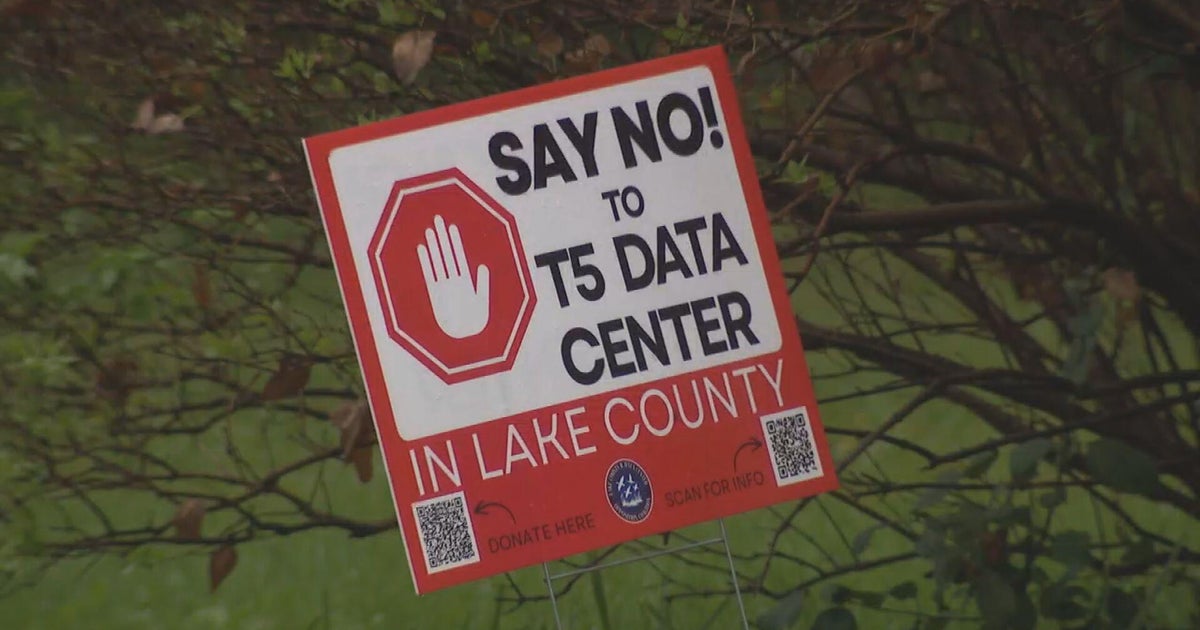
Data centers have become a subject of intensifying debate throughout the United States, as regulators and policymakers increasingly push for measures that would require operators to bear the full cost of the energy and water resources they consume, among other proposed reforms.
Beyond the question of energy generation, however, consumer advocates are raising alarms that the infrastructure costs associated with connecting data centers to ComEd’s electrical grid may ultimately fall on the shoulders of households and small businesses across northern Illinois , a claim the utility firmly disputes.
Documents submitted by ComEd in an active regulatory proceeding reveal that the new infrastructure and system upgrades required to connect 30 data centers to the grid carry a combined price tag of $3.1 billion. Several of these projects have already been connected, while the remainder are expected to be operational by 2031.
Data center developers have submitted $721 million in advance deposits , representing just under 25% of the total projected cost. Consumer advocacy organizations, including the Citizens Utility Board and the Environmental Law & Policy Center, argue that this figure could leave a shortfall of approximately $2 billion, which may ultimately be distributed across the bills of ordinary ratepayers.
“Ordinary households should not foot the bill to provide power to data centers,” said Nick Wallace, a senior associate attorney with the environmental law center. “ComEd and the (Illinois Commerce) Commission can protect ratepayers and the grid by requiring data centers to pay for 100% of their power supply and infrastructure investments.”
ComEd, for its part, maintains that the consumer groups’ analysis fails to account for $1.1 billion secured through lines of credit that guarantee transmission rate payments from data centers over a ten-year period.
Electricity delivery
The $3.1 billion in projected costs is derived from two distinct components of the electricity delivery system: transmission and distribution. Both involve the use of poles and wires to transport electricity from one location to another, though they operate at different stages of the overall process.
Transmission lines carry high-voltage electricity over long distances , along major corridors and across state lines , from power generation facilities to local substations, where voltage levels are reduced. Distribution lines then carry that lower-voltage electricity to the homes and businesses that ultimately consume it.
The costs associated with connecting data centers are divided roughly equally between these two components, with approximately $1.6 billion attributed to transmission and $1.5 billion to distribution.
Transmission costs for several individual projects each surpass $100 million, with one project alone projected to cost $289 million and another estimated at $269 million.
Max Leichtman, ComEd’s director of economic and workforce development, stated that only the distribution costs represent a fair and direct comparison to the $721 million in deposits collected thus far.
He further noted that several of these projects are not expected to come online until 2030 or 2031 and remain in early stages of development, meaning the full scope of equipment costs has yet to be determined.
“The deposits that today stand at $721 million may continue to increase as these projects move forward and become more mature and more well-defined,” Leichtman said. “That doesn’t mean that’s all we’ll ever collect.”
Leichtman also clarified that any outstanding distribution costs would not be distributed across the entire customer base, but would instead be allocated among customers within the large-user rate classification.
Consumer advocates, however, remain unconvinced that data center developers can be relied upon to fulfill their financial obligations without stronger guarantees.
“These data centers are some of the wealthiest corporations in the world,” CUB spokesperson Jim Chilsen told reporters. “They always say, ‘Trust us, we’re going to pay our energy bills,’ but Illinois customers can’t afford to take big tech’s word for it.”
Reducing speculation
Energy usage requests submitted by hyperscale data centers are widely regarded as highly speculative in nature. These large-scale facilities , frequently operated by multibillion-dollar technology companies competing aggressively in the artificial intelligence sector , sometimes submit duplicate requests to multiple utilities simultaneously, resulting in a portion of those projects never reaching completion.
In recent years, many of these projects have also encountered mounting resistance from local communities, leading to a significant number of withdrawals.
In collaboration with state and federal regulators, ComEd has taken steps to eliminate speculative requests that artificially inflate energy demand costs. These measures include requiring advance deposits from large customers and mandating the execution of long-term contracts known as transmission security agreements, or TSAs. Under these agreements, customers must provide a line of credit guaranteeing payment of transmission rates for a period of ten years, regardless of whether the project ultimately moves forward.
Regulators formally approved ComEd’s TSA requirement in 2025, meaning all projects initiated after that point are subject to these provisions.
Of the $1.6 billion in total planned transmission costs, ComEd has secured $1.1 billion through transmission security agreements. Notably, 19 of the 30 projects predate the TSA requirement and are therefore not subject to it.
Leichtman noted that the implementation of TSAs has also led to “substantial attrition” in the volume of data center requests within ComEd’s interconnection queue.
Payments now or later
In alignment with utility watchdog organizations, ComEd supports the principle that large-load customers such as data centers should be directly responsible for the costs associated with their individual projects.
The utility has put forward a new framework under which rates would be assigned directly to individual data centers based on their specific cost burdens, rather than distributing those costs across broader customer groupings. ComEd contends that this proposal, combined with the TSA and deposit requirements already in place, demonstrates a proactive and comprehensive approach to protecting its broader customer base.
“We really believe that in totality, the suite of proposals that we put together are industry-leading,” Leichtman said.
Where ComEd diverges from its watchdog counterparts, however, is on the question of upfront payment. The utility does not believe data centers should be required to pay infrastructure costs in advance, arguing that such a requirement would create significant barriers to operating in Illinois.
Eric DeBellis, general counsel for CUB, acknowledged that the TSAs represent a meaningful improvement but cautioned that they would still leave a “substantial gap” , one that households and small businesses should not be expected to fill.
“We don’t want to pay for grid bridges to nowhere,” DeBellis said. “If they don’t have these up-front payments, then we’re left footing the bill for all of it.”




Leave a Reply