

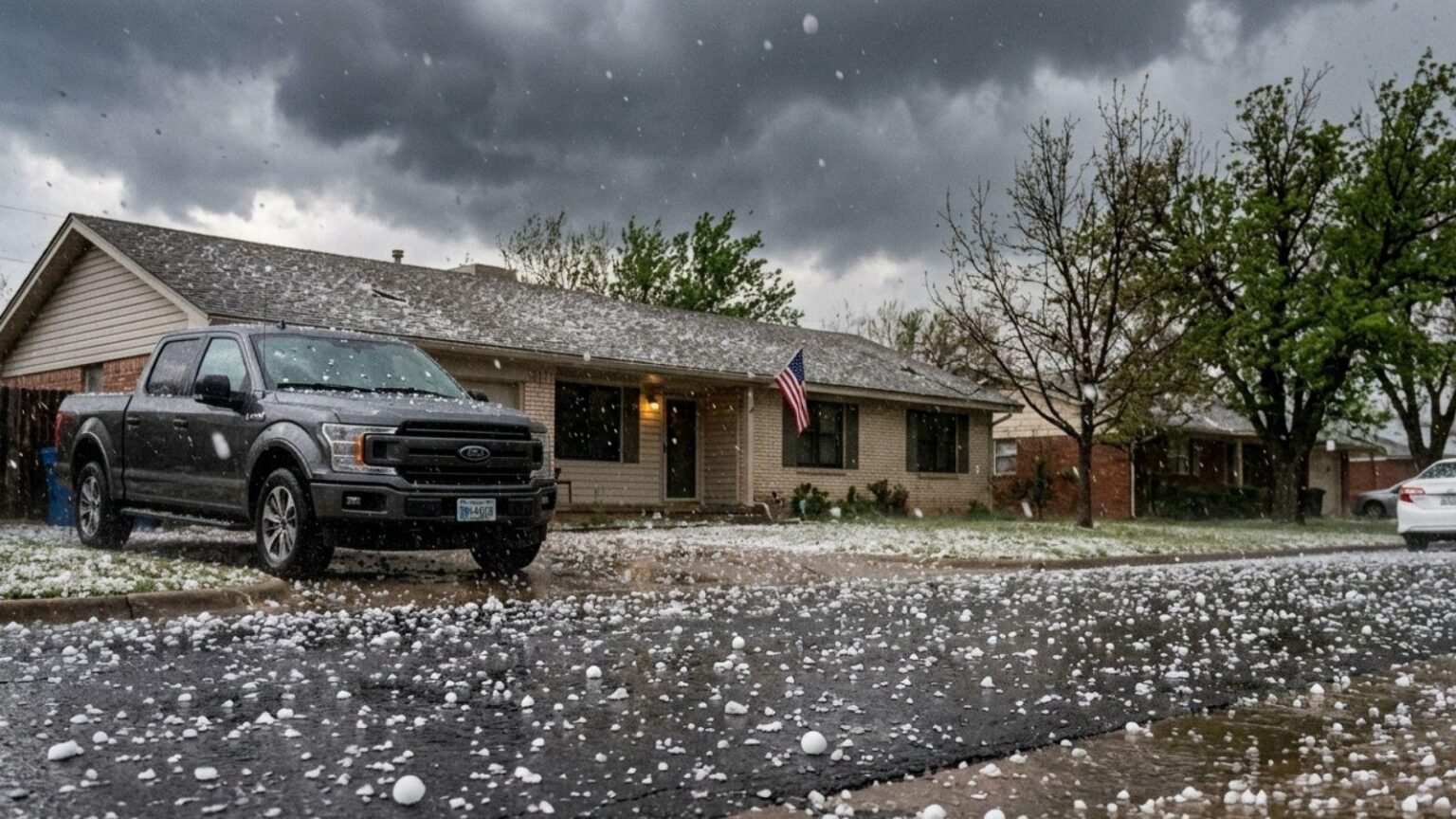
Rebekah Williams lives in Sulphur, Oklahoma, and she hasn’t filed a single insurance claim. Her homeowners premium was $178 a month in 2020. By her most recent renewal, it had climbed to $525. Her wind and hail deductible jumped from $900 to $10,000. She told lawmakers at an October 2025 interim study that nothing about her house had changed. Everything about her bill had.
Williams isn’t an outlier. She offers a preview of what’s happening across the state, and she’s one of the people who helped push Oklahoma’s insurance crisis into the Capitol’s hearing rooms.
Oklahoma ranks among the most expensive states in the country for homeowners insurance, and by several industry measures, it sits at the very top. Depending on the source and the coverage baseline, the average annual premium runs between $5,300 and $5,500, compared with a national average of roughly $2,400 to $2,800. In Oklahoma City, MoneyGeek’s 2026 data puts that figure close to $8,766 for a mid-range home. That’s no rounding error. It’s a fundamentally different kind of financial pressure.
The Tornado Narrative Isn’t Wrong, It’s Just Incomplete
Ask most people why Oklahoma insurance costs so much, and they’ll point to tornadoes. They’re not wrong. Oklahoma recorded 105 tornadoes in 2025, nearly double the state’s 75-year annual average of 59, after a record 152 in 2024. The storm exposure is real, and it’s getting worse.
But hail causes the bigger problem. Insurify ranks Oklahoma fourth nationally for hail vulnerability, and National Weather Service data shows the Tulsa region alone averages dozens of significant hail events each year. According to Insurance Commissioner Glen Mulready, wind and hail together account for 85% of all homeowners insurance claims in Oklahoma. When one category dominates your entire property loss profile, your insurer’s math gets brutal fast.
How brutal? According to an Oklahoma Insurance Department presentation to state lawmakers, Oklahoma’s homeowners insurance industry posted a combined loss ratio of 136.55% in 2023. That means insurers paid out $136 in losses and expenses for every $100 they collected in premium. The ratio improved to 108.11% in 2024, which is still a losing position for most carriers. The state uses a “use-and-file” system that lets insurers raise rates before regulators have reviewed them. So when the math tips toward losses, premiums rise quickly, and the review comes after.
How Much Are Oklahoma Homeowners Actually Paying?
The headline average doesn’t tell the full story. What you pay in Oklahoma depends sharply on where you live, which company you choose, and how much of your own risk you’re willing to absorb. The table below draws on data from MoneyGeek, The Zebra, LendingTree, and Zoellner Insurance to give a realistic picture across cities and coverage levels.
| Location / Coverage Level | Lowest Available Premium | Average Annual Premium | Source |
|---|---|---|---|
| Oklahoma City ($250K dwelling) | $3,181 (State Farm) | $8,766 | MoneyGeek 2026 |
| Oklahoma City ($100K dwelling) | $1,686 (State Farm) | — | MoneyGeek 2026 |
| Oklahoma City ($500K dwelling) | $4,345 (Allstate) | — | MoneyGeek 2026 |
| Tulsa ($250K dwelling) | $2,624 avg | $3,597 ($300/mo) | The Zebra 2026 |
| Tulsa — cheapest insurer | $1,855 (Liberty Mutual) | — | The Zebra 2026 |
| Oklahoma statewide average | — | $5,298–$5,556 | ValuePenguin / Insurify 2026 |
| National average (comparison) | — | $2,801 | LendingTree 2026 |
| Oklahoma rate increase since 2019 | +50.8% (vs. +10.4% nationally) — Oklahoma AG Gentner Drummond, 2025 | ||
The range between the lowest available premium and the average is striking. An Oklahoma City homeowner who shops aggressively and lands at State Farm can pay $3,181 a year. A homeowner with the same house who doesn’t shop, or whose insurer quietly raised rates before renewal, might pay $8,000 or more. That gap is wide enough to hit a household budget hard.
The Deductible Trap Nobody Warns You About
Here’s where Oklahoma homeowners often take the biggest hit and notice it last. Many policies carry separate wind and hail deductibles, which are different, much higher deductibles that apply specifically to tornado and hail claims. They don’t work like a regular $1,000 or $2,500 deductible. Insurers often calculate them as a percentage of your home’s insured value.
On a $250,000 home, a 3% wind/hail deductible makes you responsible for the first $7,500 of any storm claim. At 5%, that figure reaches $12,500. Rebekah Williams watched her wind and hail deductible jump from $900 to $10,000 in a single renewal cycle, even as her premium climbed. She now carries more risk and pays more for the privilege.
If you’ve signed a renewal without reading the deductible section carefully, now is the time to pull out your declarations page and check. The premium line gets all the attention. The deductible section often gets none until damage happens.
What Oklahoma Lawmakers Are Actually Doing About It
The state isn’t standing still. Senate Minority Leader Julia Kirt held an interim study in October 2025 after constituents flooded her office with complaints about premiums. State Representative Mark Tedford and Senator Aaron Reinhardt have both helped develop proposed reforms heading into the 2026 legislative session, which opened February 2, 2026.
The proposed package would shorten claim response timelines. Insurers would have 14 days to acknowledge a claim and 30 days to accept or deny it, and late payments would accrue 10% interest. A Homeowner Bill of Rights would write claims-process protections into state law. Insurers would have to offer discounts for homes built or upgraded to IBHS FORTIFIED standards. And insurers could no longer non-renew or deny coverage based solely on a roof being 15 years or older. Homeowners could appeal with an independent inspection.
Commissioner Mulready has also pointed to the Strengthen Oklahoma Homes grant program, which offers up to $10,000 for roof fortification upgrades. One important note: according to the Oklahoma Insurance Department, the program opens in application windows and fills up fast. The first 2026 launch hit capacity at 300 applications. If you’re interested, check oid.ok.gov/okready for the next open window rather than assuming it’s available year-round. Some carriers already price FORTIFIED-certified homes more favorably, and OID data shows homeowners who completed upgrades saved an average of $730 a year on premiums. The proposed legislation would make those discounts mandatory, so right now your savings depend on which carrier you’re with.
Attorney General Gentner Drummond has asked the Insurance Department to work with his Consumer Protection Unit to investigate the 50.8% rate increases since 2019 and determine whether they’re justified. That kind of scrutiny doesn’t move the needle quickly, but it does pressure carriers to document their actuarial reasoning.
What’s Not on the Table Yet (And Probably Should Be)
Former Texas Insurance Commissioner Robert Hunter, who testified at the Oklahoma interim study, raised two changes missing from the current reform package. The first is ending the use of credit scores in homeowners insurance pricing. The second is banning “price optimization,” a practice where insurers raise prices on customers they’ve determined are unlikely to shop around, regardless of their actual risk profile. Oklahoma currently allows both.
Hunter’s point is that these practices have nothing to do with weather risk. They’re pricing tools that can systematically overcharge loyal customers. Oklahoma is far from alone in allowing them, but removing them would be a meaningful consumer protection, separate from anything tornadoes or hail do to premiums.
Some states have gone further by creating a state-run safety net that steps in when storm losses turn catastrophic, essentially guaranteeing that insurers won’t go broke in a bad year. That keeps carriers in the market and puts downward pressure on premiums. Alaska and Maine both tried it and saw results. Oklahoma hasn’t gone there yet. Until it does, private carriers set the terms, and right now those terms are expensive.
What You Can Do Right Now
The reform package, if it passes, won’t lower your next renewal. It will mostly change how your insurer has to treat you during a claim. Premium relief, if it comes, is likely one to three years out. Which means the leverage available to Oklahoma homeowners right now is almost entirely in shopping behavior and home improvements.
Premium rankings shift significantly by ZIP code, coverage level, and your home’s specific characteristics — what’s cheapest statewide may not be cheapest for your address. The only way to know your number is to get multiple quotes, and not just at renewal time. Running quotes six months before your renewal gives you actual alternatives rather than the pressure of a deadline.
The FORTIFIED roof program deserves a closer look than most homeowners give it. IBHS FORTIFIED certification — earned by upgrading roof decking, sheathing, and edge-sealing to specific standards — has been shown to reduce wind and hail damage dramatically. Several Oklahoma carriers are beginning to offer discounts for certifed homes, and the state grant program covers up to $10,000 of the upgrade cost. If you’re planning to re-roof anyway, doing it FORTIFIED-certified could pay off in premium savings for years.
Read your declarations page before you need it. Check whether you have a separate wind and hail deductible, what percentage it is, and whether your coverage amount still reflects what your home would actually cost to rebuild. Inflation has pushed rebuild costs well above purchase prices in most Oklahoma markets. A policy that covered full reconstruction in 2019 may leave a significant gap today.
The Bottom Line
Oklahoma’s insurance crisis is real, it’s among the most expensive in the country by virtually every measure, and it didn’t happen overnight. The combination of worsening severe weather, rising reinsurance costs, light regulatory oversight, and pricing practices that have nothing to do with risk has put millions of homeowners in a genuinely difficult position.
The legislative fixes in progress are meaningful — shorter claims timelines, deductible transparency, roof-age protections — but they don’t directly move the premium number. The bigger structural tools, a state backstop program, credit-score reform, price-optimization limits, are still being discussed rather than legislated. Until they land, Oklahoma homeowners are mostly on their own to navigate a market that is charging more than the national averag while delivering a level of storm exposure that justifies some — but not all — of that premium.
Shop your policy. Understand your deductibles. And if your roof is due, look at FORTIFIED before you sign another renewal at whatever price your current carrier decides to send.
Disclaimer: This article is for informational purposes only and does not constitute insurance, legal, or financial advice. Premium figures reflect reported averages and vary based on home value, coverage level, location, claims history, and insurer. Consult a licensed insurance professional for guidance specific to your property and situation.









Leave a Reply