

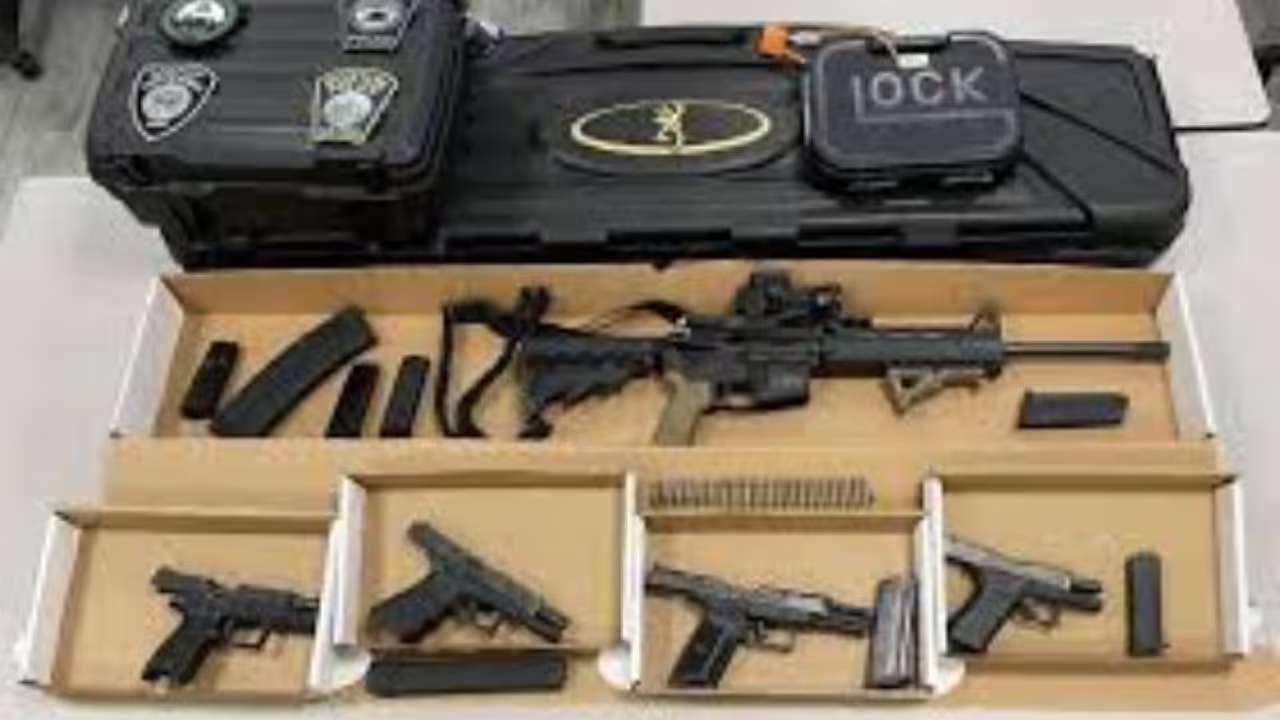
A Boston gang member will serve over seven years in federal prison after officials claimed he illegally acquired multiple firearms, ammo, high-capacity magazines, and other gun attachments despite a previous conviction that prohibited him from possessing weapons.
Kenneth Bigby Williams, 30, of Hyde Park, was sentenced in federal court in Boston to 90 months in prison, followed by three years of supervised release, according to the U.S. Attorney’s Office for the District of Massachusetts. The sentencing concludes another chapter in a case that federal prosecutors presented as part of a larger effort to combat illegal guns and violent crime in Massachusetts neighborhoods.
According to prosecutors, Bigby Williams admitted to being a member of the Bailey Street gang in Boston. In March 2026, he pleaded guilty to two charges of being a felon in possession of a firearm and ammunition. A federal grand jury indicted him in October 2025.
The case revolved around what detectives discovered following a series of search warrants executed on August 7, 2025. Authorities claimed they seized five firearms, around 73 rounds of ammunition in various calibers, many high-capacity magazines, and other firearm accessories associated with Bigby Williams and his home.
For prosecutors, the case was more than just the amount of firearms seized. It was also about who was suspected of possessing them. Bigby Williams had a prior 2019 Suffolk Superior Court conviction for possession of a firearm without a permit, making it illegal for him to own firearms.
The past conviction became important to the federal prosecution. A person with certain felony offenses is prohibited by federal law from possessing firearms or ammunition. Prosecutors claimed Bigby Williams crossed the line when the firearms and ammo were discovered.
Allison D. Burroughs, a United States District Court judge, imposed the sentence. Bigby Williams’ 90-month prison sentence means he will spend 7.5 years in prison before being released under supervision.
The announcement was delivered by United States Attorney Leah B. Foley, FBI Boston Special Agent in Charge Ted E. Docks, and Boston Police Commissioner Michael Cox. Prosecutors also commended the Suffolk County District Attorney’s Office for its assistance in the investigation.
Assistant United States Attorney John Dawley of the Organized Crime and Gang Unit prosecuted the case.
The sentencing comes as federal, state, and local officials continue to prioritize illicit gun prosecutions in cities where shootings and gun trafficking are serious public safety concerns. Officials have frequently claimed that taking guns away from persons who are legally prohibited from possessing them can stop violence before it spreads to another crime site.
This case was also linked to Operation Take Back America, a nationwide Justice Department operation targeting violent crime, cartels, transnational criminal organizations, and other public safety issues. According to the Justice Department, the initiative combines resources from programs such as Organized Crime Drug Enforcement Task Forces and Project Safe Neighborhoods, a long-running federal program that aims to reduce violent crime through partnerships between law enforcement, prosecutors, community leaders, and local stakeholders.
For Boston residents, the case brings up a familiar debate about how to prevent gun violence while safeguarding neighborhoods from recurrent gun violations. The confiscation of five guns, ammo, and high-capacity magazines was taken seriously by federal prosecutors, especially since Bigby Williams was already forbidden from owning firearms.
The sentence also conveys a message about how federal courts should treat firearms cases with past convictions. A municipal firearm arrest can lead to a federal prosecution if detectives feel the case meets federal weapons rules, particularly if the offender has a past that renders ownership illegal.
Bigby Williams will now serve the prison sentence imposed by the court, followed by three years of supervision once released. For prosecutors, the verdict reflects another federal prosecution in the government’s ongoing battle to keep illicit firearms away from those who they believe pose a threat to public safety.
The dispute may be over in court, but the greater issue persists in Boston and other cities across the United States. Illegal gun ownership cases like this one continue to influence how law enforcement agencies respond to neighborhood violence, gang activity, and the flow of firearms into already overburdened neighborhoods.







Leave a Reply