


A former nonprofit leader will serve nearly two years in federal prison for stealing from a beloved St. Louis arts institution.
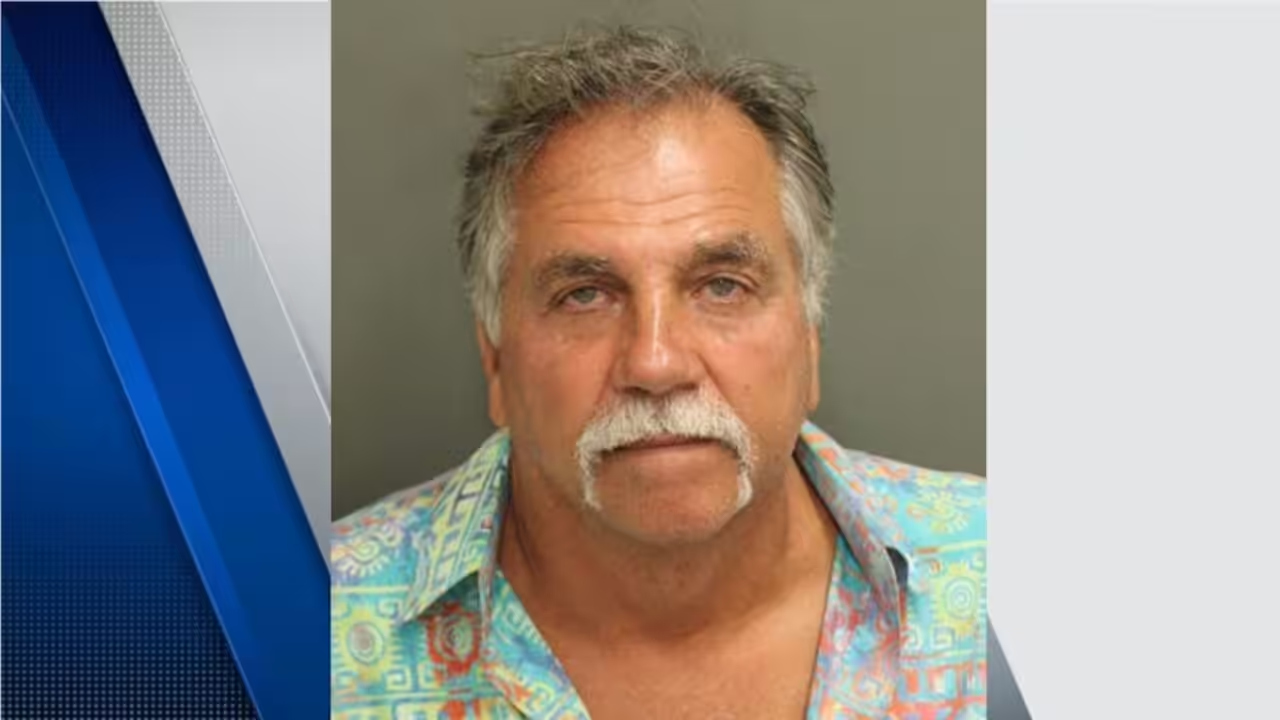
On Wednesday, Senior U.S. District Judge Audrey Fleissig sentenced George Pace to 22 months. Pace, 63, confessed in January that he stole over $120,000 from Circus Flora between December 2022 and September 2023 while serving as president of the charity board.
Pace used the money on personal costs, such as restaurant dinners and skin care.
In an interview with St. Louis Public Radio this week, Circus Flora’s executive and creative director, Jack Marsh, expressed relief that the experience is finally over.
“It was something that was certainly very hard for the organization and its supporters and all the people who love Circus Flora and what we do,” he stated. “We’re very happy to be moving forward.”
The 40th season of the circus began on Tuesday at the Grand Center’s Big Top. Marsh stated that the nonprofit had concerns about being able to perform another season.
“Everyone, I think, really understood the gravity of this and that we were the victims of something terrible, and we have been able to pull it together to do some really amazing shows these last few years,” he stated.
Marsh stated that Circus Flora has changed its operations to prevent a similar incident from occurring again.
Prosecutors wanted a sentence of somewhat less than three years, plus three years of supervised release.
Pace has agreed to repay the $123,000 he took from the circus, a process that began before prosecutors brought accusations. He will also have to pay approximately $8,000 in bank fees and interest.
“The amount of loss in this case may not appear particularly high in comparison to other fraud cases, but when the victim is a charitable organization dedicated to helping children, the loss appears to be an inadequate measure of the seriousness of the offense,” Assistant U.S. Attorney Gwendolyn Carroll wrote in the government’s sentencing memo.
Pace’s counsel requested a year of home confinement with five years of supervision owing to medical and mental health issues that require continuing care.
“At his age, the conviction in itself is a harsh punishment,” wrote public defender Eric Selig. “At his age, it’s tough to obtain work, so his options are limited. This conviction further limits his prospects.”






Leave a Reply