

Oldham County home catches fire after lightning strike
A quiet Monday night in Oldham County turned frightening when severe storms moved through the area and lightning struck a home in Prospect.
According to North Oldham Fire Chief Jim Sohan, crews responded to a fire around 7 p.m. on Harbor View Court.
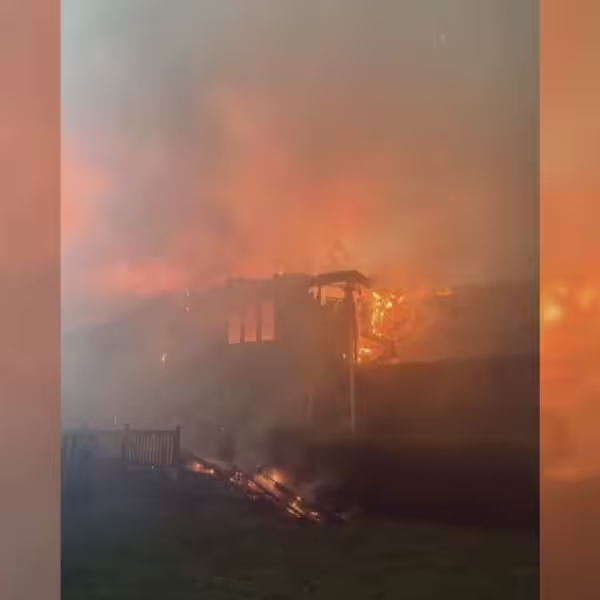
By the time firefighters arrived, flames had already spread through the roof, which later collapsed onto the second floor and then down to the first.
What stands out is how quickly the situation escalated. A single lightning strike triggered a major fire that required 46 firefighters to bring under control. Fortunately, everyone inside escaped safely, and no injuries were reported.
For homeowners, this serves as a reminder that severe weather can turn dangerous in seconds.
When storms roll in, the threat is not always outside. Sometimes, it begins right above your head.
Timeline of the Oldham County home fire incident
Residents in Oldham County likely noticed how rapidly conditions worsened that evening. Between 7 and 9 p.m., a strong line of storms moved through the region.
Heavy rain, lightning, and strong winds created conditions where one strike could cause significant damage.
Around 7 p.m., emergency crews received a call about a house fire on Harbor View Court. Reports indicated the homeowner quickly realized lightning had struck the house and called 911 without delay.
Firefighters arrived within about 15 minutes, but the fire had already spread across the roof.
The speed of the fire’s spread was striking. Flames moved from one side of the house to the other before crews could fully contain them.
This type of rapid spread is not what most homeowners expect from a lightning strike.
What happened inside the house after the lightning strike
Once the roof ignited, the structure quickly weakened.
The fire spread across the top of the home, building heat and pressure. This is typical of lightning-related fires, which can ignite suddenly and spread unpredictably.
Eventually, the roof collapsed, causing the second floor to fall onto the first. At that point, the home lost much of its structural support.
This highlights how critical timing is. Even a short delay in evacuation could have made the situation far more dangerous.
Firefighters’ response and scale of the emergency
This incident required a large response, with 46 firefighters working to contain the blaze.
Even after gaining control, crews remained at the scene overnight to monitor for flare-ups. Fires involving structural damage can reignite, especially when hidden hot spots remain.
Storm conditions added to the challenge, with wet surfaces, unstable structures, and ongoing weather risks complicating the response.
Experts note that weather-related fires often need extended monitoring because hidden embers can reignite hours later.
Were the residents safe after the fire
The most important outcome is that everyone inside the home escaped safely.
No injuries were reported, which is remarkable given the extent of the damage.
Quick action played a major role. The homeowner called 911 immediately, helping emergency crews respond as quickly as possible.
In situations like this, hesitation can be dangerous.
How severe storms caused widespread damage
The fire was just one part of a larger storm system affecting the region.
Thousands of homes lost power, and strong winds brought down multiple trees.
Flooding also caused problems, including a shutdown of part of I-264 after a vehicle stalled in standing water.
This highlights the broader impact of the storm, showing how a single weather event can disrupt an entire area.
Why lightning strikes can destroy homes so quickly
Many people think of lightning as brief and harmless beyond the initial strike, but it can be highly destructive.
When lightning hits a home, the roof is often the first point of impact. Roofing materials can ignite almost instantly, allowing fire to spread rapidly.
Lightning can also send powerful surges through electrical systems, creating hidden fire risks inside walls and wiring.
In many cases, fires grow significantly before firefighters arrive, even with a fast response.
The extreme heat of a lightning strike explains why ignition happens so quickly.
What homeowners should learn from this incident
This event offers several important lessons.
First, call emergency services immediately. Acting quickly gives responders a better chance to contain the situation.
Second, evacuate without delay. Leaving early is critical to staying safe.
Another key risk is hidden damage. Fires can start inside walls or ceilings and remain unnoticed until they become severe.
Even a minor lightning strike should never be ignored.
What to do if your home is struck by lightning
If lightning hits your home, act quickly.
Get everyone out of the house immediately. Do not try to investigate the damage.
Call 911 once you are in a safe location. Even if no flames are visible, a fire could be developing inside.
Watch for warning signs such as smoke, burning smells, flickering power, or unusual heat in walls.
The biggest mistake is assuming there is time to wait. Lightning-related fires can spread faster than expected.
Expert insights on lightning fires and response
Fire officials emphasize how aggressive lightning fires can be.
Chief Jim Sohan noted that by the time crews arrived, the fire had already spread across the roof.
Experts say lightning fires often ignite multiple points at once, especially in roofing materials and electrical systems.
This makes them more dangerous than typical fires.
Another important factor is post-fire risk. Crews stayed overnight to monitor the site, as hidden hot spots can reignite later.
Key takeaways from the Oldham County fire
Lightning is a serious threat during storms and can cause major damage within minutes.
Quick action saves lives. Immediate evacuation and calling emergency services made a difference in this case.
Fires may begin in hidden areas, such as roofs or walls, before becoming visible.
Storms should never be underestimated, as conditions can change rapidly.
This incident shows how quickly a routine storm can turn into a life-altering event.











Leave a Reply